
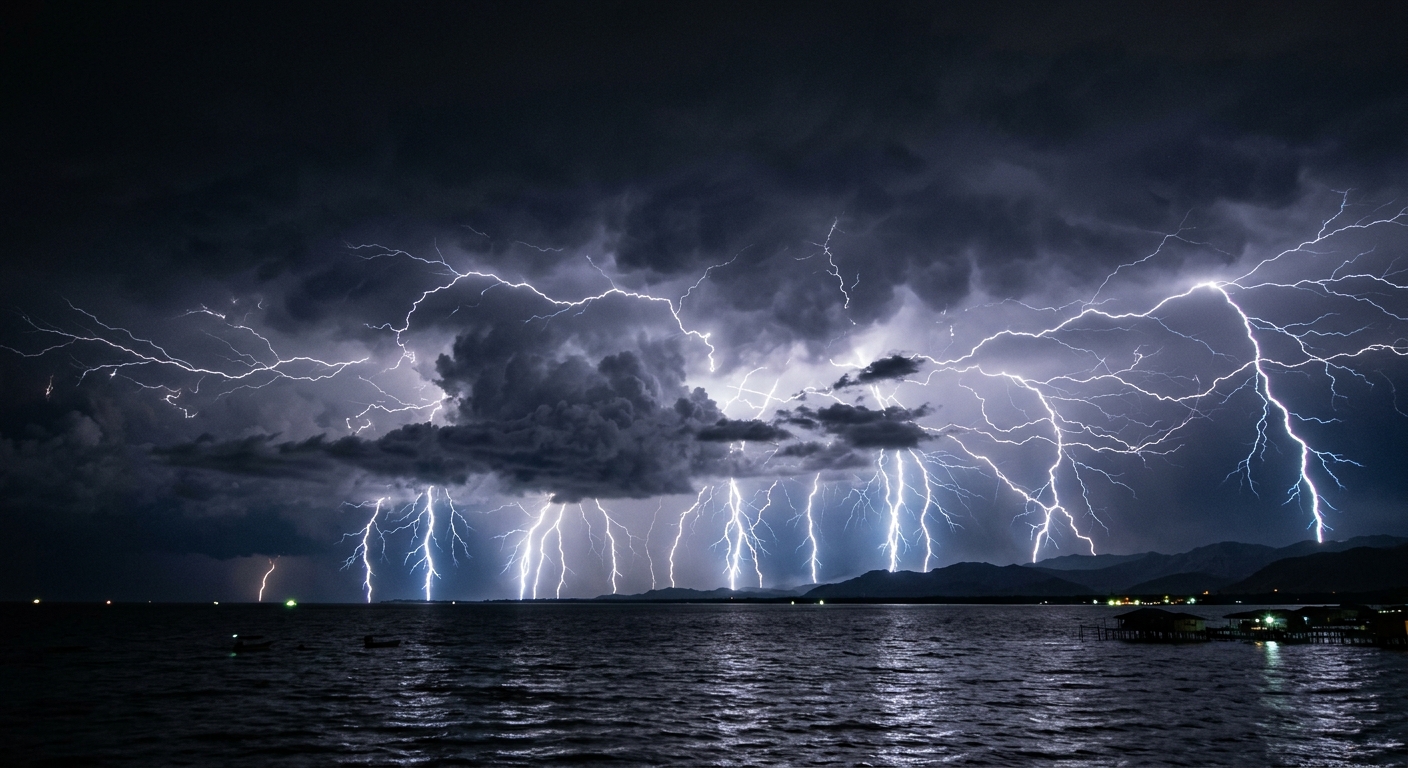
Deep in the heart of Venezuela, where the Catatumbo River meets Lake Maracaibo, nature puts on the most spectacular and relentless light show on Earth. This isn’t your average thunderstorm that rolls in and out within a few hours. This is the Catatumbo Lightning, a meteorological phenomenon so intense and persistent that it strikes nearly 300 times per hour, almost every single night of the year.
The Numbers That Defy Belief
The statistics surrounding Catatumbo Lightning read like something from a science fiction novel. This natural phenomenon generates approximately 280 lightning strikes per hour during peak activity, with some nights recording over 400 strikes in a single hour. The lightning occurs roughly 300 nights per year, typically lasting between 7 to 10 hours each night. Over the course of a year, this translates to more than 1.2 million lightning strikes in one concentrated area.
To put this in perspective, the average thunderstorm might produce a few dozen lightning strikes per hour at most. The Catatumbo region experiences more lightning activity in a single night than most places on Earth see in an entire year. The phenomenon is so reliable that locals have historically used it as a natural lighthouse, guiding ships and travelers through the region for centuries.
The Perfect Storm of Geography
The secret behind this electrical extravaganza lies in the unique geographical features of the region. Lake Maracaibo sits like a massive bowl surrounded by the Andes Mountains to the west and south, and the Cordillera de Mérida to the southeast. This topographical arrangement creates a perfect atmospheric mixing chamber.
The Atmospheric Recipe
During the day, the tropical sun heats the lake’s surface, creating warm, moisture-laden air that begins to rise. As evening approaches, cool air from the surrounding mountains flows down into the basin, colliding with the warm, humid air rising from the lake. This collision creates powerful convection currents that reach heights of up to 10 kilometers into the atmosphere.
The key ingredients for this nightly spectacle include:
- Warm, humid air from Lake Maracaibo
- Cool mountain winds carrying different electrical charges
- Methane gas rising from the surrounding wetlands
- The unique basin shape that traps and concentrates these atmospheric conditions
The Methane Connection
Recent scientific research has revealed an unexpected contributor to the phenomenon: methane. The wetlands surrounding Lake Maracaibo release significant amounts of methane gas, which rises into the atmosphere and appears to enhance the electrical conductivity of the air. This methane acts like an invisible conductor, making it easier for electrical charges to build up and discharge as lightning.
This discovery helps explain why the Catatumbo region produces so much more lightning than other areas with similar topographical features. The methane essentially supercharges the already perfect atmospheric conditions, creating an environment where electrical activity can flourish with unprecedented intensity.
A Phenomenon Visible from Space
The Catatumbo Lightning is so intense that it can be seen from space and detected by satellites orbiting hundreds of miles above Earth. NASA has captured stunning images of the phenomenon, showing a concentrated cluster of electrical activity that stands out dramatically against the darkness of the surrounding landscape.
The lightning produces an estimated 1.2 to 3.6 million flashes per year, generating so much electrical activity that it contributes significantly to the regeneration of the planet’s ozone layer. Scientists estimate that the Catatumbo Lightning helps restore approximately 10% of the world’s ozone layer, making this natural light show not just spectacular to watch, but actually beneficial to our planet’s atmospheric health.
Cultural and Historical Significance
For the indigenous peoples of the region, particularly the Wayuu and other local tribes, the Catatumbo Lightning holds deep spiritual significance. They have incorporated the phenomenon into their mythology and folklore, viewing it as a spiritual force that protects their land from outsiders.
Historically, the lightning served practical purposes as well. Pirates and explorers in the 16th and 17th centuries used the consistent light as a natural beacon for navigation. Some historical accounts suggest that the lightning’s brightness was so intense it could illuminate objects up to 25 miles away, making it visible to ships far out at sea.
The Silent Lightning Mystery
One of the most peculiar aspects of Catatumbo Lightning is that it’s often completely silent. Despite the incredible electrical activity, thunder is rarely heard. This occurs because the lightning typically strikes at altitudes between 2 and 10 kilometers above ground level, high enough that the sound waves dissipate before reaching human ears.
Environmental Threats and Conservation
Despite its seemingly eternal nature, the Catatumbo Lightning faces threats from climate change and human activity. In 2010, the phenomenon mysteriously stopped for several months, causing concern among scientists and locals alike. The pause was attributed to severe drought conditions that altered the region’s atmospheric dynamics.
Ongoing environmental pressures including deforestation, oil exploration, and changing precipitation patterns in the Amazon basin could potentially disrupt the delicate balance of conditions that create this natural wonder. Scientists continue to monitor the phenomenon closely, working to understand how environmental changes might affect its future.
Visiting Nature’s Electric Theater
For those brave enough to witness this natural spectacle firsthand, the optimal viewing period is between April and November, when atmospheric conditions are most favorable. The lightning typically begins around 7 PM and can continue until dawn, creating an all-night natural fireworks display that has been described as both beautiful and terrifying.
The Catatumbo Lightning stands as one of nature’s most impressive displays of raw power and perfect timing. In a world where natural wonders are increasingly rare, this Venezuelan phenomenon continues to remind us that our planet still holds secrets that can leave us awestruck and humble in the face of nature’s incredible forces.





ive actually wanted to do a birding trip to lake maracaibo specifically because of this phenomenon, not gonna lie. the constant lightning creates these insane microclimates that attract some really unusual species during migration, especially the fork tailed flycatchers and some of the hummingbirds that time their routes with the seasonal atmospheric shifts. would love to know more about how the ozone restoration actually affects the bird populations down there since so many species navigate using atmospheric cues
Log in or register to replyThis is absolutely wild, and I’m genuinely curious if anyone’s seriously looked at how those atmospheric conditions create such consistent electrical charge separation, because you’d think there’s a biomimicry goldmine there for improving our current energy capture tech. Like, we have piezoelectric materials that generate electricity from pressure and vibration, but what if we could study the thermodynamic patterns that make Lake Maracaibo such a lightning hotspot and apply that to how we design energy harvesting systems? The ozone regeneration angle is fascinating too, kind of makes you wonder if we could reverse-engineer that process at smaller scales.
Log in or register to replyokay but heres what really gets me – those weird microclimates beth mentioned? theres gotta be some seriously fascinating parasite-host dynamics happening in the species attracted to that zone. like imagine all those fork-tailed flycatchers dealing with parasites under extreme atmospheric conditions, the electromagnetic fields might actually be affecting behavior in ways we havent even considered yet. theres this whole world of host manipulation happening and the lightning is probably creating selection pressures we dont fully understand, which honestly makes the biomimicry angle even cooler because nature might be solving energy problems at multiple biological levels at once
Log in or register to reply