Deep in Antarctica, Taylor Glacier appears to bleed crimson into the white landscape through a phenomenon called Blood Falls. This stunning red waterfall is actually iron-rich brine from a 1.5-million-year-old subglacial lake that turns rust-colored when it meets oxygen, harboring unique microorganisms that could hold clues about life on other worlds.
Deep in the Sahara Desert, massive sand dunes create haunting musical sounds that can be heard for miles when millions of perfectly-shaped sand grains vibrate in synchronization during avalanches. This rare phenomenon requires precise conditions including uniform grain size, complete dryness, and specific wind patterns to transform ordinary dunes into nature’s most impressive musical instruments.
In 2019, Russia’s Raikoke volcano erupted with such tremendous force that it literally punched a visible hole through Earth’s atmosphere. Astronauts aboard the International Space Station captured stunning images of this rare atmospheric phenomenon, revealing the incredible power of volcanic eruptions to reshape our planet’s sky in real-time.
The Richat Structure in the Sahara Desert is a 25-mile-wide circular formation so perfect it’s visible from space, leading some to believe it could be the ruins of the lost city of Atlantis. This geological mystery combines ancient legends with modern science, creating one of Earth’s most debated natural wonders.
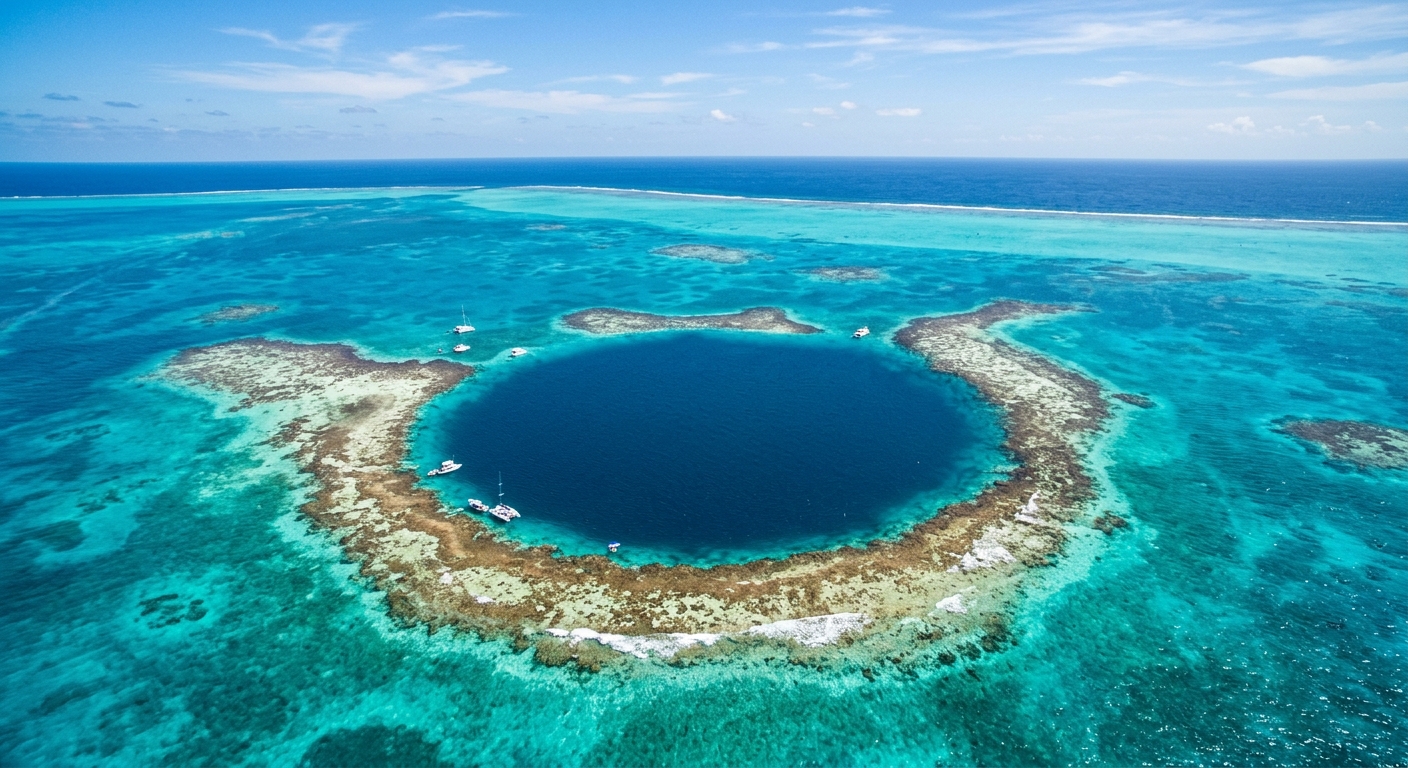
The Great Blue Hole of Belize has been quietly collecting sediment for 4,000 years, creating an underwater archive that records the collapse of major civilizations from the Maya to Rome. This natural time capsule reveals the terrifying pattern of how climate change has repeatedly brought down history’s greatest empires.
The Mariana Trench is so incredibly deep that Mount Everest, Earth’s tallest mountain, would completely disappear into its depths with over a mile of water still covering its peak. This mind-bending oceanic abyss represents one of the most extreme and mysterious environments on our planet.
Ball lightning appears as mysterious glowing spheres that can pass through walls and float through rooms, baffling scientists for over 200 years. Despite numerous theories and modern research efforts, this rare weather phenomenon remains one of meteorology’s greatest unsolved puzzles.
Deep beneath the Pacific Ocean lies Tamu Massif, a submarine volcano covering 120,000 square miles – larger than the entire state of New Mexico. This underwater giant, discovered in 2013, dwarfs Mount Everest in volume and challenges our understanding of Earth’s geological capabilities.
The Soviet Union’s attempt to drill the deepest hole in history reached 9 miles into Earth’s crust, where scientists recorded mysterious sounds resembling human voices that remain unexplained to this day. The Kola Superdeep Borehole project revealed that the depths of our planet hold acoustic phenomena that challenge our understanding of geology and physics.
Death Valley holds the world record for hottest air temperature at 134°F, not the Sahara Desert as commonly believed. This California furnace creates perfect conditions for extreme heat through its below-sea-level basin, surrounding mountains, and heat-absorbing surfaces.