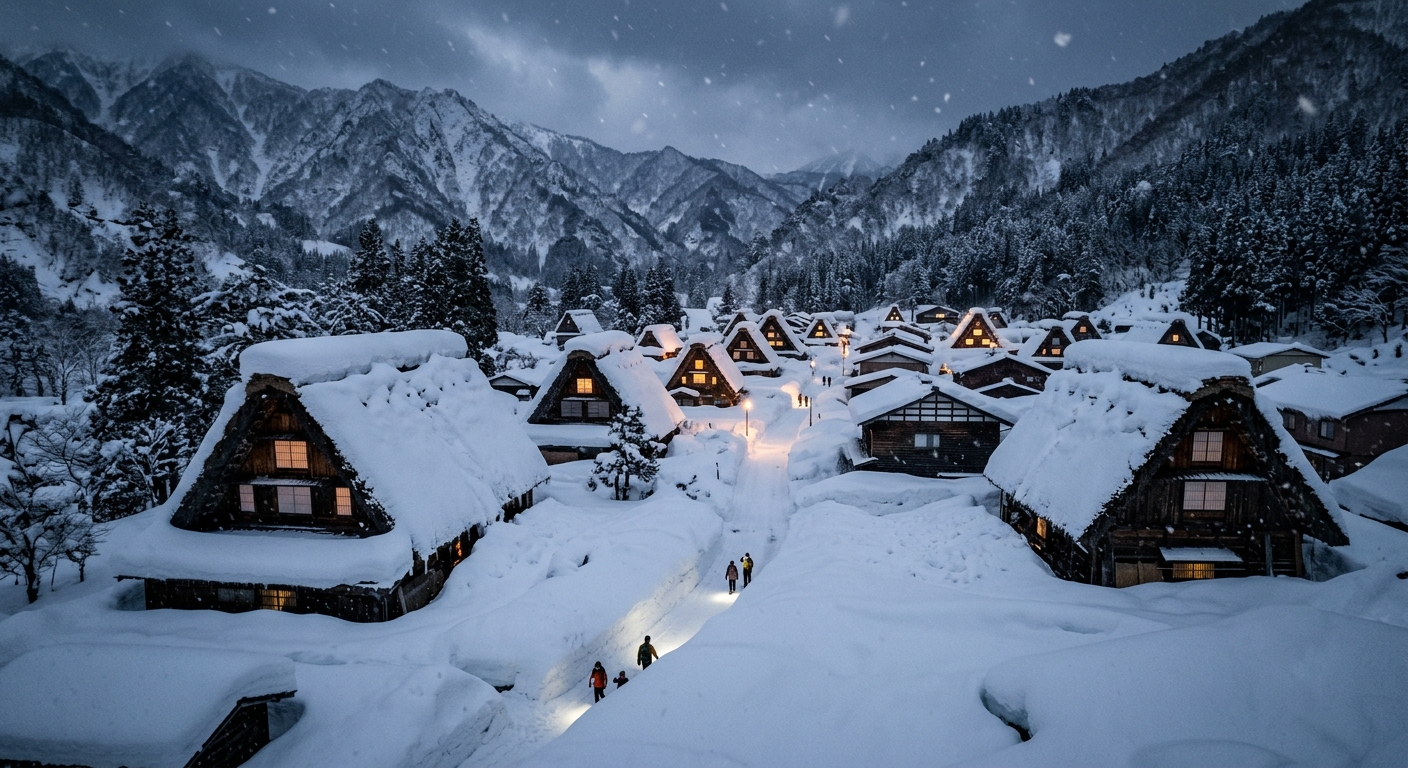
Imagine stepping outside your front door only to find yourself face-to-face with a wall of snow that reaches the third floor of a building. This isn’t a scene from a disaster movie or a freak weather event. It’s just another winter day in some coastal towns along Japan’s Sea of Japan, where nature unleashes one of the most spectacular snow phenomena on Earth.
The White Monster: 10 Meters of Annual Snowfall
Every winter, coastal communities along Japan’s western shores experience what can only be described as a snow apocalypse. Towns like Sukayu Onsen in Aomori Prefecture regularly receive over 10 meters (33 feet) of snow annually, with some years pushing even higher. To put this in perspective, that’s enough snow to completely bury a three-story house.
The town of Tateyama holds records that boggle the mind. In exceptional years, snow depths have reached over 20 meters (65 feet), creating corridors through the white that tower above vehicles like frozen canyons. These aren’t just temporary accumulations either. The snow persists for months, transforming entire landscapes into alien winter worlds.
The Perfect Storm: How Geography Creates a Snow Machine
The extraordinary snowfall along the Sea of Japan coast results from a meteorological phenomenon so precise it seems almost engineered. During winter, bone-chilling Siberian winds sweep across the relatively warm waters of the Sea of Japan. As these arctic air masses travel over the sea, they absorb massive amounts of moisture.
When these moisture-laden winds finally hit Japan’s western coastline and the towering mountains beyond, they’re forced upward. As the air rises, it cools rapidly, and all that absorbed moisture transforms into snow. Lots and lots of snow.
The Lake Effect on Steroids
This process, known as lake-effect snow, occurs in other parts of the world, but the Sea of Japan creates the perfect conditions for an extreme version. The sea maintains a relatively stable temperature throughout winter, providing a consistent source of moisture. Meanwhile, the dramatic topography of Japan’s western regions forces the air to rise quickly, maximizing snow production.
Life in the Snow Zones: How Communities Survive
Living with 10 meters of annual snowfall requires extraordinary adaptations. Homes in these regions are built with incredibly steep roofs designed to shed snow before dangerous accumulations can form. Many buildings feature reinforced structures capable of bearing enormous snow loads.
Transportation becomes a logistical nightmare and engineering marvel combined. Roads require constant maintenance by specialized snow removal equipment. Some routes feature heated pavement systems, while others rely on massive snow plows that create towering walls of white on either side of the roadway.
The Underground Networks
In the heaviest snow zones, entire underground networks connect buildings, allowing residents to move around without ever surfacing into the white world above. Shopping centers, schools, and essential services are often linked by these subterranean passages.
Some communities have embraced creative solutions, like elevated walkways that float above the typical snow line, creating a second level of infrastructure designed specifically for winter navigation.
The Economic Snow Machine
While dealing with extreme snowfall presents challenges, these regions have transformed their white burden into economic opportunity. The reliable, high-quality powder snow attracts millions of skiing and snowboarding enthusiasts from around the world.
Resorts in areas like Niseko and Hakuba have gained international reputations for their exceptional snow conditions. The consistent, dry powder created by the Sea of Japan effect is considered among the world’s finest for winter sports.
Hot Springs in Winter Wonderlands
The combination of extreme snow and Japan’s abundant hot springs (onsen) creates unique experiences impossible to find elsewhere. Visitors can soak in naturally heated waters while surrounded by snow walls that tower overhead, creating intimate winter sanctuaries.
Climate Patterns and Future Changes
The extreme snowfall patterns along the Sea of Japan are remarkably consistent, driven by large-scale atmospheric patterns that have persisted for centuries. However, climate researchers are closely monitoring these regions for signs of change.
Warmer ocean temperatures could potentially increase moisture absorption, leading to even more intense snowfall events. Conversely, shifting wind patterns or warming air temperatures might disrupt the delicate balance that creates these snow phenomena.
Beyond Japan: Similar Phenomena Worldwide
While Japan’s Sea of Japan coast experiences some of the most extreme lake-effect snow on the planet, similar processes occur elsewhere. The Great Lakes region of North America sees comparable effects, though rarely reaching the same extreme accumulations.
The key difference lies in geography. Japan’s unique combination of large bodies of relatively warm water, consistently cold continental air masses, and dramatic topographical changes creates the perfect recipe for these snow extremes.
These coastal communities along the Sea of Japan represent humanity’s remarkable ability to adapt to extreme natural conditions. They’ve not only survived in one of the world’s snowiest environments but created thriving communities that celebrate and capitalize on their extraordinary weather. Every winter, as the Siberian winds begin their journey across the sea, these towns prepare once again for their annual transformation into some of the most snow-covered places on Earth.

okay but can we talk about the actual life thriving in that snow because literally tardigrades are just chilling in there in cryptobiosis waiting out the winter and its absolutely bonkers that these microscopic tanks can just pause their entire metabolism and survive conditions that would obliterate literally any other animal, like the fact that theyre literally everywhere including buried under 33 feet of snow in japan is insane to me
Log in or register to replyOh I love where your head’s at with the tardigrades, though I have to say the thing that gets me about extreme snow zones is how they become these dark refuges for bioluminescent fungi and bacteria living under the snowpack, totally shielded from our light pollution up here at the surface – it’s like nature carved out the perfect cave system for creatures that evolved to glow in darkness, and we’ll probably never see most of their light shows because we can’t dig through 33 feet just to witness their tiny chemical fireworks!
Log in or register to replyThat snowpack is basically creating a wild stratified aquifer system – I’m fascinated by how those massive seasonal snow loads affect groundwater recharge and ultimately the chemistry of rivers flowing through those regions, because all that meltwater in spring becomes this huge pulse that totally reshapes stream ecology downstream. Have you all noticed how snow-dominated watersheds tend to have these boom/bust cycles for macroinvertebrates compared to rain-fed systems, and how dams absolutely destroy that natural hydrograph that everything evolved around?
Log in or register to reply