A Landscape That Defies Reality
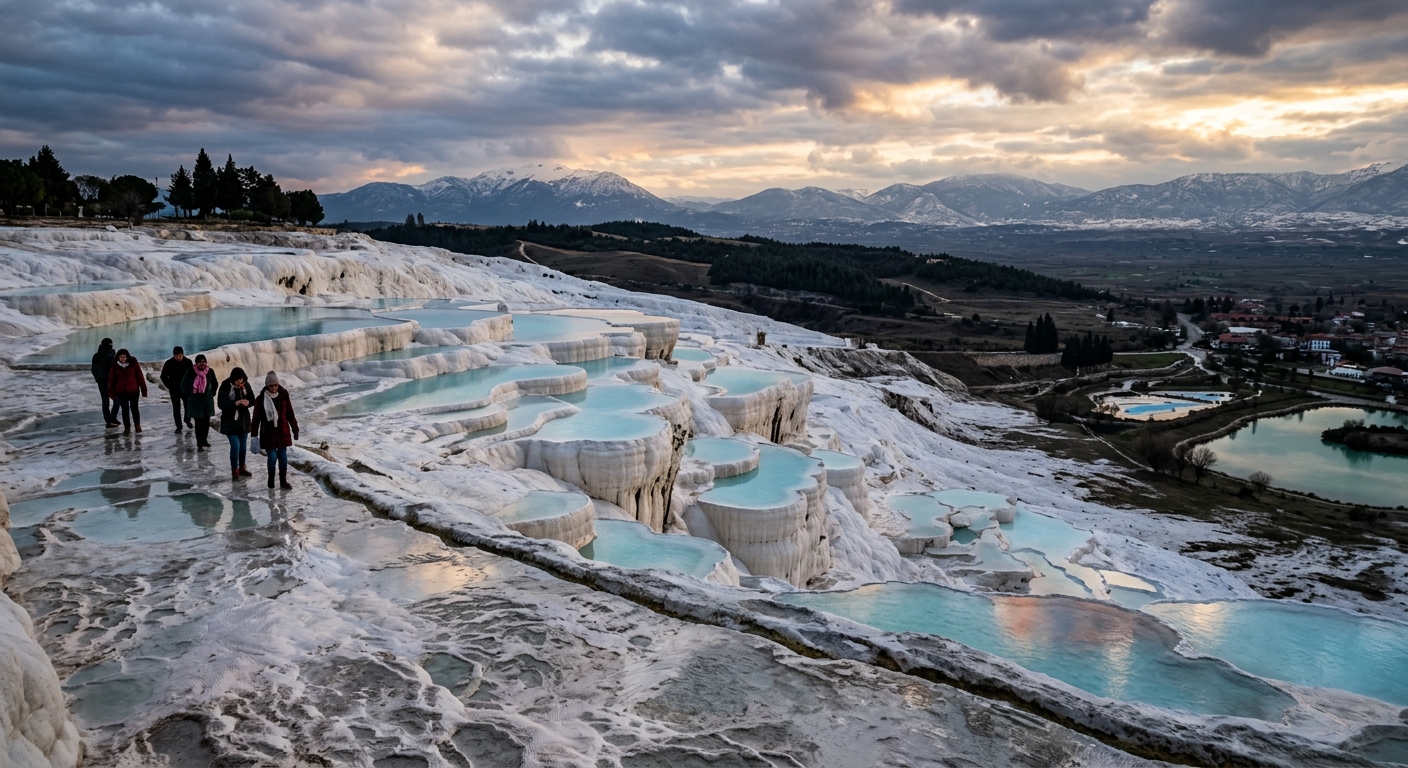
Imagine stumbling upon what appears to be a massive frozen waterfall cascading down a hillside, its pristine white terraces gleaming in the sunlight like fresh snow. You might think you’ve wandered into an Arctic wonderland, but you’d be standing in the sweltering heat of southwestern Turkey. Welcome to Pamukkale, one of Earth’s most spectacular geological illusions.
The name “Pamukkale” literally translates to “cotton castle” in Turkish, and once you see these ethereal white terraces, you’ll understand why. This UNESCO World Heritage site has been fooling visitors for millennia with its snow-white appearance, when in reality, it’s composed entirely of mineral-rich thermal pools that have been forming for over 14,000 years.
The Science Behind the Spectacle
What creates this otherworldly landscape isn’t ice or snow, but rather an intricate process involving hot springs, calcium carbonate, and thousands of years of patient geological work. Deep beneath Pamukkale, tectonic activity heats groundwater to temperatures reaching 95°F (35°C). As this mineral-rich water bubbles to the surface, it carries with it high concentrations of calcium carbonate.
When the hot spring water reaches the surface and begins to cool, a fascinating chemical reaction occurs. The calcium carbonate precipitates out of the water, forming solid deposits of travertine, a type of limestone. Over millennia, these deposits have built up layer upon layer, creating the stepped terraces that cascade down the hillside like a frozen waterfall.
The Travertine Formation Process
The formation of these terraces follows a precise natural process:
- Spring Emergence: Hot, mineral-laden water emerges from 17 different springs scattered across the hillside
- Cooling and Precipitation: As the water cools and loses carbon dioxide, calcium carbonate crystallizes
- Layering: Each day, new microscopic layers of travertine are deposited, gradually building the terraces
- Pool Formation: Natural barriers form as minerals accumulate, creating the characteristic stepped pools
A Thermal Oasis with Healing Powers
These aren’t just pretty pools to look at. The thermal waters of Pamukkale have been renowned for their supposed healing properties since ancient times. The mineral-rich waters contain not only calcium carbonate but also sulfur, magnesium, and other minerals that some believe provide therapeutic benefits for skin conditions, arthritis, and circulation problems.
The water temperature varies from pool to pool, ranging from a comfortable 95°F (35°C) to areas where the water has cooled significantly as it flows down the terraces. The pH level is slightly alkaline, which contributes to the smooth, silky feeling of the water that many visitors describe.
Ancient Recognition of the Site’s Power
The ancient Greeks and Romans were well aware of Pamukkale’s unique properties. They established the city of Hierapolis directly above the terraces in the 2nd century BC, turning the area into a spa resort for the ancient world. Wealthy Romans would travel hundreds of miles to bathe in these mystical white pools, believing the waters could cure ailments and extend life.
The Delicate Balance of Conservation
This natural wonder faces constant challenges from both natural processes and human interference. The travertine formations are incredibly delicate, and even small changes in water flow or mineral content can affect the terraces’ appearance and growth.
During the 1980s and 1990s, hotels built directly on the terraces were pumping out thermal water for their pools and allowing tourists to walk freely across the formations. This human interference began to turn sections of the terraces brown and gray, threatening to destroy thousands of years of natural artistry.
Recognizing the danger, Turkish authorities implemented strict conservation measures. Hotels were demolished, water flow was carefully regulated to ensure even distribution across the terraces, and visitor access was restricted to designated areas. Today, most of the terraces have returned to their brilliant white color, though the restoration process continues.
Visiting Nature’s Snow Castle
Modern visitors to Pamukkale must remove their shoes before walking on the terraces, and access is limited to specific pathways to protect the delicate formations. The experience of wading through the warm, mineral-rich waters while surrounded by gleaming white terraces remains one of Turkey’s most surreal travel experiences.
The best time to witness the full spectacle is during sunrise or sunset, when the white travertine takes on golden and pink hues, creating an even more dramatic contrast with the clear blue thermal pools. The interplay of light and mineral deposits creates a constantly changing landscape that photographers and nature lovers find endlessly captivating.
The Ongoing Mystery
Despite centuries of study, scientists continue to discover new aspects of Pamukkale’s formation. Recent research has revealed that the terraces grow at different rates depending on seasonal variations in water temperature and mineral content. Some pools can add several millimeters of new travertine in a single year, while others remain virtually unchanged for decades.
This natural laboratory continues to provide insights into geological processes, mineral formation, and the delicate balance required to maintain such extraordinary natural formations. Pamukkale stands as a testament to the power of gradual geological processes to create landscapes that seem almost too fantastical to be real, proving once again that nature’s imagination far exceeds our own.
oh man pamukkale is so cool, though i gotta say the real mind-bender for me is how similar self-cleaning surfaces show up all over nature through totally different processes, like how lotus leaves developed their waxy coating vs how these mineral deposits work. its convergent evolution but for geology kind of? anyway yeah the calcium carbonate buildup over millennia is wild, those thermal vents have basically been doing the same thing over and over for thousands of years and creating this accidental masterpiece
Log in or register to replyThis is absolutely gorgeous, but can we talk about how these thermal springs are basically nature’s own water purification system? I work with white-nose syndrome in cave ecosystems, and bats actually rely on these kinds of mineral-rich water sources way more than people realize – they’re crucial for their health and hydration. Pamukkale’s thermal activity creates exactly the kind of pristine water environments that bats need, so beyond being visually stunning, these formations are literally supporting wildlife that most tourists never even think about when they’re snapping photos!
Log in or register to replyThis is such a perfect example of how geological processes can create surfaces that rival engineered materials – I’ve been thinking about how those calcium carbonate deposits achieve that self-cleaning, water-repellent property without any coating applied. The way mineral-rich water naturally stratifies and builds those terraces is basically nature’s own layering process, and I keep wondering if we could mimic that mechanism for creating self-maintaining surfaces in industrial applications. Has anyone studied whether the angle and flow rate of those springs could inform better water management systems for agriculture in arid regions?
Log in or register to reply