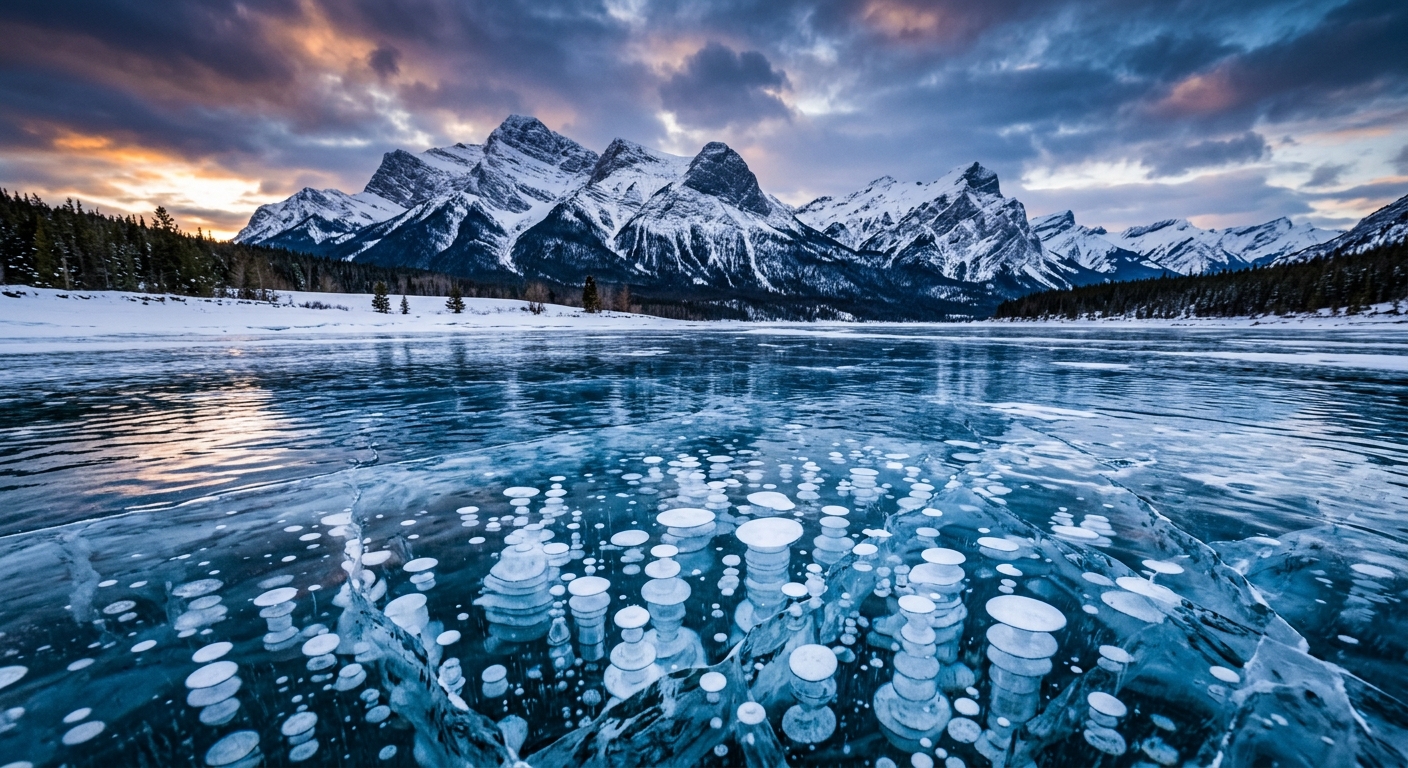
Deep in the Canadian Rockies lies one of nature’s most spectacular winter phenomena that looks like something from an alien world. Lake Abraham, an artificial reservoir in Alberta, transforms each winter into a mesmerizing display of frozen methane bubbles trapped beneath its crystal-clear ice surface. These aren’t ordinary bubbles, they’re pockets of flammable gas that create an otherworldly landscape while hiding a potentially explosive secret.
The Science Behind the Spectacular Display
The breathtaking bubble formations in Lake Abraham result from a fascinating biological process happening deep beneath the water’s surface. As organic matter like leaves, grass, and dead aquatic plants sink to the lake bottom, bacteria begin breaking down this decomposing material. During this decomposition process, the bacteria produce methane gas as a natural byproduct.
Under normal circumstances, this methane would simply rise to the surface and escape into the atmosphere. However, Lake Abraham’s unique conditions create the perfect storm for this incredible phenomenon. The lake’s depth, combined with Alberta’s harsh winter temperatures that can plummet to -30°C (-22°F), causes the surface to freeze rapidly and remain frozen for months.
As the methane bubbles rise from the lake floor, they become trapped at different levels within the ice as it forms layer by layer. This creates the stunning three-dimensional effect that makes the bubbles appear suspended at various depths, like frozen jellyfish floating in an icy aquarium.
Why Lake Abraham is Special
While methane production in bodies of water is common worldwide, several factors make Lake Abraham’s display particularly spectacular:
- Artificial Origin: Created in 1972 by the construction of the Bighorn Dam, the lake flooded a forested valley, providing an abundant source of organic matter for bacterial decomposition
- Clear Ice Formation: The lake’s specific mineral content and freezing patterns create exceptionally clear ice, making the bubbles highly visible
- Consistent Temperature: Alberta’s reliable sub-zero temperatures ensure the ice remains thick and stable throughout winter
- Protected Environment: The lake’s location shields it from strong winds that could disrupt the bubble formation process
The Flammable Truth About These Frozen Bubbles
The most mind-blowing aspect of Lake Abraham’s frozen bubbles is their explosive potential. Each bubble contains concentrated methane gas, which is highly flammable. When the ice melts in spring or if the bubbles are deliberately punctured, the escaping methane can be ignited, creating dramatic flames that dance on the water’s surface.
Scientists and adventurous visitors have demonstrated this phenomenon by carefully drilling small holes in the ice above bubble clusters. When a lit match is held near the hole, the escaping methane creates an impressive flame that can burn for several minutes. However, this should never be attempted by inexperienced individuals, as methane is both toxic and explosive in high concentrations.
The methane concentration in these bubbles is significant enough to contribute to greenhouse gas emissions when released naturally during spring thaw. This makes Lake Abraham not just a visual wonder, but also an important study site for climate researchers examining natural methane production in freshwater environments.
Safety Considerations and Environmental Impact
While the frozen methane bubbles create a stunning visual display, they also present certain risks and environmental considerations. The ice surface, though appearing solid, can be unpredictable due to the gas pockets beneath. Areas with high concentrations of bubbles may have thinner or weaker ice, making them potentially dangerous for walking or skating.
From an environmental perspective, the methane released from Lake Abraham and similar bodies of water contributes to atmospheric greenhouse gases. Methane is approximately 25 times more potent than carbon dioxide in terms of its warming effect on the atmosphere, making these natural emissions a subject of ongoing climate research.
Photographing Nature’s Ice Art
Lake Abraham has become a pilgrimage site for photographers and nature enthusiasts from around the world. The best viewing conditions typically occur from December through March, when the ice is thick enough to walk on safely and the bubbles are most clearly defined.
The optimal photography conditions happen during the golden hours of sunrise and sunset, when the low-angle light illuminates the bubbles from within the ice, creating an ethereal glow. The contrast between the white bubbles and the deep blue ice creates striking compositions that have made Lake Abraham one of Canada’s most photographed winter destinations.
Professional photographers recommend bringing polarizing filters to reduce glare from the ice surface and tripods for the sharp detail shots necessary to capture the intricate bubble patterns. The constantly changing light conditions and the need to work in extreme cold temperatures make photographing Lake Abraham both challenging and rewarding.
A Window Into Earth’s Hidden Processes
Beyond its visual appeal, Lake Abraham serves as a fascinating window into the hidden processes that occur beneath frozen water surfaces worldwide. The methane bubble phenomenon occurs in many northern lakes, but few offer such clear visibility into this natural process.
Scientists studying Lake Abraham have gained valuable insights into bacterial activity in cold-water environments, methane production rates in artificial reservoirs, and the relationship between organic matter decomposition and greenhouse gas emissions. This research contributes to our broader understanding of how human-made water bodies impact local and global environmental systems.
The lake demonstrates how human intervention in natural landscapes can create unexpected consequences, both beautiful and scientifically significant. What began as a hydroelectric project has become an accidental laboratory for studying natural gas production and a destination that showcases one of Earth’s most spectacular winter phenomena.

Oh wow, those methane bubbles are wild! I’m curious if you’ve read anything about what’s causing the uptick in methane release from thawing lakes, because it connects to something I think about a lot with my own yard work – how our local ecosystems are responding to warming. It’s such a stark reminder that even beautiful winter scenes are telling us something’s shifting. Makes me want to plant more native trees and shrubs to help with carbon sequestration, even though it feels small compared to the scale of what’s happening in places like Lake Abraham.
Log in or register to replyYeah the methane angle is fascinating, but honestly what REALLY gets me is what’s happening to the *microbial communities* driving all that methane production in the first place. Those frozen lakes are basically time capsules of bacterial and archaeal activity, and when they thaw, you’ve got methanogenic archaea going absolutely wild in the anoxic zones. The crazy thing is these microscopic organisms are literally reshaping our climate, but everyone fixates on the bubbles instead of the trillions of microbes doing the actual work down there.
Log in or register to replyive actually seen some discussion about this in relation to boreal wetland ecosystems and how climate change is affecting methane release cycles, which honestly keeps me up at night when i think about what its doing to bird populations that depend on those wetland habitats. the timing of spring thaw is getting so unpredictable that warblers and shorebirds are arriving to breeding grounds when their food sources havent emerged yet, and i’ve noticed the shifts in my own sighting records over the past 15 years. do you think the changes in your yard are affecting which birds you’re seeing?
Log in or register to reply