
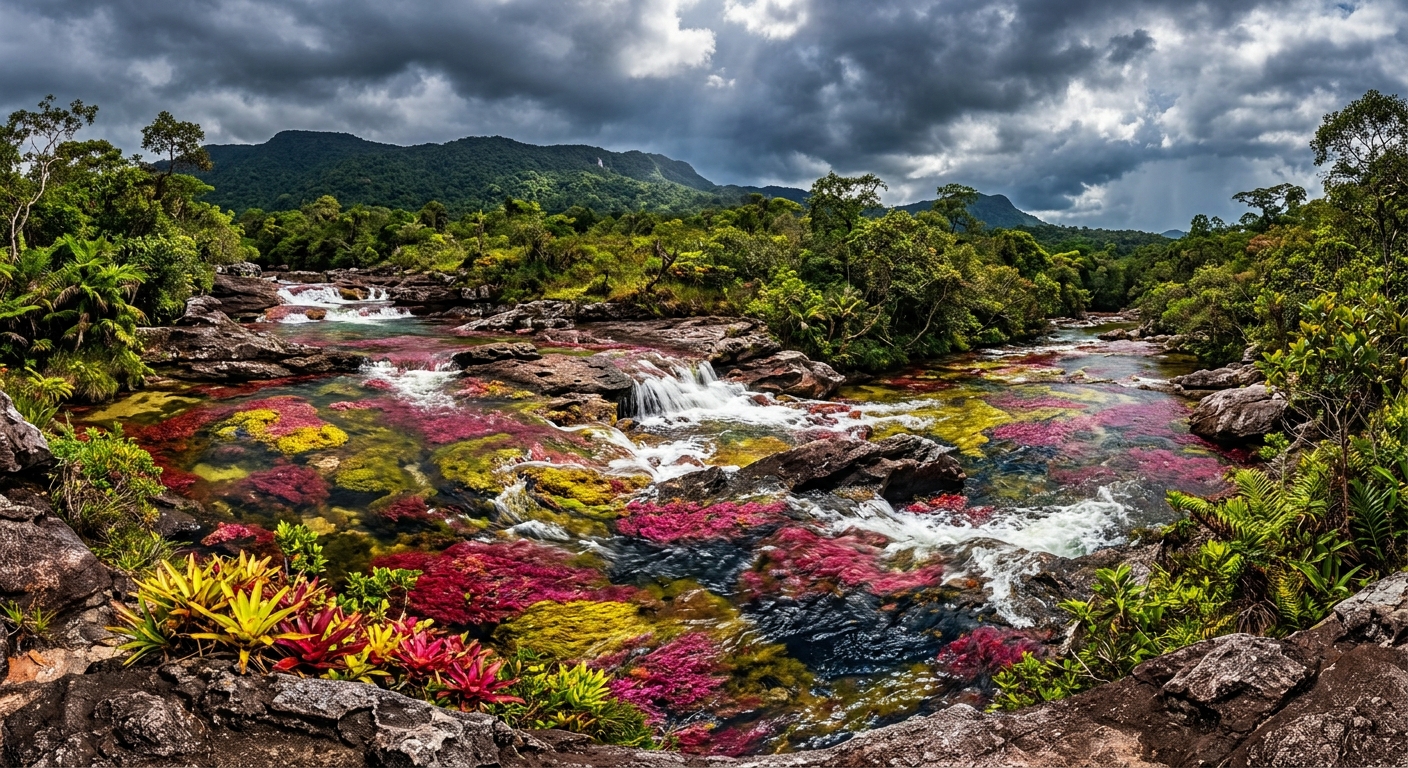
Deep in the heart of Colombia’s Serrania de la Macarena National Park flows a river so extraordinary that it defies belief. For half the year, the Cano Cristales transforms from an ordinary waterway into what locals call ‘El Rio de los Cinco Colores’ – the River of Five Colors. This natural phenomenon creates one of the most breathtaking displays on Earth, painting the riverbed in brilliant reds, yellows, greens, blues, and pinks simultaneously.
The Science Behind Nature’s Masterpiece
The magical transformation of Cano Cristales isn’t supernatural, it’s the result of a remarkable aquatic plant called Macarenia clavigera. This endemic species exists nowhere else on Earth and has evolved specifically to thrive in the unique conditions of this Colombian river system.
From June to November, when water levels drop and sunlight penetration increases, Macarenia clavigera undergoes a spectacular color change. The plant produces vibrant pigments as a response to varying light conditions, water temperature, and nutrient availability. Different sections of the river experience different environmental conditions, creating distinct color zones that flow seamlessly into one another.
The Color Palette Explained
Each color in the river serves as a window into the complex ecosystem dynamics at play:
- Red: The dominant color comes from Macarenia clavigera in peak reproductive phase, when the plant produces intense red pigments
- Yellow: Areas where the plant receives different light exposure or experiences varying nutrient levels
- Green: Sections where the Macarenia grows alongside other aquatic vegetation and algae
- Blue: The natural color of the water itself, visible in deeper pools
- Pink: Transitional zones where red pigments are less concentrated
A Geological Canvas Millions of Years in the Making
The river’s stunning visual impact isn’t just about the plants. Cano Cristales flows over some of the oldest rock formations on Earth, part of the Guiana Shield that dates back nearly 1.2 billion years. These ancient crystalline rocks create a smooth, almost polished riverbed that perfectly showcases the colorful plant life above.
The unique geology also contributes to the river’s chemistry. The ancient rocks are extremely low in nutrients and minerals, creating oligotrophic (nutrient-poor) conditions that favor Macarenia clavigera over other plant species. This geological poverty actually creates biological richness, allowing the endemic plant to dominate without competition.
Perfect Timing: The Seasonal Symphony
The timing of Cano Cristales’ transformation is crucial and precise. During Colombia’s wet season (December to May), the river runs too high and fast for the colors to develop properly. The increased water depth blocks sunlight, and the strong current prevents the Macarenia from establishing the stable colonies needed for color production.
As the dry season approaches and water levels recede, perfect conditions emerge. The plants receive optimal sunlight exposure, water temperatures stabilize, and the gentle current allows the Macarenia to bloom in its full chromatic glory. This delicate balance means the spectacular display lasts only about five months each year.
A Fragile Wonder Under Threat
The uniqueness of Cano Cristales also makes it incredibly vulnerable. Macarenia clavigera exists in such a specialized ecological niche that even small environmental changes can have devastating effects. Climate change, altered precipitation patterns, and increased tourism pressure all pose significant threats to this natural wonder.
Pollution is particularly dangerous because the river’s low-nutrient environment means any introduction of fertilizers, soaps, or other chemicals can completely disrupt the ecosystem balance. Even sunscreen from swimmers can trigger algal blooms that outcompete the Macarenia and destroy the color display.
Conservation Success Story
Recognizing the river’s importance, Colombian authorities have implemented strict conservation measures. Access to Cano Cristales is carefully controlled, with visitor numbers limited and guided tours mandatory. Swimming is restricted to designated areas, and the use of any chemical products near the river is prohibited.
These efforts have paid off. After years of illegal agriculture and cattle ranching threatened the ecosystem, the river’s colors have returned to their full intensity. Local communities now serve as guardians of this natural treasure, with eco-tourism providing sustainable income that incentivizes protection.
Experiencing the Liquid Rainbow
For the fortunate few who witness Cano Cristales during its colorful season, the experience is transformative. The river stretches for approximately 100 kilometers, with the most spectacular displays occurring in easily accessible sections near La Macarena town.
The best viewing times are typically between September and November, when the Macarenia clavigera reaches peak coloration. Early morning visits often provide the most dramatic lighting conditions, as the low-angle sunlight enhances the contrast between different colored sections.
Photographers and nature enthusiasts travel from around the world to capture this phenomenon, but no image truly captures the surreal experience of standing beside a naturally occurring rainbow river flowing through ancient stone channels.
Nature’s Living Art Gallery
Cano Cristales represents something profound about our planet’s capacity for beauty and wonder. This remote Colombian river reminds us that Earth still holds secrets, still produces phenomena that can leave us speechless with amazement.
The river’s annual transformation from mundane waterway to living masterpiece demonstrates the incredible complexity and beauty that emerges when geology, biology, and climate interact in perfect harmony. In a world where natural wonders face increasing threats, Cano Cristales stands as both an inspiration and a reminder of what we stand to lose if we don’t protect these irreplaceable treasures.
For five months each year, this remote river becomes a liquid rainbow, flowing through the Colombian wilderness like a painter’s brush across an ancient canvas. It’s a phenomenon so extraordinary that it challenges our understanding of what rivers can be, proving once again that our planet never stops finding new ways to amaze us.

That’s a really cool thought, Marcus! I’d guess the fish are more keyed into the substrate and water chemistry that creates those colors rather than the colors themselves, but honestly the whole system makes me think about how the Andes uplift in that region exposed all kinds of mineral-rich bedrock that probably feeds into the river’s chemistry. The aquatic plants thriving there are basically living on a foundation shaped by tectonic activity over millions of years, so it’s all connected in this fascinating deep-time way.
Log in or register to replyThis is absolutely stunning, but I’m curious about something kind of random – I wonder if any migratory fish species use this river as a navigation marker during their journeys? Like, could the color patterns help orient them somehow, or is that totally overthinking it? The bioluminescent properties of that aquatic plant alone make me wonder what other navigation cues animals might be picking up from it that we haven’t even considered yet.
Log in or register to replyhonestly this is making me think about what aquatic insects must be doing in that river – like, the macroinvertebrates living in those colored zones could be using visual cues in ways we totally haven’t studied yet, and i’d kill to do macro photography of the aquatic insects there to see if their coloration shifts between different sections of the river! the compound eyes on aquatic insects are genuinely incredible at detecting color variations, so Marcus’s navigation theory could totally apply to them too.
Log in or register to reply