
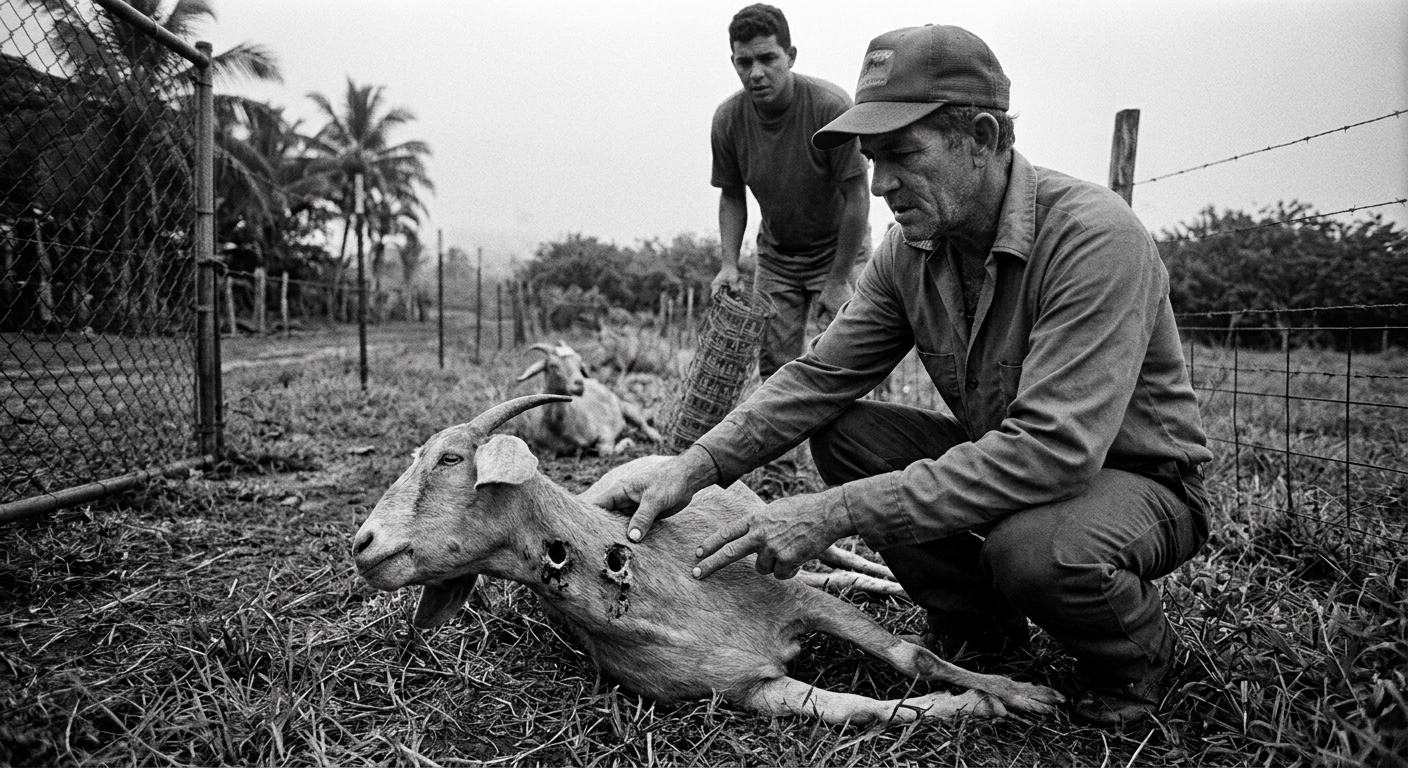
In the summer of 1995, a creature unlike anything in recorded folklore emerged from the mountains of Puerto Rico and captured the world’s imagination with unprecedented speed. The Chupacabra, Spanish for “goat-sucker,” didn’t just become a local legend—it achieved global recognition faster than any cryptid in human history, spreading across continents in just 48 hours through a perfect storm of media, culture, and timing.
The Birth of a Monster
The Chupacabra phenomenon began on August 29, 1995, when Madelyne Tolentino reported a terrifying encounter in Canóvanas, Puerto Rico. Her description painted a picture of something that seemed ripped from science fiction: a bipedal creature standing four to five feet tall, with large black eyes, gray skin, and distinctive spines running down its back. But it wasn’t just Tolentino’s vivid account that launched the legend—it was what happened next that defied all expectations for how folklore typically spreads.
Within hours of the initial report, similar sightings began flooding in from across the island. Farmers discovered their livestock drained of blood through small, precise puncture wounds. The victims weren’t just goats—chickens, rabbits, and even larger animals like horses were found in the same mysterious condition. What made these cases particularly unsettling was the surgical precision of the wounds and the complete absence of blood at the scene.
The 48-Hour Media Explosion
What happened next was unprecedented in the history of cryptozoology. In 1995, the internet was still in its infancy, yet the Chupacabra story achieved something that would be remarkable even by today’s viral standards. Within 48 hours of the initial Puerto Rican reports, news outlets across Latin America, the United States, and Europe were covering the story.
The rapid spread can be attributed to several factors:
- Spanish-language media networks: Univision and other major Spanish-speaking networks had established extensive broadcasting networks that connected Latin American communities worldwide
- Cultural resonance: The creature tapped into existing folklore and fears present across Latino communities globally
- Perfect timing: The mid-1990s marked a peak period for interest in UFOs, aliens, and unexplained phenomena, fueled by shows like “The X-Files”
- Compelling visual descriptions: Unlike vague monster legends, the Chupacabra had specific, detailed physical characteristics that made it easy to visualize and remember
The Role of Emerging Technology
While the internet wasn’t yet the dominant force it would become, early online bulletin boards and newsgroups played a crucial role in amplifying the story. Amateur researchers and enthusiasts shared theories, additional sightings, and analysis at unprecedented speed. Fax machines, still widely used in newsrooms, transmitted detailed reports and even sketches across continents in minutes.
Radio proved equally important, particularly Spanish-language AM stations that served immigrant communities. These stations often operated on limited budgets and were hungry for compelling content. The Chupacabra story provided exactly what they needed: a sensational tale that resonated deeply with their audience’s cultural background.
Global Manifestations and Mutations
As the Chupacabra legend spread beyond Puerto Rico, something fascinating occurred: the creature began to adapt to local environments and cultural contexts. In Mexico, reports described a more reptilian entity. In Texas and the southwestern United States, witnesses reported a hairless, dog-like creature—quite different from the original bipedal description.
This morphological flexibility allowed the legend to take root in diverse geographic and cultural settings. Each region’s version of the Chupacabra reflected local fears, existing folklore, and environmental factors. The creature became a kind of cryptozoological chameleon, shape-shifting not just physically but culturally as it spread.
Scientific Explanations and Skeptical Analysis
While the Chupacabra captured imaginations worldwide, scientific investigation revealed more mundane explanations for many sightings. Mange-infected coyotes and dogs, when viewed under stress or in poor lighting conditions, could easily match many witness descriptions. The distinctive blood-draining behavior was often attributed to decomposition processes or scavenging by insects and other small animals.
However, the scientific explanations did little to slow the legend’s spread. If anything, the debate between believers and skeptics only added fuel to the cultural fire, ensuring continued media coverage and public interest.
Cultural Impact and Lasting Legacy
The Chupacabra’s lightning-fast global spread fundamentally changed how we understand the transmission of folklore in the modern world. Traditional legends typically spread over generations through oral tradition, gradually evolving and adapting as they moved from community to community. The Chupacabra demonstrated that in the modern media landscape, a compelling story could achieve global recognition almost instantly.
This phenomenon predated social media by more than a decade, yet it achieved viral status through traditional media channels with remarkable efficiency. The speed of the Chupacabra’s spread offered a preview of how information would move in the digital age, serving as an early case study in viral cultural transmission.
The Economics of Fear
The Chupacabra’s rapid spread also revealed the economic potential of cryptozoological phenomena. Within weeks of the initial sightings, entrepreneurs were selling Chupacabra t-shirts, books, and toys. Tourist operators in Puerto Rico began offering “Chupacabra tours,” and the creature became an unexpected economic asset for the island’s tourism industry.
This commercialization further accelerated the legend’s spread, as businesses across Latin America and the southwestern United States recognized the marketing potential of associating their products or services with the notorious creature.
Modern Parallels and Digital Evolution
Looking back at the Chupacabra’s 48-hour global conquest, it’s striking how it anticipated the viral phenomena that would become commonplace in the social media age. The creature’s rapid spread demonstrated the power of compelling visual imagery, cultural resonance, and media amplification—all key ingredients for viral content today.
The legend continues to evolve in the digital age, with new sightings shared on social media platforms and analyzed by online communities. YouTube videos claiming to show Chupacabra encounters regularly attract hundreds of thousands of views, proving that the creature’s appeal remains strong more than 25 years after its emergence.
The Chupacabra phenomenon stands as a fascinating example of how modern communication technologies can transform local folklore into global cultural phenomena virtually overnight. It reminds us that in our interconnected world, the distance between a strange report from a small Puerto Rican town and international headlines has collapsed to mere hours. In an age where information travels at the speed of light, even the most extraordinary claims can find a global audience faster than ever before in human history.





Patricia makes such a good point about what was *actually* threatening livestock back then, and honestly, the same thing happens with bats today – we’re fixated on the spooky story while real ecological crises go ignored. White-nose syndrome has killed millions of bats since 2006 and barely makes headlines compared to vampire bat panic, even though the vast majority of bat species are insectivores doing incredible pest control that saves agriculture billions annually. The cryptid captures imaginations way faster than the conservation crisis, and it’s so frustrating because bats need our attention on the real threats, not the fictional ones!
Log in or register to replyoh this is fascinating because the timing actually intersects with something i noticed during that period – the early 90s were when birding forums and listservs were exploding, so you had all these interconnected communities basically primed to share unusual wildlife reports super fast. i wonder how many of those initial chupacabra sightings were actually misidentified animals, maybe mangy coyotes or coatis? ive seen people confidently claim the rarest species based on a blurry sighting, so cryptids spreading through that pre-internet network effect must have been wild to watch in real time.
Log in or register to replyI love that you’re connecting this to interconnected communities, but can we just appreciate that the *actual* fastest-spreading thing happening in those oceans in the 90s were harmful algal blooms that nobody was talking about? Like, people were losing their minds over a cryptid while dinoflagellates were literally killing fish by the millions and producing toxins that made shellfish poisonous, and honestly the dinoflagellates were way more dramatic when you zoom in and see them under a microscope, haha.
Log in or register to reply