Imagine being able to walk from Russia to Alaska without ever seeing a drop of ocean water. For thousands of years, this wasn’t just possible – it was how early humans first set foot on the American continent. The Bering Land Bridge, a massive stretch of land that once connected Asia and North America, served as humanity’s original highway to the New World before vanishing beneath the waves 11,000 years ago.
A Continent-Sized Bridge to Nowhere
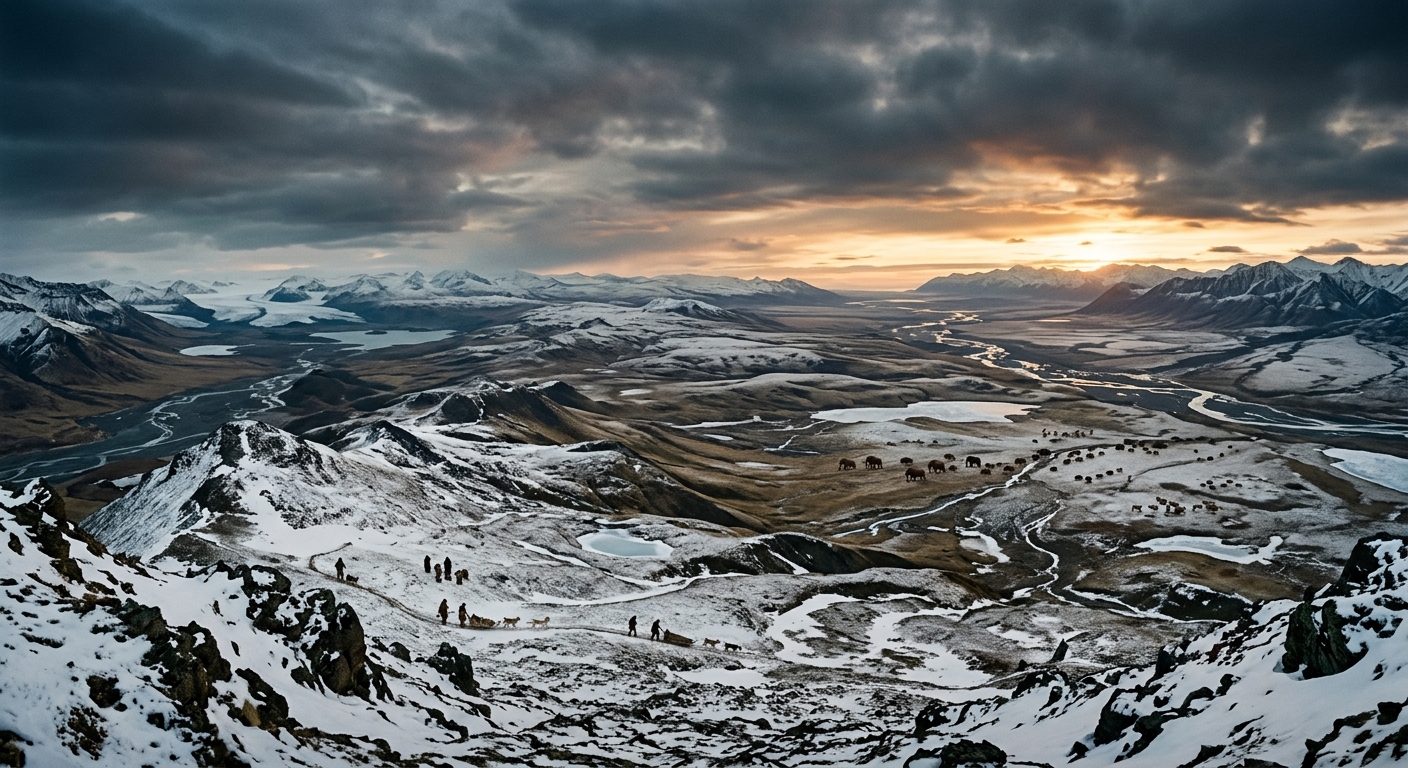
The Bering Land Bridge, known to scientists as Beringia, wasn’t just a narrow strip of land connecting two continents. This colossal landmass was roughly 1,000 miles wide from north to south, covering an area larger than Alaska and California combined. To put this in perspective, you could fit the entire state of Texas into this ancient land bridge and still have room left over.
What we now call the Bering Strait, the 55-mile stretch of water separating Russia from Alaska, was once a vast grassland teeming with life. Woolly mammoths, giant bison, cave lions, and saber-toothed cats roamed freely across this prehistoric superhighway, completely unaware they were traveling between continents.
The Ice Age’s Greatest Engineering Project
The existence of Beringia was made possible by one of Earth’s most dramatic climate events: the Last Glacial Maximum. During this period, which peaked around 20,000 years ago, massive ice sheets locked up so much of Earth’s water that global sea levels dropped by an astounding 400 feet. This dramatic drop exposed the shallow seafloor of the Bering Strait, creating a land connection that would remain stable for thousands of years.
The timing was perfect for one of the most significant migrations in human history. Early peoples from Asia, following herds of animals and seeking new hunting grounds, unknowingly became the first Americans as they crossed this natural bridge between worlds.
Life on the Bridge: A Prehistoric Paradise
Contrary to what you might expect from such a northern region, Beringia wasn’t a frozen wasteland. The land bridge supported a rich ecosystem that scientists call the “mammoth steppe” – a unique environment unlike anything that exists today.
The Megafauna Highway
This ancient landscape hosted an incredible array of now-extinct megafauna:
- Woolly Mammoths: These giants used Beringia as their personal superhighway, with some populations becoming isolated on islands when the bridge flooded
- American Cheetahs: Yes, North America once had its own species of cheetah that likely crossed via Beringia
- Giant Short-Faced Bears: Standing 12 feet tall on hind legs, these massive predators made the crossing to terrorize Ice Age America
- Steppe Bison: Much larger than modern bison, these creatures provided crucial sustenance for early human migrants
- Cave Lions: The largest cats that ever lived stalked prey across this ancient land
The Plant Life That Fed a Continent
The vegetation of Beringia was equally remarkable. Instead of the tundra that exists in the region today, the land bridge supported vast grasslands filled with nutritious herbs, sedges, and grasses. This rich plant life could support the massive herbivore populations that in turn fed the predators and early human hunters.
The Great Disappearing Act
As the Last Glacial Maximum came to an end around 15,000 years ago, global temperatures began to rise. The massive ice sheets that had locked up so much of Earth’s water started melting, and sea levels began their inexorable rise. The process wasn’t immediate – it took several thousand years for the rising waters to completely submerge the land bridge.
By 11,000 years ago, the last remnants of this continental connection had vanished beneath the waves. The Bering Strait as we know it today was born, forever separating Asia and America by water. The land bridge’s disappearance marked the end of free movement between the continents and isolated the Americas from the Old World for millennia to come.
Evidence Hidden in Plain Sight
Today, scientists piece together the story of Beringia through multiple lines of evidence. Genetic studies of both animals and plants show clear connections between Asian and American species that could only have occurred through land-based migration. Archaeological sites on both sides of the Bering Strait reveal similar tool technologies and cultural practices among ancient peoples.
Perhaps most remarkably, the seafloor of the Bering Strait still holds secrets from its dry past. Marine archaeologists have discovered mammoth tusks, ancient pollen, and even stone tools on the ocean bottom, direct evidence of the rich terrestrial ecosystem that once thrived there.
A Bridge That Changed Everything
The implications of the Bering Land Bridge extend far beyond a simple geographic curiosity. This temporary connection between continents facilitated one of the most significant population movements in human history, leading to the settlement of two entire continents. The cultures, languages, and civilizations that would eventually develop across the Americas all trace their origins back to those brave souls who crossed this ancient bridge.
The disappearance of Beringia also had profound effects on global ecosystems. Many of the megafauna that had freely moved between continents became isolated, contributing to extinction patterns that shaped the modern world. The flooding of the land bridge created new ocean currents and weather patterns that continue to influence global climate today.
Lessons from a Lost World
The story of the Bering Land Bridge serves as a powerful reminder of how dramatically our planet can change over relatively short periods. In just a few thousand years, an area larger than most countries completely disappeared beneath the ocean, taking with it an entire ecosystem and way of life.
As we face our own period of rapid climate change and rising sea levels, the tale of Beringia offers both warnings and wonder. It reminds us that the Earth we know today is just one snapshot in a constantly changing story, and that the seemingly permanent features of our world are often more temporary than we might imagine.

yo this is so wild, the beringia landbridge is actually a perfect example of how environmental changes can totally reshape entire civilizations, kinda like how a single pheromone trail can redirect thousands of ants and create completely different colony outcomes. imagine being part of those early migration waves and not even realizing you were walking on what would become an ocean floor, the sheer scale of it is insane. also totally agree with nick that seeing the actual ecosystem context makes it hit different than just reading “land bridge existed lol”
Log in or register to replyThis is such a perfect example of why I drag people to the paleontology wing on weekends, honestly. Once you see the timeline of sea level changes and actually grasp that Beringia wasn’t some narrow footpath but a full ecosystem with mammoths roaming around, it hits different. The museum I volunteer at just opened an exhibit showing how quickly that transition happened geologically, and watching people realize “oh, that’s why indigenous populations are genetically distinct” makes me think maybe there’s hope for getting folks to care about ecosystems before they vanish too.
Log in or register to replyomg yes the mammoths!! ppl always picture this like… narrow little bridge but it was literally a full landscape w/ grasslands and megafauna, thats so cool your museum is doing that exhibit. tbh theres something haunting about how fast these transitions can happen geologically but also like, its a great reminder that extinction isnt always this dramatic meteor event – sometimes its just rising water over thousands of years and boom, your whole migration route disappears. kinda makes u think about how we’re reshaping ecosystems right now but on a way shorter timescale lol
Log in or register to reply