
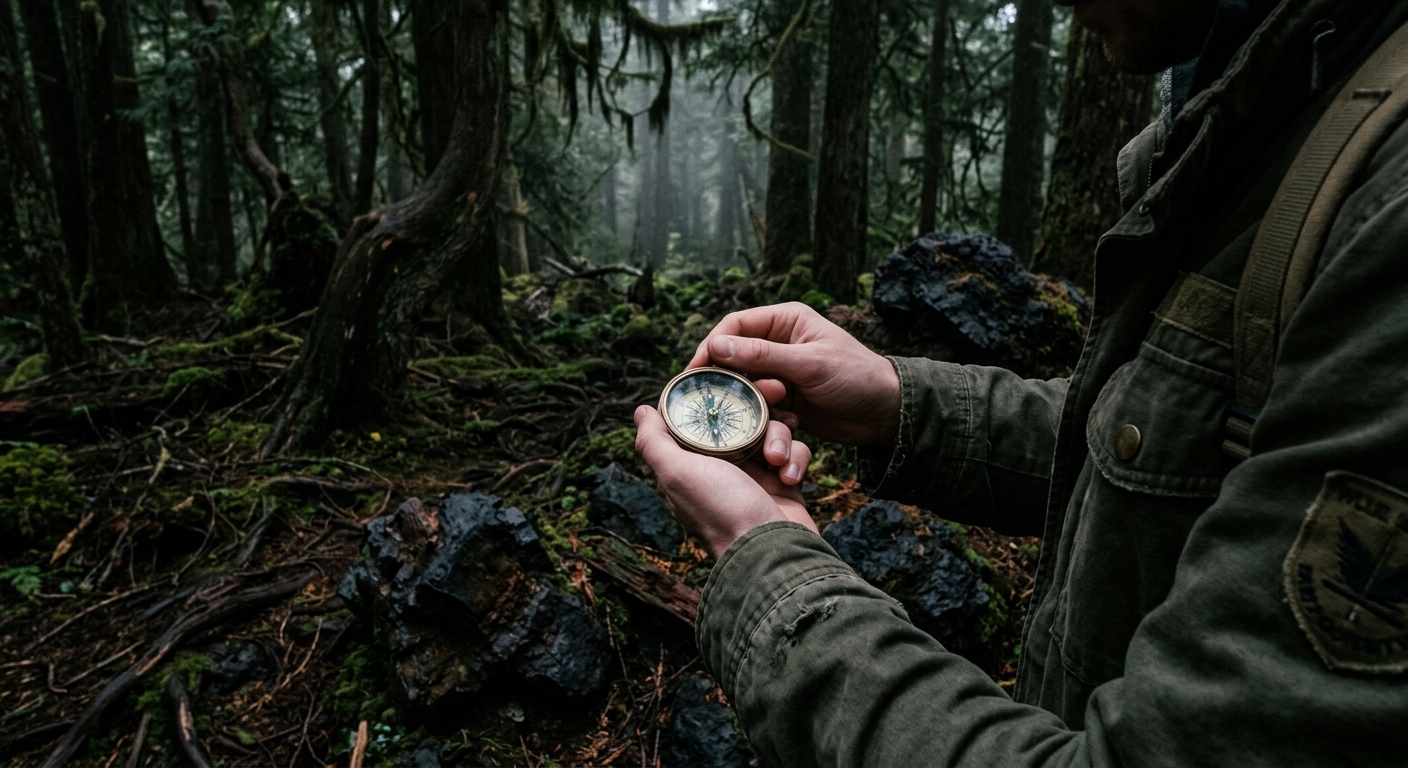
Deep within Japan’s mysterious woodlands lie forests that have captured the imagination of locals and visitors for centuries. These so-called ‘haunted forests’ are shrouded in eerie legends of supernatural phenomena, disorienting effects on visitors, and unexplained disappearances. But what if the ghostly reputation of these woodlands isn’t purely folklore? Recent scientific investigations have revealed that many of Japan’s most notorious haunted forests sit atop genuine geological anomalies that could explain their spine-chilling reputations.
The Science Behind the Supernatural
Japan’s haunted forests, including the infamous Aokigahara at the base of Mount Fuji, share a common geological foundation that creates very real physical effects on both electronic equipment and human perception. These forests are built upon ancient lava flows rich in iron and other magnetic minerals, creating localized magnetic field distortions that can wreak havoc on navigation equipment and potentially affect human physiology.
The magnetic anomalies in these regions are so pronounced that compasses spin wildly, GPS devices malfunction, and cell phones lose signal strength. This technological failure alone is enough to create a sense of unease and disorientation in modern visitors who rely heavily on electronic navigation. But the geological effects run much deeper than simple equipment failure.
Aokigahara: Where Science Meets the Supernatural
Perhaps no forest in Japan is more notorious than Aokigahara, also known as the Sea of Trees. This dense woodland sits on a massive lava flow that erupted from Mount Fuji over 1,000 years ago. The volcanic rock beneath the forest floor is incredibly porous and filled with iron-rich minerals that create a complex web of magnetic disturbances.
The Magnetic Maze Effect
The magnetic anomalies in Aokigahara create what researchers call a ‘magnetic maze effect.’ The distorted magnetic fields don’t just affect compasses; they can actually influence the human inner ear and vestibular system, which relies on tiny magnetic crystals called otoconia for balance and spatial orientation. This physiological interference can cause:
- Feelings of disorientation and vertigo
- Difficulty maintaining a straight path
- Persistent sensation of being watched or followed
- Auditory hallucinations due to pressure changes
- Heightened anxiety and paranoia
The Underground Network of Volcanic Chambers
Recent geological surveys using ground-penetrating radar have revealed that many of Japan’s haunted forests sit above complex networks of underground volcanic chambers and lava tubes. These subterranean spaces create acoustic anomalies that can amplify and distort sounds in unsettling ways.
The hollow spaces beneath the forest floor act like enormous resonance chambers, causing footsteps, voices, and wind to echo and reverberate in ways that can make visitors feel like they’re being followed or that voices are calling from unseen sources. The acoustic properties of these underground formations can make sounds appear to come from completely different directions, adding to the disorienting experience.
Infrasound: The Frequency of Fear
The geological structure of these forests also generates infrasound, sound waves below the range of human hearing but still detectable by our bodies. Wind moving through the complex underground chambers and across the uneven volcanic terrain creates these low-frequency vibrations. Research has shown that exposure to infrasound can trigger feelings of unease, anxiety, and even the sensation of a supernatural presence.
Gas Emissions and Their Psychological Effects
The volcanic geology beneath Japan’s haunted forests continues to release various gases through soil vents and cracks in the bedrock. These emissions include carbon dioxide, hydrogen sulfide, and various sulfur compounds that can affect human physiology and psychology in subtle but significant ways.
Elevated carbon dioxide levels in certain areas of these forests can cause:
- Mild hypoxia leading to confusion and poor decision-making
- Increased heart rate and feelings of panic
- Shortened attention span and memory problems
- Heightened emotional responses to stimuli
Meanwhile, hydrogen sulfide, even in low concentrations, can trigger stress responses and contribute to feelings of nausea and discomfort that visitors often interpret as supernatural warnings.
The Temperature Inversions and Microclimates
The unique geological features of these forests create distinctive microclimates characterized by sudden temperature drops, unusual humidity patterns, and persistent fog formations. The porous volcanic rock acts as a massive heat sink, while underground chambers create convection currents that can cause dramatic temperature fluctuations within very small areas.
These temperature inversions contribute to the forests’ eerie atmosphere by creating persistent mist and fog that can appear and disappear suddenly. The thermal effects also influence local air pressure, which sensitive individuals can feel as a oppressive or heavy sensation that many interpret as a supernatural presence.
Why These Forests Became Legendary
Understanding the geological basis for these forests’ strange effects helps explain why they developed supernatural reputations long before modern science could explain the phenomena. For centuries, people entering these woodlands experienced genuine physical and psychological effects that seemed to have no natural explanation.
The combination of disorientation, equipment failure, strange sounds, unusual weather patterns, and physiological stress created perfect conditions for supernatural interpretations. Visitors genuinely experienced something unusual and unsettling, but lacking scientific knowledge of magnetic fields, infrasound, and gas emissions, they naturally attributed these effects to ghostly or demonic influences.
Modern Research and Future Discoveries
Contemporary geologists and environmental scientists continue to study these remarkable forests using advanced technology including magnetometers, seismic sensors, and atmospheric analysis equipment. Each new study reveals additional layers of complexity in how geological factors create the psychological and physiological effects that gave these forests their haunted reputations.
This research not only demystifies the supernatural aspects of these locations but also provides valuable insights into how geological features can influence human behavior and perception. The findings have applications beyond folklore, offering important data for understanding how environmental factors affect mental health, navigation systems, and even urban planning in geologically active regions.
Japan’s haunted forests remain as mysterious and compelling as ever, but now we understand that their power comes not from supernatural forces but from the incredible complexity and activity of the Earth itself. These forests serve as powerful reminders that our planet continues to surprise us with phenomena that blur the line between the scientific and the seemingly supernatural.





That’s a really interesting point about sensory overload in dense forest environments. I haven’t explored tropical systems myself, but I’ve noticed something similar in heavily silted cave passages where visibility drops to inches and the acoustic properties get so warped that you lose all spatial reference, kind of like what you’re describing with that canopy complexity. I wonder if what feels “supernatural” in both cases is just our brains struggling to process unfamiliar sensory input rather than anything mysteriously magnetic, honestly seems like the simpler explanation when you’ve been disoriented in caves before.
Log in or register to replyThe geological angle here is fascinating, though I’d be curious whether those magnetic anomalies actually compare to the sensory disorientation I’ve experienced in dense tropical rainforests like Borneo’s lowland forests, where the sheer canopy complexity and humidity can genuinely mess with your sense of direction without any magnetic weirdness involved. It’s a good reminder that “supernatural” phenomena often have earthly explanations, but sometimes our brains are just overwhelmed by unfamiliar ecosystems – which honestly doesn’t make the experience any less intense or worthy of respect, especially given the tragic context of Aokigahara.
Log in or register to replyI appreciate the focus on actual geology here, but I’m noticing this post doesn’t mention what’s happening to the insect communities in these forests, which honestly matters more for understanding forest “health” than magnetic fields do. Places like Aokigahara have seen dramatic declines in insect biomass over recent decades, and that’s what’s actually reshaping these ecosystems from the ground up, affecting everything from pollination to food webs for birds and small mammals. The disorientation people experience might be real, but the real ecological story is the silent collapse of invertebrate populations that should be thrumming through those forests.
Log in or register to reply