
Hidden beneath the vast Pacific Ocean lies one of Earth’s most spectacular and mind-bending secrets: a massive underwater mountain that makes Mount Everest look like a small hill. This colossal submarine volcano, known as Tamu Massif, challenges everything we thought we knew about the limits of geological formations on our planet.
The Underwater Titan That Defies Imagination
When we think of the world’s largest mountains, our minds immediately turn to the towering peaks of the Himalayas. Mount Everest, standing at 29,032 feet above sea level, has long captured human imagination as the ultimate geological giant. But what if we told you that lurking 1,000 miles east of Japan, there’s a mountain so massive it could swallow Everest whole?
Tamu Massif, discovered in its full glory only in 2013, spans an area roughly the size of New Mexico—approximately 120,000 square miles. To put this in perspective, that’s about the same size as the entire British Isles. Rising from the ocean floor to within 6,500 feet of the Pacific’s surface, this underwater behemoth represents one of the largest single volcanoes ever discovered on Earth.
A Mountain Born from Fire
What makes Tamu Massif even more extraordinary is its origin story. This massive formation is what scientists call a shield volcano, created by enormous outpourings of lava that spread out in all directions from a central point. Unlike the steep, cone-shaped volcanoes we’re familiar with, shield volcanoes have gentle slopes and cover vast areas.
The volcano formed approximately 145 million years ago during the Cretaceous period, when dinosaurs still roamed the Earth. During its active period, Tamu Massif spewed forth massive quantities of basaltic lava, building layer upon layer over millions of years. The sheer volume of material ejected during its formation is almost incomprehensible—enough to bury the entire continental United States under several feet of rock.
The Science Behind the Giant
Researchers believe Tamu Massif formed at the intersection of three tectonic ridges, creating a perfect storm of geological conditions. This unique position allowed for an unprecedented outpouring of magma from deep within the Earth’s mantle. The volcano’s massive size suggests that during its formation, the underlying mantle plume—a column of hot rock rising from deep within the Earth—was extraordinarily powerful and long-lasting.
Comparing Giants: Tamu Massif vs. Mount Everest
The comparison between these two geological titans reveals just how massive Tamu Massif truly is:
- Volume: Tamu Massif contains approximately 600,000 cubic miles of material, making it roughly 50 times larger than Mount Everest by volume
- Base area: While Mount Everest’s base covers about 150 square miles, Tamu Massif sprawls across 120,000 square miles
- Height from base: Though Everest reaches higher above sea level, Tamu Massif rises about 13,000 feet from the ocean floor
- Age: Mount Everest is relatively young at 60 million years old, while Tamu Massif has existed for 145 million years
The Hidden World of Submarine Volcanoes
Tamu Massif is just one example of the incredible geological features hidden beneath our oceans. Scientists estimate that over 80% of all volcanic activity on Earth occurs underwater, yet we know remarkably little about these submarine giants. The ocean depths remain one of the least explored frontiers on our planet—we have better maps of the surface of Mars than we do of our own ocean floors.
These underwater volcanoes play crucial roles in our planet’s geology and climate systems. They help drive ocean circulation patterns, create unique ecosystems, and contribute to the formation of new ocean floor through seafloor spreading. Some submarine volcanoes are still active today, continuously reshaping the ocean floor in ways we’re only beginning to understand.
Modern Exploration and Discovery
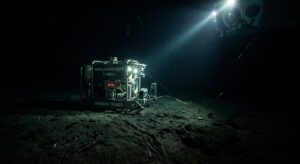
The full extent of Tamu Massif wasn’t recognized until relatively recently, thanks to advanced sonar mapping and drilling expeditions. The Integrated Ocean Drilling Program, an international scientific collaboration, has conducted extensive research on the formation, collecting core samples that revealed its true nature as a single, massive volcano rather than a collection of smaller volcanic features.
Implications for Understanding Earth
The discovery of Tamu Massif has profound implications for our understanding of volcanic processes and planetary geology. It suggests that during certain periods in Earth’s history, volcanic activity operated on scales far beyond anything we observe today. This has led scientists to reconsider theories about mantle dynamics, plate tectonics, and the thermal evolution of our planet.
Furthermore, studying formations like Tamu Massif helps researchers understand similar features on other planets. Mars, for instance, hosts Olympus Mons, a shield volcano even larger than Tamu Massif. By understanding how these massive volcanic structures form and evolve, we gain insights into geological processes throughout the solar system.
The Ocean’s Greatest Mysteries
Tamu Massif serves as a humbling reminder of how much we still don’t know about our own planet. Despite centuries of exploration and decades of advanced technology, the deep ocean continues to yield surprises that challenge our understanding of Earth’s geology, biology, and climate systems.
As technology continues to advance, who knows what other giants lie hidden in the ocean depths? Perhaps even larger formations await discovery, ready to once again reshape our perspective on the incredible planet we call home. The story of Tamu Massif reminds us that Earth still holds secrets that can surprise and amaze us, proving that sometimes the most extraordinary wonders are hiding in plain sight—or in this case, beneath miles of ocean water.


This is absolutely wild, though now I’m imagining the entire microbial ecosystem colonizing those deep hydrothermal vents around Tamu Massif, the chemosynthetic bacteria feeding sulfides, and then the fungi… oh man, the fungi adapted to that pressure and darkness. We think we know about extremophiles but honestly the fungal communities in deep ocean environments are so poorly understood compared to their bacterial neighbors, probably because they’re harder to culture. Has anyone looked at what fungal species might be thriving in those vent systems?
Log in or register to replyOkay so fungi in extreme environments absolutely deserve way more attention, and while I’m more of an arthropod person, I have to say some of the most incredible extremophiles I’ve photographed are actually the tiny crustaceans and copepods colonizing those vent systems – their adaptations are just insane! But you’re so right that fungi get overlooked, and honestly the chemosynthetic food webs around hydrothermal vents are like a completely alien ecosystem that makes me wonder what undiscovered arthropod communities are thriving down there too (because there’s always arthropods, let me tell you).
Log in or register to replyThis is such a cool discovery, and Frederica’s point about the microbial ecosystems around those hydrothermal vents really gets me thinking – I’ve spent time in rainforest canopies where the biodiversity in a single cubic meter can be staggering, but the deep ocean vents operate on such a completely alien scale of adaptation. What fascinates me is how these extreme environments, whether it’s the canopy or the abyssal zone around Tamu Massif, show us that life finds a way to thrive in the most impossible conditions, which makes the loss of accessible biodiverse spaces like rainforests feel even more urgent since we still don’t fully understand the ecosystem services
Log in or register to reply