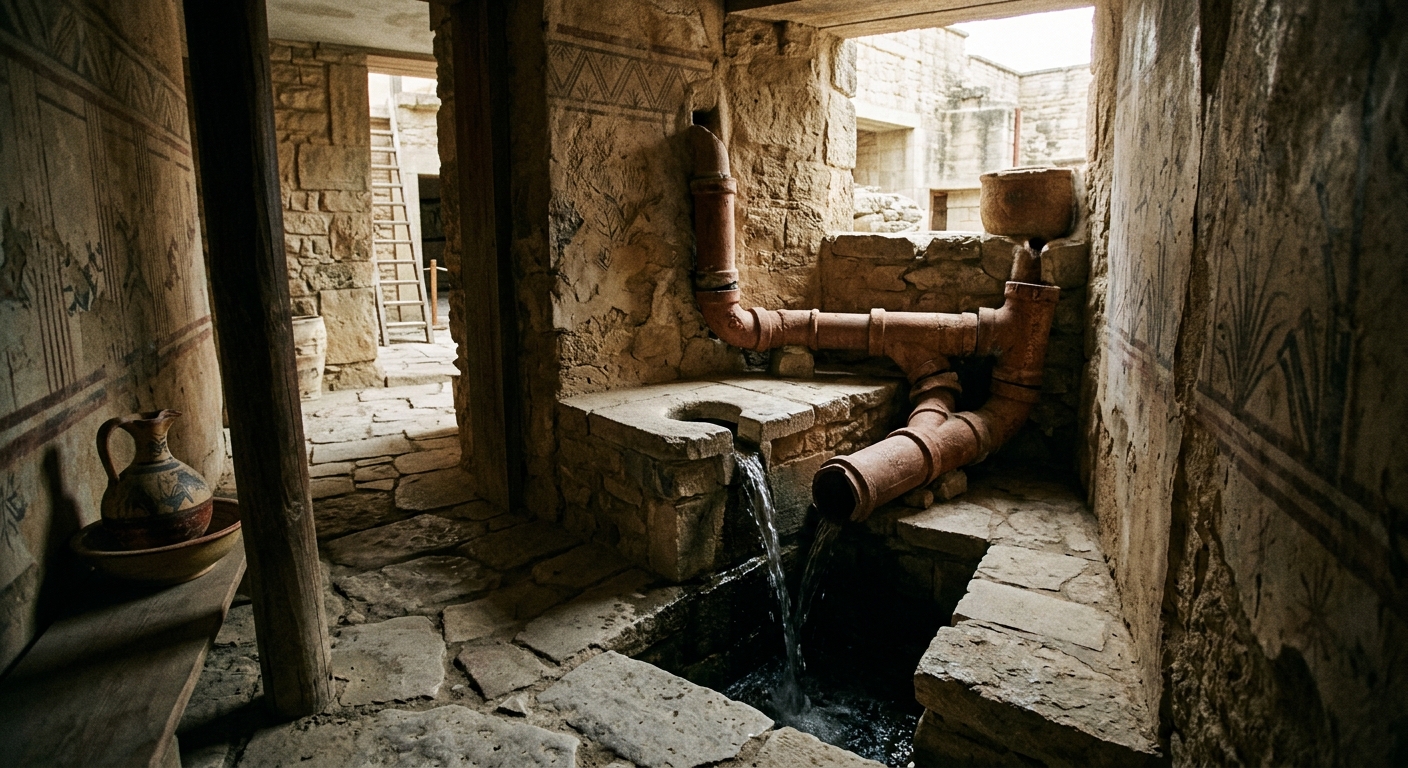
The mysterious Minoan civilization of ancient Crete had fully functional flush toilets and sophisticated indoor plumbing systems 4,000 years ago, complete with hot and cold running water. This Bronze Age technology was so advanced that it wouldn’t be matched in most of the world until the modern era.
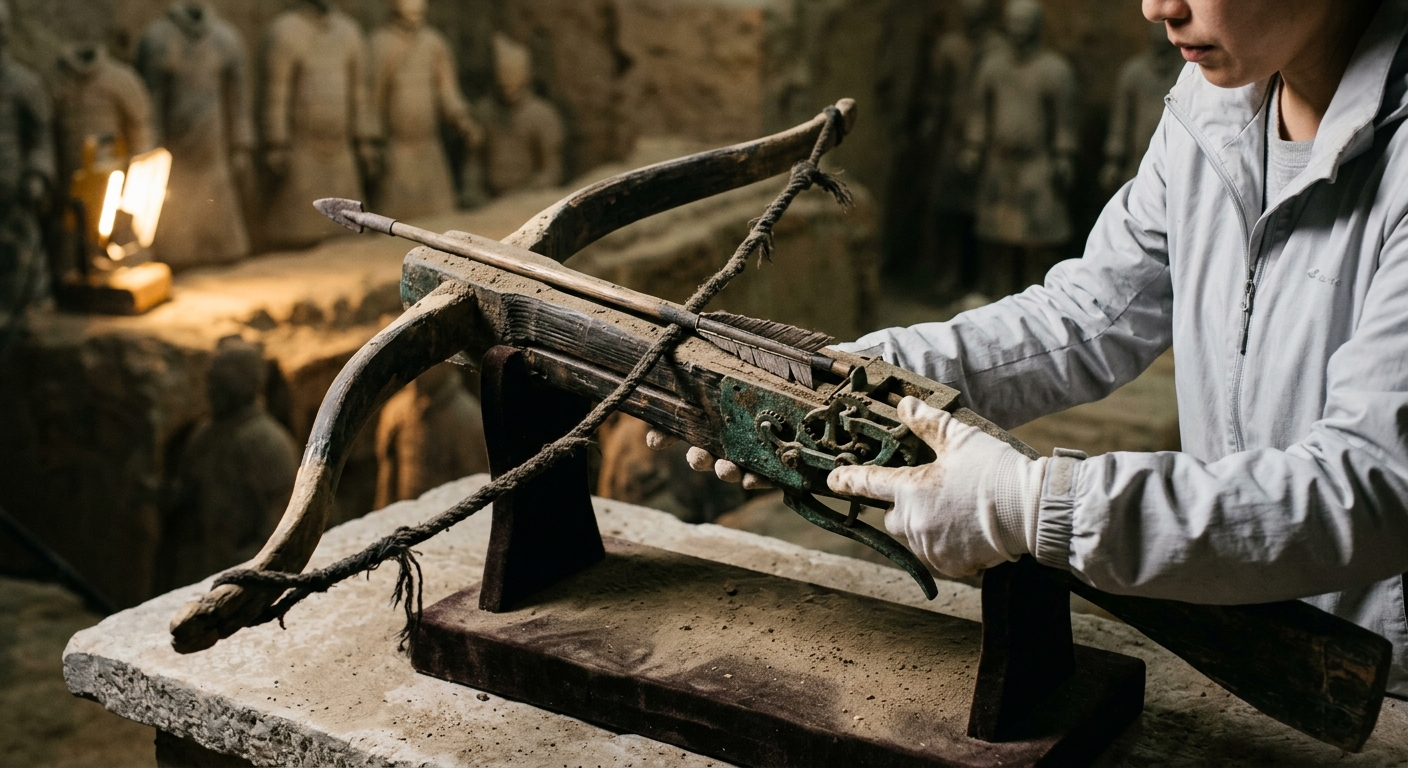
Archaeologists discovered crossbows buried with China’s Terracotta Army that remain fully functional after 2,200 years underground. These ancient weapons feature advanced metallurgy and precision manufacturing that wouldn’t be matched in Europe for another two millennia.
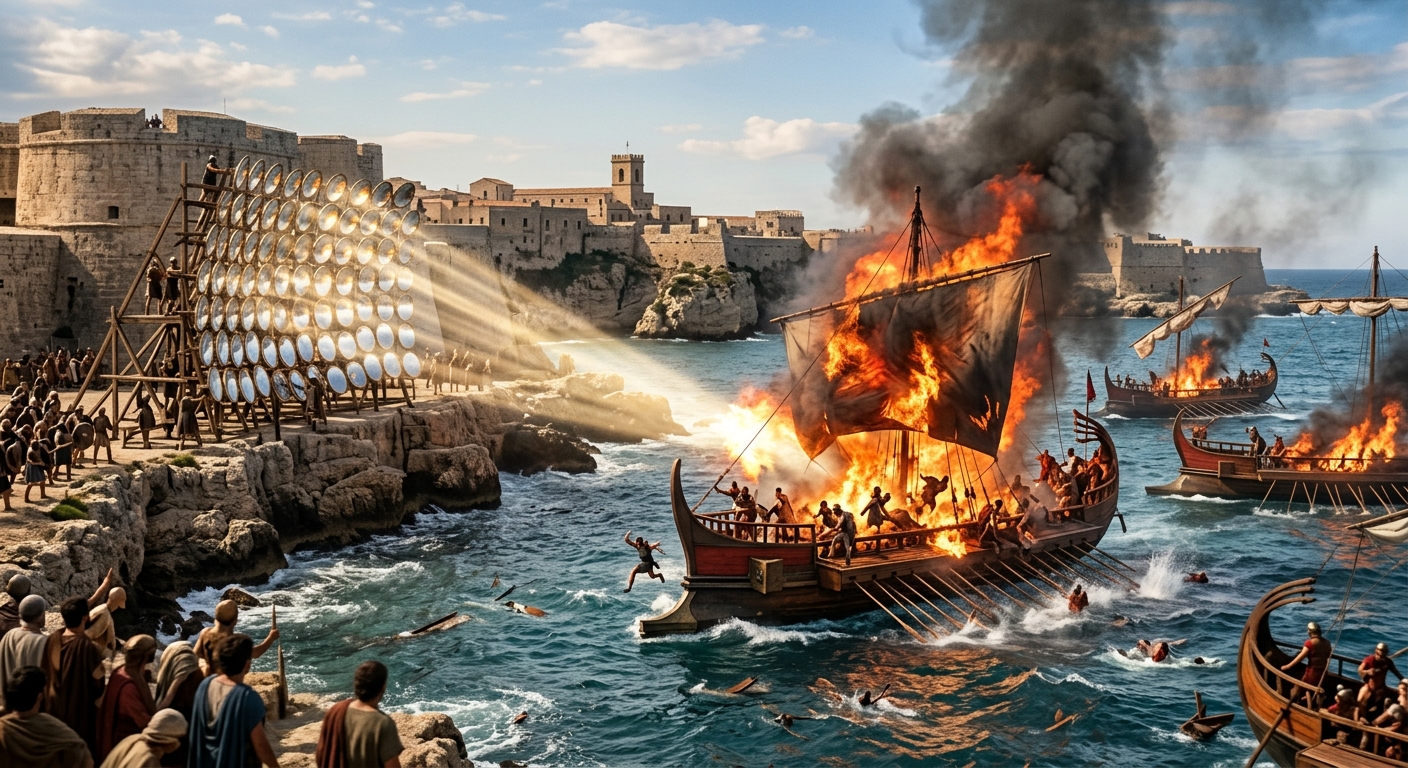
Ancient Greek engineers may have weaponized sunlight itself, using arrays of bronze mirrors to focus solar energy into devastating beams capable of igniting enemy ships. This legendary technology combined advanced mathematics with ingenious engineering in ways that still fascinate scientists today.
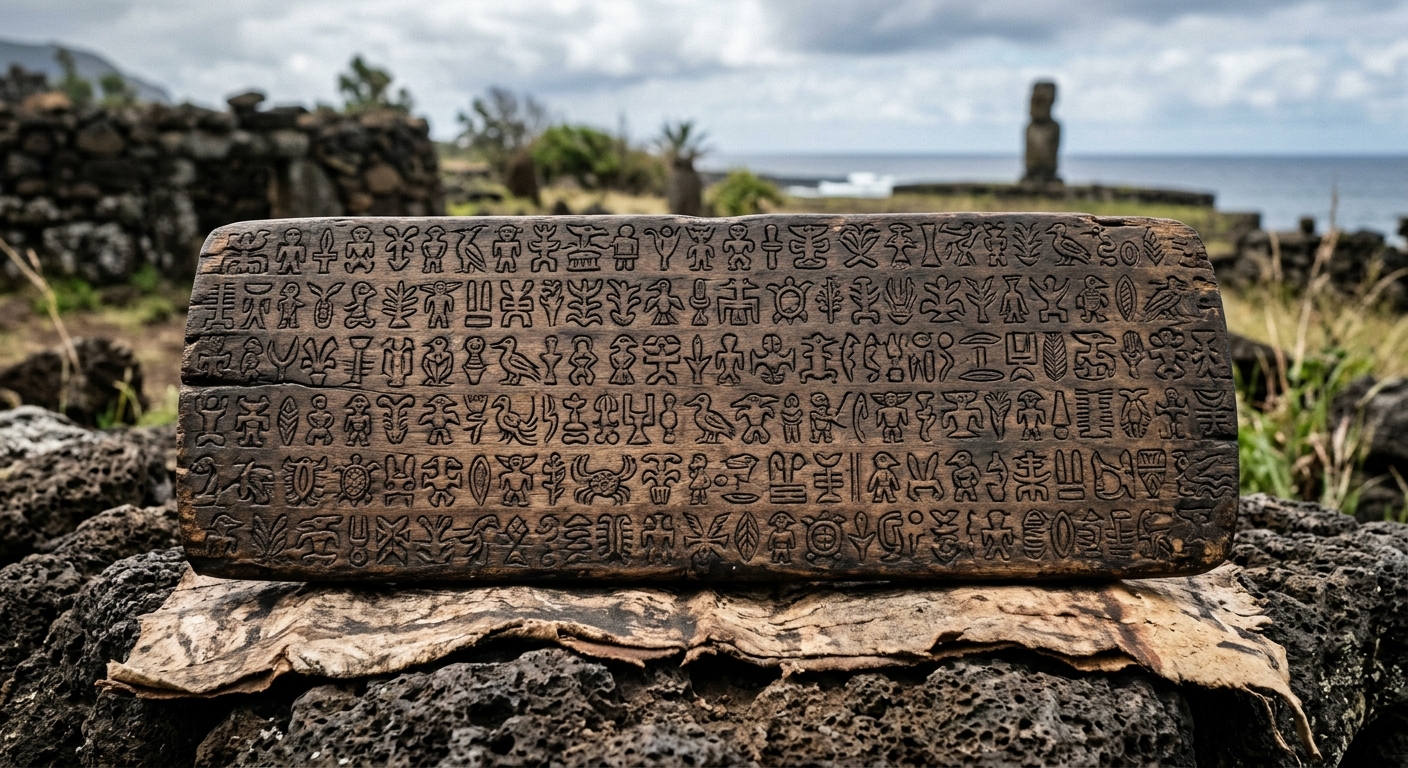
Easter Island’s rongorongo script is the only writing system ever independently developed in all of Oceania, consisting of mysterious glyphs carved into wooden tablets. Despite over a century of study, this unique script remains completely undeciphered, making it one of archaeology’s greatest unsolved mysteries.
Ancient Maya artisans created a brilliant blue pigment so durable it survived 1,500 years in tropical conditions without fading. When the secret technique vanished during Spanish conquest, it took modern scientists decades to discover the Maya had unknowingly invented the world’s first nanotechnology pigment.
Roman engineers created concrete that actually grows stronger over 2,000 years by using volcanic ash and seawater, while modern concrete crumbles in decades. Scientists are now racing to unlock this ancient formula that could revolutionize construction and solve our crumbling infrastructure crisis.
The tomb of China’s first emperor contains rivers of mercury that flow through underground chambers, creating a toxic environment too dangerous for modern archaeologists to explore. After 2,200 years, this deadly underground palace remains one of the world’s greatest unexcavated archaeological sites.
Four centuries before Gutenberg revolutionized Europe with his printing press, Chinese inventors had already mastered woodblock printing and even movable type. The world’s oldest printed book, the Diamond Sutra from 868 CE, reveals a sophisticated printing industry that was mass-producing books while Europeans were still copying manuscripts by hand.
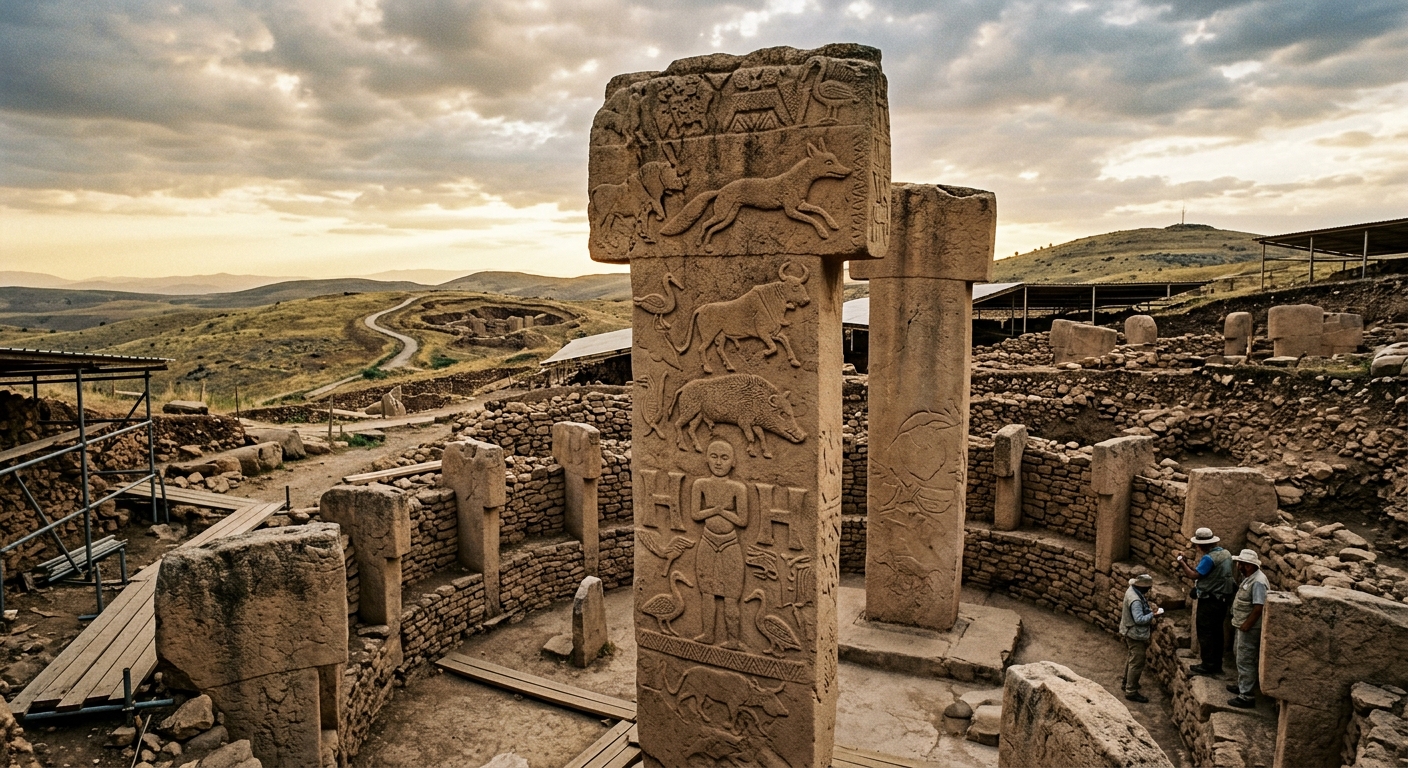
Gobekli Tepe, a 12,000-year-old temple complex in Turkey, predates Stonehenge by 6,000 years and was built by hunter-gatherers who weren’t supposed to have such advanced capabilities. This archaeological marvel has completely overturned our understanding of early human civilization and the development of complex society.
The Voynich Manuscript, a 600-year-old book filled with undecipherable text and impossible botanical illustrations, has defeated every codebreaker from WWII cryptographers to modern AI systems. This medieval mystery continues to guard its secrets despite centuries of attempts by the world’s most brilliant minds to crack its code.