Beneath the vast, snow-covered expanse of Siberia lies one of the most incredible and terrifying secrets on our planet. Hidden in the permanently frozen ground, known as permafrost, is a massive reservoir of carbon that dwarfs all human carbon emissions throughout history. This frozen time capsule contains approximately 1,700 billion tons of carbon, nearly twice as much as currently exists in the entire atmosphere.
What Exactly Is Permafrost?
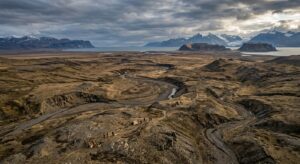
Permafrost is ground that remains frozen for at least two consecutive years, though most Siberian permafrost has been locked in ice for thousands or even millions of years. This frozen soil extends across roughly 24% of the Northern Hemisphere’s land surface, with Siberia containing the largest and deepest deposits on Earth. Some areas have permafrost extending down nearly 5,000 feet below the surface.
Think of permafrost as nature’s ultimate freezer, preserving organic matter in a state of suspended animation. When plants and animals died thousands of years ago, the extreme cold prevented their complete decomposition. Instead of releasing their carbon back into the atmosphere as CO2, these ancient organisms became locked in the frozen ground, accumulating layer upon layer over millennia.
The Mind-Blowing Scale of Siberian Carbon
To put this carbon reservoir into perspective, consider these staggering facts:
- The permafrost contains more carbon than all the world’s forests combined
- It holds approximately double the amount of carbon currently in our atmosphere
- Since the Industrial Revolution began around 1850, humans have emitted roughly 400 billion tons of carbon, less than a quarter of what’s stored in Siberian permafrost alone
- If just 10% of this carbon were released, it would equal all human emissions from the past 170 years
Scientists estimate that the top 10 feet of permafrost alone contains about 1,000 billion tons of carbon. But the carbon extends much deeper, with some deposits reaching extraordinary depths that researchers are only beginning to understand.
The Ancient History Locked in Ice
The carbon trapped in Siberian permafrost tells an incredible story of Earth’s past. Much of this organic matter dates back to the Pleistocene epoch, containing the remains of vast grasslands that once supported massive herds of mammoths, woolly rhinoceros, and other megafauna. Some carbon deposits are even older, preserving organic material from forests and wetlands that existed hundreds of thousands of years ago.
Researchers have discovered remarkably well-preserved specimens in the permafrost, including entire mammoth carcasses with intact DNA, ancient viruses, and plant material so well-preserved that it still contains viable seeds. This frozen archive provides invaluable insights into past climates and ecosystems.
The Ticking Time Bomb
Here’s where this fascinating geological phenomenon becomes deeply concerning. The Arctic is warming at twice the global average, causing permafrost to thaw at an unprecedented rate. As the frozen ground melts, microorganisms that have been dormant for thousands of years spring back to life and begin decomposing the ancient organic matter.
This decomposition process releases carbon dioxide and methane into the atmosphere. Methane is particularly problematic because it’s roughly 25 times more potent as a greenhouse gas than CO2 over a 100-year period. When permafrost thaws in waterlogged conditions, it produces methane; when it thaws in well-drained areas, it primarily releases CO2.
The Feedback Loop Effect
The release of carbon from thawing permafrost creates a dangerous feedback loop. As more greenhouse gases enter the atmosphere, global temperatures rise further, causing more permafrost to thaw, which releases more carbon, leading to additional warming. This self-reinforcing cycle could accelerate climate change far beyond current projections.
Scientists estimate that permafrost could release between 130 to 160 billion tons of carbon by 2100 under current warming scenarios. This would be equivalent to adding another major industrialized country’s worth of emissions to the atmosphere.
Recent Scientific Discoveries
Recent research has revealed even more startling facts about Siberian permafrost:
- Some areas are thawing 70 years earlier than scientists predicted just a decade ago
- Massive craters have appeared in Siberia, some over 100 feet wide, caused by methane explosions from thawing permafrost
- Ancient bacteria and viruses, some over 30,000 years old, are coming back to life as the ground thaws
- The rate of carbon release has accelerated significantly in recent years, with some regions now releasing more carbon than they absorb
Implications for Our Planet’s Future
The carbon locked in Siberian permafrost represents one of the largest potential sources of future greenhouse gas emissions on Earth. Unlike human emissions, which can theoretically be controlled through policy and technology, permafrost thawing is largely irreversible once it begins.
This massive carbon reservoir fundamentally changes how scientists think about climate change. It means that even if humans dramatically reduce emissions, the planet could continue warming due to natural feedback mechanisms like permafrost thaw. Understanding and monitoring this frozen carbon has become crucial for accurate climate modeling and planning.
The story of Siberian permafrost reminds us that our planet holds secrets of unimaginable scale, where ancient history and future climate intersect in ways that continue to astonish scientists. As we face the challenge of climate change, this frozen carbon time bomb serves as both a fascinating glimpse into Earth’s past and a sobering reminder of the delicate balance that governs our planet’s climate system.