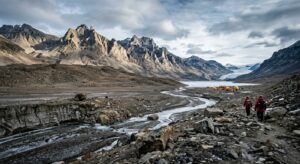
Imagine standing at the edge of what was once one of Earth’s most legendary bodies of water, only to find cracked, salt-crusted earth stretching to the horizon. This isn’t science fiction – it’s the very real future facing the Dead Sea, one of our planet’s most extraordinary natural wonders. This iconic saltwater lake, famous for allowing visitors to float effortlessly on its surface, is disappearing at an alarming rate of three feet per year, and scientists predict it could vanish entirely by 2050.
The Dead Sea: A Natural Wonder Under Threat
Located at the lowest point on Earth’s surface, 1,412 feet below sea level, the Dead Sea sits between Israel, Jordan, and the West Bank. This remarkable body of water has captivated humanity for millennia, earning mentions in biblical texts and attracting visitors from around the world who come to experience its unique properties.
The Dead Sea’s claim to fame lies in its extraordinary salt content. At nearly 35% salinity – almost ten times saltier than typical ocean water – it creates a density so high that human bodies become naturally buoyant. Swimmers find it virtually impossible to sink, leading to the surreal sight of people casually reading newspapers while floating on their backs.
But this natural marvel is facing an unprecedented crisis. Since the 1960s, the Dead Sea has lost more than one-third of its surface area, shrinking from approximately 1,000 square kilometers to just 605 square kilometers today. The water level continues to drop at an accelerating pace, leaving behind a trail of environmental and economic devastation.
The Perfect Storm: Why the Dead Sea Is Disappearing
Water Diversion: Stealing the Sea’s Lifeline
The primary culprit behind the Dead Sea’s demise is human intervention. The Jordan River, which historically provided the majority of the Dead Sea’s water input, has been heavily diverted for agricultural and urban use by surrounding countries. What was once a mighty river carrying 1.3 billion cubic meters of water annually to the Dead Sea now delivers a mere trickle of 100 million cubic meters – a staggering 92% reduction.
This dramatic decrease in freshwater input has broken the delicate balance that maintained the Dead Sea’s water levels for thousands of years. Without sufficient inflow to replace water lost through evaporation, the sea has entered a death spiral.
Climate Change Accelerates the Crisis
Rising temperatures in the region have intensified evaporation rates, creating a double blow to the already water-starved sea. As global warming pushes average temperatures higher, the Dead Sea loses even more water to the atmosphere, accelerating its decline.
Industrial Exploitation
Massive industrial operations on both the Israeli and Jordanian shores extract millions of tons of minerals and salts from the Dead Sea annually. These facilities, while economically important, further reduce water levels and disrupt the natural ecosystem.
Catastrophic Consequences: When the Sea Disappears
Environmental Destruction
The shrinking Dead Sea has created a landscape that resembles a disaster zone. As water levels recede, they leave behind thousands of sinkholes – some as large as basketball courts and 80 feet deep. These geological hazards have swallowed roads, buildings, and agricultural fields, making entire areas uninhabitable.
The retreating shoreline has also exposed salt flats that create massive dust storms when disturbed by wind. These storms carry toxic particles across the region, affecting air quality and human health in surrounding communities.
Economic Devastation
The Dead Sea’s decline threatens a multi-billion-dollar tourism industry. Hotels and resorts that were once waterfront properties now sit hundreds of meters from the shore, connected by increasingly long boardwalks that must be extended annually. Some facilities have been abandoned entirely as the shoreline retreated beyond practical reach.
The famous Ein Gedi Spa, once a premier destination for Dead Sea treatments, has had to relocate its facilities multiple times as the water continues its relentless retreat. Local communities that have depended on Dead Sea tourism for generations face an uncertain future.
Cultural and Historical Loss
The potential loss of the Dead Sea represents more than an environmental catastrophe – it threatens to erase a site of immense cultural and historical significance. This body of water has been mentioned in religious texts for over 2,000 years and has served as a natural wonder that connects modern visitors to ancient history.
Desperate Measures: The Race to Save an Icon
Recognizing the gravity of the situation, regional governments and international organizations have proposed various solutions, though none come without significant challenges and costs.
The Red Sea-Dead Sea Pipeline Project
The most ambitious proposal involves constructing a massive pipeline to transport water from the Red Sea to the Dead Sea, spanning over 200 kilometers. This project, estimated to cost several billion dollars, would theoretically provide enough water to stabilize Dead Sea levels while also generating hydroelectric power and providing desalinated water for the region.
However, environmental scientists worry about the potential consequences of mixing Red Sea water with the Dead Sea’s unique chemistry, which could trigger unpredictable ecological changes.
Water Management Reform
Some experts argue that the most sustainable solution involves reforming water management practices throughout the Jordan River basin. This would require unprecedented cooperation between Israel, Jordan, Syria, and Lebanon to reduce diversions and restore natural flow patterns.
A Ticking Clock
As we race toward 2050, the Dead Sea continues its relentless shrinkage, serving as a stark reminder of humanity’s impact on natural wonders. Whether through innovative engineering solutions or fundamental changes in how we manage precious water resources, the next two decades will determine if future generations will ever experience the wonder of floating effortlessly in Earth’s saltiest sea.
The Dead Sea’s plight represents more than the loss of a single natural wonder – it symbolizes the urgent need for international cooperation in addressing environmental crises before they become irreversible. Time is running out for this ancient wonder, and with it, a piece of our planet’s extraordinary legacy hangs in the balance.