The Day Earth’s Voice Was Heard Around the Globe
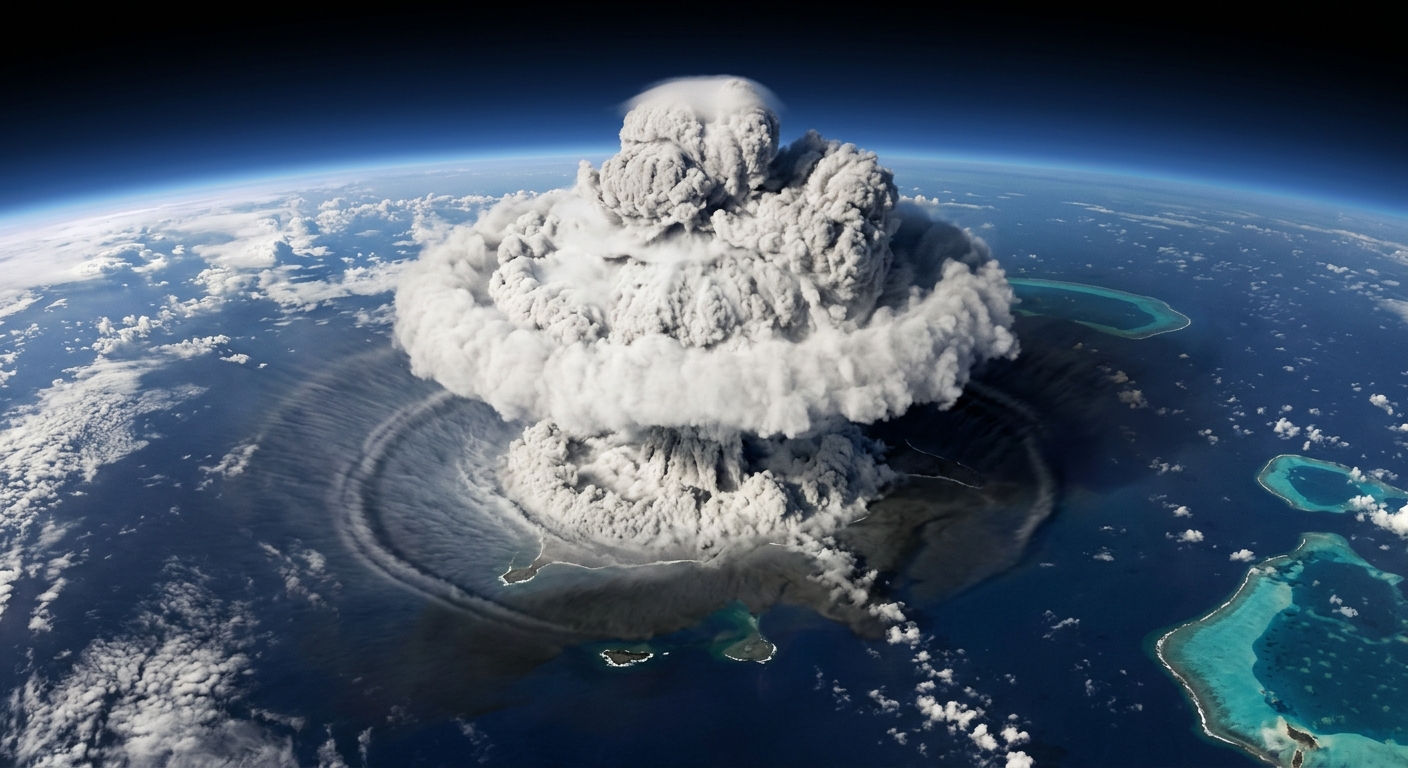
On January 15, 2022, at 17:20 UTC, the planet Earth let out a scream so loud it traveled around the world four times. The source of this geological roar was Hunga Tonga-Hunga Ha’apai, an underwater volcano in the South Pacific that produced the most powerful volcanic eruption witnessed in over 130 years. This wasn’t just another volcanic event; it was a cataclysmic explosion that redefined our understanding of volcanic power and its global impact.
The eruption was so extraordinary that it broke multiple records and defied scientific predictions. The blast was heard as far away as Alaska, over 6,000 miles from the source, making it audible across nearly half the planet. To put this in perspective, imagine standing in New York City and clearly hearing an explosion happening in Rome.
A Volcanic Explosion That Touched Space
What makes the Tonga eruption truly mind-boggling is not just its power, but how it literally reached into space. The explosion sent an ash plume soaring to an unprecedented height of 35 miles (57 kilometers) into the atmosphere, penetrating deep into the mesosphere. This made it the tallest volcanic plume ever recorded in the satellite era.
The eruption injected an estimated 150 million tons of water vapor into the stratosphere, increasing the total amount of water in this atmospheric layer by approximately 10%. This massive water injection was unlike anything scientists had previously observed, as most volcanic eruptions actually dry out the stratosphere through their sulfur dioxide emissions.
The Science Behind the Spectacular
Several factors combined to create this perfect storm of volcanic violence:
- Underwater Location: The volcano’s crater sat about 500 feet below sea level, creating ideal conditions for explosive interaction between magma and seawater
- Magma Composition: The magma was particularly gas-rich, contributing to the explosive nature of the eruption
- Rapid Depressurization: The sudden release of pressure created a chain reaction that amplified the explosion’s power
- Perfect Depth: The water depth was optimal for maximum explosive potential, neither too shallow nor too deep
Shock Waves That Circled the Earth
The eruption generated atmospheric pressure waves that were detected by weather stations around the globe. These shock waves traveled at the speed of sound, completing multiple laps around the Earth. Barometric pressure sensors in locations as distant as the United Kingdom recorded the passing waves, demonstrating the truly global nature of this geological event.
The pressure waves were so powerful that they triggered unusual weather phenomena thousands of miles away. Meteotsunami waves were observed along coastlines in the Caribbean, Mediterranean, and even the North Sea, caused purely by atmospheric pressure changes from the distant volcanic explosion.
Tsunamis Born from Thin Air
Perhaps most remarkably, the Tonga eruption created tsunamis through an extremely rare mechanism. While most tsunamis are caused by underwater earthquakes displacing water, Tonga’s tsunamis were generated primarily by atmospheric pressure waves. As the shock waves traveled across ocean surfaces, they created water displacement that manifested as tsunami waves.
These atmospheric tsunamis reached heights of up to 45 feet locally and triggered tsunami warnings across the entire Pacific Basin. Waves reached Japan within hours, demonstrating how a single volcanic event could threaten coastlines across the world’s largest ocean.
The Island That Disappeared and Reappeared
The eruption completely obliterated most of Hunga Tonga-Hunga Ha’apai island. Satellite images showed that approximately 90% of the island vanished during the explosion. However, in a fascinating twist of geological regeneration, volcanic activity has since begun rebuilding the island, with new land emerging from the sea within months of the eruption.
Global Climate Consequences
Unlike typical major volcanic eruptions that cool the planet through sulfur dioxide emissions blocking sunlight, the Tonga eruption had a warming effect. The massive water vapor injection into the stratosphere acts as a greenhouse gas, potentially contributing to warming temperatures for several years.
Climate scientists estimate that the eruption’s water vapor could remain in the stratosphere for 5-10 years, subtly influencing global weather patterns and potentially accelerating ice loss in polar regions. This makes Tonga unique among major volcanic eruptions in human history.
Technology Meets Ancient Power
The eruption occurred in the modern satellite age, providing scientists with unprecedented data collection opportunities. Multiple satellites captured the event in real-time, offering insights into volcanic processes that were previously impossible to study. Lightning detectors recorded over 400,000 lightning strikes during the eruption, creating one of the most intense lightning storms ever documented.
Social media platforms were flooded with real-time reports from across the Pacific as people shared their experiences of the pressure waves, unusual weather, and tsunami alerts. This created a unique global documentation of a major geological event through crowdsourced observations.
Lessons from Earth’s Fury
The Tonga eruption serves as a powerful reminder of our planet’s dynamic nature and the interconnectedness of Earth’s systems. It demonstrated how a single geological event can simultaneously affect the atmosphere, oceans, and climate on a global scale. The event has revolutionized volcanic monitoring systems and improved our understanding of how underwater volcanoes can impact the entire planet.
As we continue to study the long-term effects of this remarkable eruption, one thing remains clear: Earth still has the power to surprise us with displays of raw geological force that dwarf human capabilities and remind us of our place in the natural world.

This is fascinating timing because I’ve been following the seabird tracking data from the Pacific and there’s been some really noticeable behavioral shifts in migrating species post-Tonga, especially in the timing of their movements through traditional feeding zones. Patricia, your point about ocean disruption is crucial – I’m curious if anyone’s correlated the plankton bloom changes with GPS data from migrating whales or seabirds, since they rely so heavily on those productivity windows for refueling on their routes. The shock waves are cool and all, but the cascading effects on food webs probably mattered way more for animals with split-second migration windows than the atmospheric drama did.
Log in or register to replyokay so this is wild and all but can we talk about what happened to the plankton??? like the Tonga eruption dumped massive amounts of ash and sulfur compounds into the ocean and people are focused on the atmospheric shock waves when there’s an entire invisible biosphere down there getting absolutely disrupted. those microscopic organisms produce half the oxygen you’re breathing right now, and volcanic events can trigger phytoplankton blooms or total die-offs depending on the nutrient mix – it’s honestly as dramatic as any surface-level climate story, we just can’t see it without a microscope!
Log in or register to replyPatricia, YES thank you for bringing this up! The ocean impacts are honestly what keep me up at night because the Arctic food webs depend on those plankton blooms, and if Tonga disrupted nutrient cycling in ways we’re still trying to understand, that ripples all the way north to affect what polar bears and seals are eating. I’ve been trying to find good data on how the ash affected phytoplankton productivity globally because that’s literally the foundation of everything cold water ecosystems rely on.
Log in or register to reply