
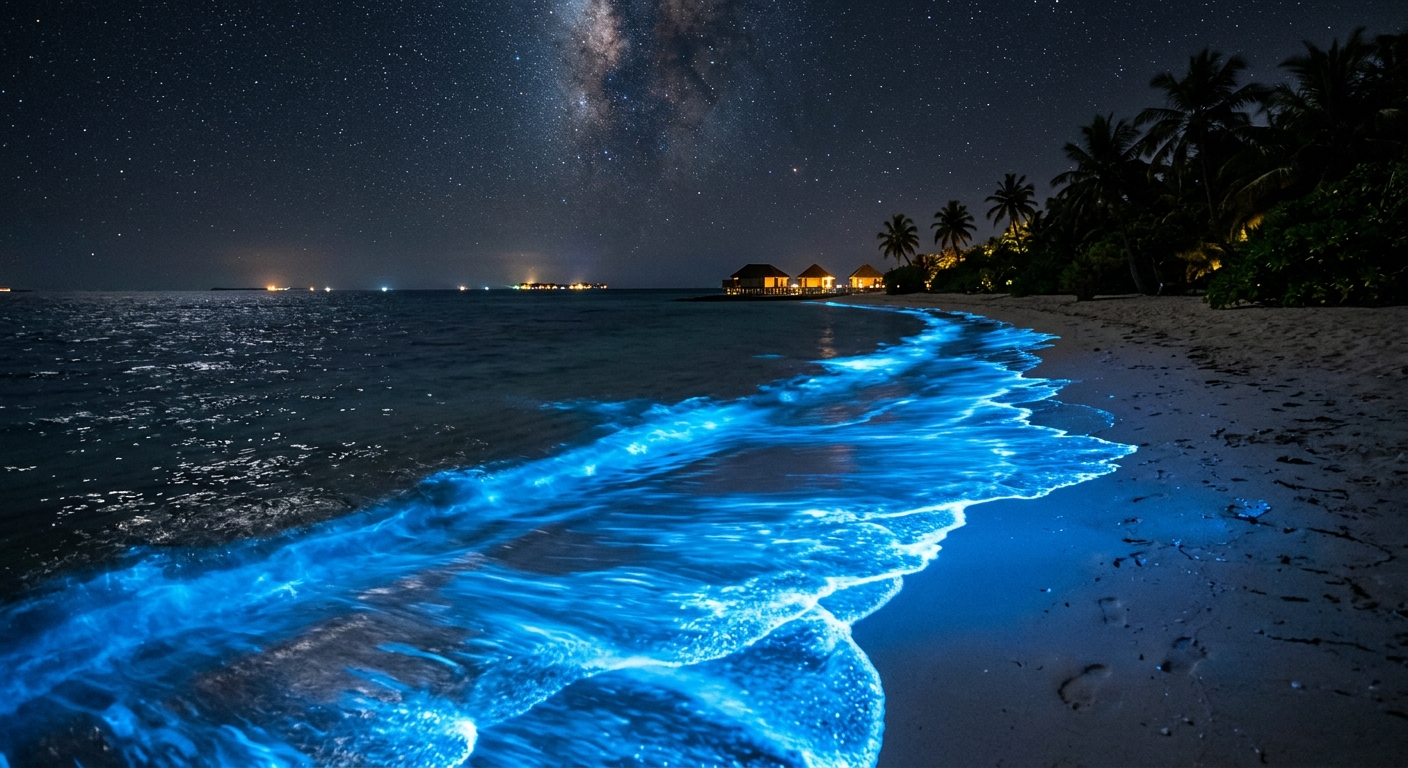
Imagine walking along a pristine beach under the cover of darkness, when suddenly the sand beneath your feet erupts into a brilliant blue glow with every step you take. This isn’t science fiction or a fever dream, it’s a real phenomenon that occurs on certain beaches in the Maldives, transforming tropical paradise into something that looks like it belongs on an alien planet.
The culprit behind this magical light show? Microscopic organisms called bioluminescent plankton that turn the ocean’s edge into nature’s most spectacular nightclub. When disturbed by waves, footsteps, or even a gentle touch, these tiny creatures emit an ethereal blue light that makes the water appear to be filled with liquid starlight.
The Science Behind the Spectacle
The primary species responsible for this breathtaking display is Lingulodinium polyedrum, commonly known as sea sparkle. These dinoflagellates are single-celled organisms that possess a remarkable ability: they can produce their own light through a chemical reaction called bioluminescence.
When these microscopic creatures are agitated by physical disturbance, they emit bright blue flashes lasting just a fraction of a second. The process involves a compound called luciferin, which reacts with the enzyme luciferase in the presence of oxygen. This reaction produces light without heat, making it one of the most efficient light sources known to science.
Why Do They Glow?
Scientists believe this bioluminescent defense mechanism serves multiple purposes:
- Predator Deterrent: The sudden flash of light can startle potential predators, giving the plankton a chance to escape
- Burglar Alarm: The bright light may attract larger predators that could eat whatever is threatening the plankton
- Communication: Some researchers suggest the light could serve as a form of communication between organisms
When and Where to Witness the Magic
While bioluminescent plankton can be found in various parts of the world, the Maldives offers some of the most reliable and spectacular displays. The phenomenon is most commonly observed on Vaadhoo Island, part of the Raa Atoll, where local tourism has dubbed it “the sea of stars.”
The best time to witness this natural light show is during the warmer months, typically from July to February, when plankton populations are at their peak. Several factors contribute to optimal viewing conditions:
Perfect Conditions for Blue Magic
- Dark nights: New moon phases provide the darkest skies, making the bioluminescence more visible
- Warm water temperatures: Plankton populations thrive in temperatures above 68°F (20°C)
- Nutrient-rich waters: Areas with higher concentrations of organic matter support larger plankton blooms
- Gentle wave action: Moderate surf provides enough disturbance to trigger the light without dispersing the organisms
The Delicate Balance of Marine Ecosystems
While these glowing displays are undeniably beautiful, they’re also indicators of complex marine ecosystem dynamics. Bioluminescent plankton blooms often occur when specific environmental conditions align, including water temperature, nutrient levels, and ocean currents.
Interestingly, while moderate plankton populations create these magical displays, massive blooms can sometimes indicate environmental stress. Climate change, pollution, and other human activities can disrupt the delicate balance that creates optimal conditions for bioluminescence.
Conservation Concerns
The increasing popularity of bioluminescent beach tourism has raised concerns among marine biologists. Heavy foot traffic, light pollution from photography equipment, and water contamination from sunscreens and other chemicals can negatively impact plankton populations.
Some beaches have implemented guidelines to protect these fragile ecosystems, including restrictions on flash photography, limitations on the number of visitors, and requirements to use reef-safe sunscreens during the day.
Other Bioluminescent Hotspots Around the World
While the Maldives offers some of the most accessible bioluminescent experiences, similar phenomena occur in other locations around the globe:
- Mosquito Bay, Puerto Rico: Home to the brightest bioluminescent bay in the world
- Holbox Island, Mexico: Features seasonal bioluminescent displays from July to September
- Torrey Pines State Beach, California: Occasional red tide events create spectacular blue waves
- Mission Bay, San Diego: Regular bioluminescent activity during warmer months
- Jervis Bay, Australia: Known for its bright blue bioluminescent displays
The Photography Challenge
Capturing bioluminescence on camera presents unique challenges for photographers. The light emitted by plankton is relatively dim and short-lived, requiring specific techniques:
- Long exposure times (15-30 seconds)
- High ISO settings (1600-6400)
- Wide aperture lenses (f/1.4-f/2.8)
- Sturdy tripods to prevent camera shake
- Manual focus set to infinity
Many photographers recommend bringing a red flashlight to preserve night vision while adjusting camera settings, as white light can temporarily blind you to the subtle blue glow.
Planning Your Bioluminescent Adventure
If you’re planning to witness this natural wonder, timing is crucial. Check local weather conditions, moon phases, and recent plankton activity reports. Many resorts in the Maldives offer guided bioluminescence tours, which can significantly increase your chances of seeing the phenomenon.
Remember that bioluminescence is a natural occurrence that can’t be guaranteed. Patience and flexibility in your travel plans will greatly improve your odds of experiencing this magical display.
The glowing beaches of the Maldives offer more than just a stunning visual experience; they provide a window into the incredible complexity and beauty of marine ecosystems. As climate change and human activity continue to impact our oceans, these bioluminescent displays serve as both a celebration of nature’s wonder and a reminder of what we stand to lose if we don’t protect these fragile environments.


You’re absolutely right about the nuance, Pete, and honestly this is why I’m obsessed with getting people to experience bioluminescence in person at like 2am when it’s darkest. The dinoflagellates light up so differently depending on water temperature and disturbance, and it hits different when you’re actually there watching it respond to your movement rather than just reading about the mechanism. Have you noticed how light pollution is messing with these displays in a lot of coastal areas? I feel like it’s the kind of subtle ecological shift people don’t realize they’re missing.
Log in or register to replyThis is such a cool example of bioluminescence as a chemical defense mechanism, though I’d gently push back on “defending themselves” being the full story – it’s actually way more nuanced than that! The dinoflagellates doing most of the work in those displays use luciferin compounds that emit light through an oxidation reaction, and while it *might* startle predators, scientists think the main function is actually to attract larger predators to eat the ones attacking them – basically weaponizing light as a dinner bell against their attackers. The real beauty is how these organisms evolved to exploit the exact chemistry needed to make photons under water conditions, which is genuinely harder than terrestrial bioluminescence
Log in or register to replyOh man, I’m so glad you two are talking about the dinoflagellates because everyone always glosses over the actual organisms doing the glowing, but also can we talk about how some bioluminescent dinoflagellates use their light to attract predators to eat their predators? It’s absolutely bonkers and way more complex than just “defense” – honestly I need to get some macro shots of these guys under the microscope because their structure is just as mind-blowing as the light show itself.
Log in or register to reply