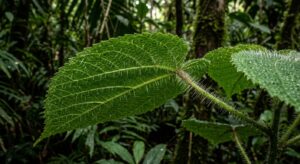
A Plant Born from Darkness
Deep in the shadows of European forests grows a plant so beautiful and so deadly that it earned names whispered in both desire and terror. Atropa belladonna, known as deadly nightshade or simply belladonna, carries within its glossy black berries enough poison to kill a grown man. Yet for centuries, this sinister beauty was deliberately cultivated, harvested, and used by those who understood its dual nature as both enhancer of beauty and bringer of death.
The very name “belladonna” translates to “beautiful woman” in Italian, a moniker that hints at the plant’s most famous cosmetic application. But this innocent-sounding name masks a darker truth: this same plant has been responsible for countless deaths throughout history, wielded by assassins, witches, and poisoners who knew exactly how to harness its lethal power.
The Science Behind the Seduction
What makes belladonna both alluring and lethal lies in its chemical composition. The plant contains a cocktail of tropane alkaloids, primarily atropine, scopolamine, and hyoscyamine. These compounds are what botanists call anticholinergics, meaning they block the action of acetylcholine, a crucial neurotransmitter in both the central and peripheral nervous systems.
When applied to the eyes, these alkaloids cause the pupils to dilate dramatically by paralyzing the iris sphincter muscle. This pupil dilation, known medically as mydriasis, was considered the height of beauty in Renaissance Europe. Wide, dark pupils were thought to make women appear more youthful, mysterious, and sexually attractive. The dilated pupils created an almost hypnotic gaze that was believed to be irresistible to potential suitors.
The Beauty Ritual That Could Kill
Italian women of the 15th and 16th centuries would carefully extract juice from belladonna berries and apply tiny drops directly into their eyes before social gatherings. The effect was immediate and dramatic: pupils would expand to nearly twice their normal size, creating an otherworldly, captivating appearance that became synonymous with Italian beauty.
However, this beauty treatment came with severe risks. The same compounds that dilated pupils could easily be absorbed through the mucous membranes of the eyes and enter the bloodstream. Even small amounts could cause:
- Severe headaches and dizziness
- Rapid heartbeat and elevated blood pressure
- Confusion and disorientation
- Hallucinations and delirium
- Complete loss of vision for days or weeks
- In extreme cases, coma and death
Many women paid the ultimate price for beauty, accidentally poisoning themselves in pursuit of the perfect gaze.
A Weapon Hidden in Plain Sight
While wealthy women risked their lives for beauty, belladonna found an even darker purpose in the hands of those with murderous intent. The plant’s berries, sweet-tasting and resembling harmless blueberries, became the perfect vehicle for assassination. Just two to five berries contained enough alkaloids to kill an adult, making belladonna one of history’s most effective botanical weapons.
Ancient Romans were among the first to weaponize the plant. Historical accounts suggest that belladonna was used to poison enemy water supplies during sieges. The alkaloids would cause mass hallucinations, confusion, and death among opposing forces, effectively ending battles without traditional combat.
The Assassin’s Garden
During the Middle Ages and Renaissance, belladonna became synonymous with court intrigue and political assassination. The plant was so closely associated with murder that its mere presence in a garden could be considered evidence of treasonous intent. Professional poisoners, often women who served as food tasters or servants in noble households, would cultivate belladonna alongside other deadly plants like hemlock and foxglove.
The perfect crime often involved mixing belladonna extract into wine or food. The victim would experience what appeared to be a sudden illness: fever, delirium, and eventually death. In an era before modern toxicology, these symptoms were often attributed to natural causes or divine punishment rather than deliberate poisoning.
Witches, Sorcerers, and Flying Ointments
Perhaps no association is stronger in folklore than that between belladonna and witchcraft. The plant was a key ingredient in what medieval texts called “flying ointments” or “witches’ salves.” These topical preparations were said to allow witches to fly to their sabbats, but the reality was far more grounded in pharmacology than magic.
These ointments typically contained belladonna along with other psychoactive plants like henbane and mandrake. When applied to sensitive areas of skin, the alkaloids would be absorbed into the bloodstream, causing powerful hallucinations that could indeed make users feel as though they were flying. The sensation was so realistic that many believed they had actually left their bodies and traveled through the air.
This connection between belladonna and supernatural experiences led to its inclusion in countless witch trials. Possession of the plant was often considered evidence of practicing dark magic, and many innocent herbalists and healers were executed simply for growing or using belladonna.
Modern Medicine Tames the Beast
Today, the same compounds that made belladonna both beautiful and deadly have found legitimate medical applications. Atropine, extracted and purified from the plant, is now a life-saving medication used in hospitals worldwide. It treats certain types of poisoning, helps regulate heart rhythm during cardiac emergencies, and is used by ophthalmologists to dilate pupils for eye examinations, the same effect Renaissance women sought for beauty.
Scopolamine, another belladonna alkaloid, has found use in treating motion sickness and as a pre-anesthetic medication. However, it has also gained notoriety as a “date rape drug” due to its ability to render victims compliant and amnesic, proving that the dark legacy of belladonna continues into the modern era.
The Enduring Mystery
Belladonna remains one of nature’s most fascinating paradoxes: a plant that embodies both ultimate beauty and absolute death. Its story reflects humanity’s complex relationship with the natural world, our willingness to risk everything for aesthetic perfection, and our ingenious ability to find both healing and harm in the same source.
Today, while belladonna still grows wild in many parts of Europe and has been introduced to other continents, its deadly reputation is well established. Modern poisoning cases are rare but not unheard of, usually involving children who mistake the attractive berries for edible fruit or curious adults who underestimate the plant’s potency.
The legacy of belladonna serves as a powerful reminder that in nature, beauty and danger often walk hand in hand, and that the line between medicine and poison can be as thin as a single drop falling into a Renaissance woman’s eye.