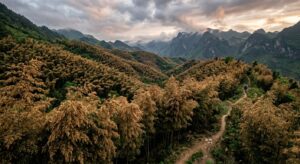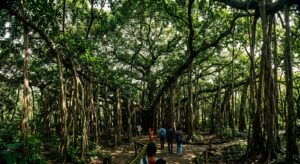
In the depths of a seemingly peaceful forest, a silent chemical war rages overhead. When insects begin munching on leaves, trees don’t just stand there and take it. Instead, they launch one of nature’s most sophisticated defense strategies, using a compound that might sound surprisingly familiar: aspirin. Yes, the same chemical sitting in your medicine cabinet is being deployed as a plant distress signal that can save entire forest communities.
The Secret Language of Trees
For decades, scientists have known that plants can communicate, but the discovery of aspirin as a chemical messenger revealed just how advanced this botanical communication network really is. When a tree detects insect damage, it doesn’t just produce aspirin for its own defense. It releases this chemical into the air as a volatile organic compound, creating an airborne alarm system that neighboring plants can detect and respond to.
This process, known as induced systemic resistance, transforms individual trees into community guardians. The moment one tree comes under attack, it begins broadcasting a chemical SOS that can travel through the air to warn other plants in the vicinity. It’s like a biological early warning system that has been operating for millions of years, long before humans ever dreamed of telecommunication.
How Plant Aspirin Actually Works
The aspirin that plants produce, scientifically known as salicylic acid, serves multiple critical functions in plant defense:
- Immediate Protection: It acts as an antimicrobial agent, preventing bacteria and fungi from infecting wounds left by insect feeding
- Immune System Activation: It triggers the plant’s immune response, ramping up production of defensive compounds
- Neighbor Alert System: When released into the air, it warns nearby plants to prepare their defenses
- Insect Deterrent: The compound can make leaves less palatable to insects, encouraging them to move elsewhere
What makes this system particularly remarkable is its efficiency. Plants can detect aspirin concentrations in the air at incredibly low levels, sometimes just a few parts per billion. This sensitivity allows the warning system to work across considerable distances, with some studies showing communication between trees separated by 20 feet or more.
The Willow Tree Connection
The connection between plant aspirin and human medicine isn’t coincidental. For over 2,000 years, humans have used willow bark to treat pain and fever, unknowingly tapping into the same salicylic acid that plants use for defense. Willow trees are particularly rich in this compound because they’re frequently attacked by insects and need robust defense mechanisms.
In 1838, Italian chemist Raffaele Piria first isolated salicylic acid from willow bark, and by 1897, Felix Hoffmann had developed the modified version we know as aspirin. Little did these early chemists know they were reverse-engineering a sophisticated plant communication system that had been operating for eons.
Beyond Willows: The Aspirin Producers
While willows are the most famous aspirin producers, they’re far from alone. Many plant species manufacture salicylic acid for defense and communication:
- Tobacco plants: Generate massive amounts when under viral attack
- Arabidopsis: A model organism showing how aspirin moves through plant tissues
- Rice: Uses aspirin signaling to coordinate defense against fungal infections
- Tomatoes: Produce aspirin to defend against bacterial and viral pathogens
- Birch trees: Contain high levels of aspirin compounds in their bark
The Science Behind Plant Communication
Recent research has revealed the intricate mechanisms behind this plant communication network. When an insect begins feeding, the mechanical damage and chemical compounds in insect saliva trigger a cascade of molecular events within the plant. Special enzymes convert stored compounds into salicylic acid, which then travels through the plant’s vascular system like a chemical alarm bell.
Some of this aspirin is released through the plant’s stomata (leaf pores) as methyl salicylate, a volatile form that can travel through the air. Neighboring plants detect this airborne signal through their own stomata and immediately begin preparing their defenses, even though they haven’t been attacked yet.
This preemptive defense strategy, called priming, allows plants to respond faster and more effectively when they are eventually attacked. It’s like a biological version of a neighborhood watch program, where one plant’s misfortune becomes everyone’s early warning.
Implications for Agriculture and Conservation
Understanding plant aspirin communication has opened new possibilities for sustainable agriculture. Farmers and researchers are exploring ways to harness this natural defense system to protect crops without relying heavily on pesticides. By treating plants with small amounts of salicylic acid, it’s possible to activate their natural defense mechanisms and make them more resistant to insect attacks.
This discovery also highlights the importance of biodiversity in natural ecosystems. In diverse plant communities, the aspirin communication network creates a web of mutual protection that benefits the entire ecosystem. Monoculture farming, by contrast, may disrupt these natural communication networks and make crops more vulnerable to widespread insect damage.
The Bigger Picture
The aspirin defense system represents just one example of the sophisticated chemical communication networks that surround us in nature. Every day, plants are sending and receiving chemical messages that help them survive, thrive, and protect their communities. This hidden world of plant communication challenges our assumptions about the passive nature of plant life and reveals a dynamic, interconnected web of botanical intelligence.
Next time you take an aspirin for a headache, remember that you’re using a compound that has been serving as nature’s emergency broadcast system for millions of years. In the plant world, aspirin isn’t just medicine – it’s a lifeline that connects individual organisms into a resilient, communicating community. The trees around you aren’t silent observers of the world; they’re active participants in a chemical conversation that spans forests, fields, and gardens, using the same molecule that sits in your medicine cabinet to call for help when danger strikes.