
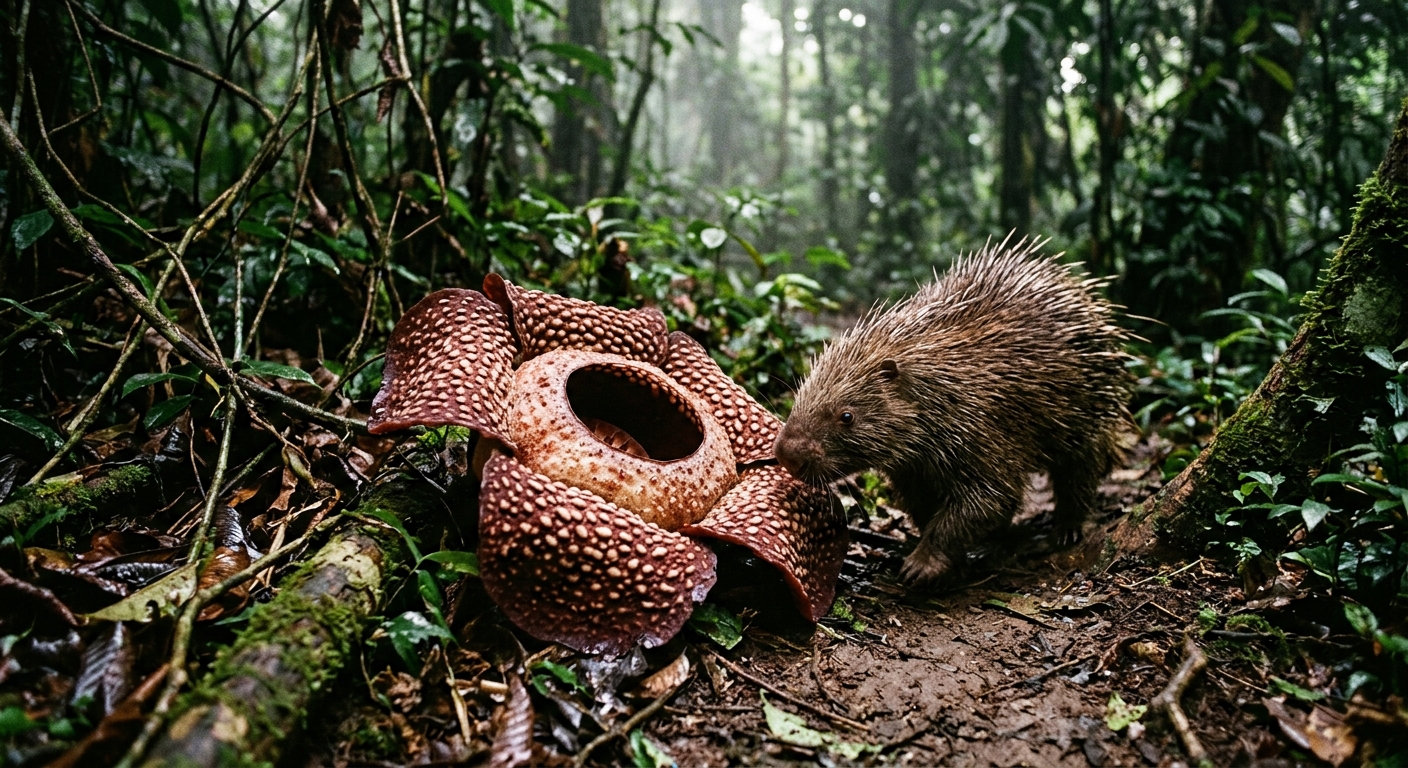
Deep in the rainforests of Southeast Asia lurks one of nature’s most sinister and sophisticated predators. But this isn’t a tiger or a snake. It’s a flower. Meet the Corpse Lily (Rafflesia arnoldii), a parasitic plant that has evolved one of the most disturbing abilities in the natural world: the power to detect the scent of blood from passing animals and use that information to time its massive, rotting blooms.
The World’s Largest Flower Has a Bloody Secret
The Corpse Lily holds the record as the largest individual flower on Earth, with blooms reaching up to three feet in diameter and weighing as much as 24 pounds. But size isn’t its most remarkable feature. This botanical vampire has developed an extraordinary sensory system that allows it to detect chemical signatures in the air, including the metallic scent of blood from wounded or menstruating animals.
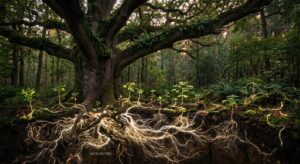
Unlike most plants that rely on visual cues like sunlight or seasonal changes to determine when to bloom, Rafflesia arnoldii has evolved to be a chemical detective. Its underground root system, which parasitizes host vines, contains specialized chemoreceptor cells that can identify specific organic compounds carried on air currents. When these cells detect the iron-rich molecules found in blood, along with other biological markers from potential animal visitors, the plant begins its bloom cycle.
The Science Behind the Supernatural Ability
This blood-sensing ability isn’t magic, but rather an extreme example of evolutionary adaptation. The Corpse Lily has developed what botanists call “enhanced chemosensory perception,” a trait typically associated with predatory animals rather than plants. The flower’s sensing mechanism works through a complex network of:
- Specialized root hairs: These microscopic structures contain chemoreceptor proteins similar to those found in animal olfactory systems
- Chemical processing nodes: Clusters of cells that analyze and interpret different molecular signatures
- Signal transmission pathways: A communication network that carries chemical information throughout the parasitic root system
- Bloom trigger mechanisms: Cellular switches that initiate the flowering process when specific chemical thresholds are met
Research conducted by the University of Bogor in Indonesia has shown that the plant can detect blood compounds at concentrations as low as parts per billion, making it more sensitive than many electronic chemical sensors. This ability allows the Corpse Lily to sense bleeding animals from distances of up to several miles, depending on wind conditions and terrain.
The Perfect Predator’s Strategy
But why would a plant need to smell blood? The answer lies in the Corpse Lily’s parasitic lifestyle and reproduction strategy. Unlike typical flowers that attract pollinators with bright colors and sweet nectar, the Corpse Lily specializes in attracting carrion flies and beetles. These insects are drawn to the smell of death and decay, making them perfect pollinators for a flower that mimics rotting flesh.
By detecting blood in the environment, the plant can predict when and where animal deaths are likely to occur. Injured animals often seek shelter in dense vegetation, exactly where the Corpse Lily thrives. When the plant senses blood, it knows that carrion insects will soon be in the area, either feeding on wounds or eventually on carcasses.
The timing of this process is crucial. The Corpse Lily’s bloom lasts only 5 to 7 days, and the window for successful pollination is even shorter. By synchronizing its flowering with the presence of blood-detecting insects, the plant dramatically increases its chances of reproductive success.
The Corpse Lily’s Horrifying Bloom Process
Once the plant detects sufficient blood compounds, it begins one of nature’s most dramatic transformations. The bloom process takes approximately 9 to 12 months from initial trigger to full flowering. During this time, the plant redirects massive amounts of energy from its host vine to develop the enormous flower bud.
When the flower finally opens, it releases one of the most potent odors in the plant kingdom. The smell, described as a combination of rotting meat, feces, and decaying fish, can be detected by humans from over a quarter-mile away. This putrid aroma serves a dual purpose: attracting carrion insects while simultaneously repelling larger animals that might damage the delicate reproductive structures.
A Disappearing Vampire of the Forest
Unfortunately, this remarkable blood-sensing ability may not be enough to save the Corpse Lily from extinction. Deforestation and habitat destruction have severely reduced populations throughout Southeast Asia. The plant’s complex parasitic relationship with specific host vines makes it particularly vulnerable to environmental changes.
Climate change poses an additional threat by altering the chemical composition of forest air currents, potentially interfering with the plant’s ability to detect blood and other chemical signals. Some researchers worry that rising temperatures and changing humidity levels could disrupt the delicate sensory mechanisms that have taken millions of years to evolve.
Conservation efforts are underway in several countries, but protecting the Corpse Lily requires preserving entire forest ecosystems, not just individual plants. The species depends on a complex web of relationships between host plants, pollinating insects, and the animal life that provides the blood signals essential for bloom timing.
Nature’s Ultimate Chemical Detective
The Corpse Lily’s blood-sensing ability challenges our understanding of plant intelligence and sensory perception. This botanical bloodhound proves that the line between plant and animal capabilities is far blurrier than we once believed. Its sophisticated chemical detection system rivals that of many predatory animals and demonstrates that evolution can produce solutions that seem almost supernatural.
As we continue to study this remarkable species, we’re discovering that the natural world is full of abilities that surpass our wildest imagination. The Corpse Lily serves as a reminder that even in our modern age, Earth’s most remote corners still harbor secrets that can fundamentally change how we view life itself.
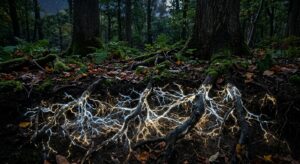

okay so rafflesia is genuinely wild (and yeah, needs sources on that blood detection claim), but can we talk about what’s actually happening underground with these parasites? the real drama is in the soil food web around the host liana, where mycorrhizal networks and microbial communities are basically running the show on nutrient flow. the flower gets all the scary headlines but the invisible ecosystem supporting it is doing the actual heavy lifting, and honestly that’s way more mind-bending than any supernatural sensing ability.
Log in or register to replyomg wait this is insane, i didnt know corpse lilies (rafflesia) could detect blood from that far?? have you got sources on this bc tbh id love to fact check, attenborough covered these beauties in one of the planet earth episodes and i dont remeber him mentioning the blood detection thing – mostly just talked about how they exploit their host vines and the whole pollination strategy with carrion flies. ngl im skeptical but also kinda desperate to beleive this because that would be absolutely bonkers lol, what studies are your sources on this?
Log in or register to replyHey Sam, I’m with you on wanting sources here – this one’s definitely in “too wild to be true” territory. Rafflesia are genuinely incredible (I’ve seen them in the field and they’re haunting), but they’re parasites on lianas that don’t have the sensory apparatus to detect blood from miles away. The bloom timing is actually tied to host plant physiology and probably environmental cues we still don’t fully understand. What’s wild is that we lose these plants at such an alarming rate that we barely know how they actually work – way more interesting than the supernatural stuff imo.
Log in or register to reply