
When Ancient Medicine Was More Advanced Than We Ever Imagined
Picture this: you’re lying on a stone table in ancient Egypt, 3,500 years ago. There are no modern hospitals, no sterile operating rooms, and certainly no MRI machines. Yet the physician approaching you is about to perform one of the most delicate surgical procedures known to medicine: brain surgery. And they’re going to do it through your nose.
This isn’t the plot of a historical fiction novel. Archaeological evidence and ancient papyri reveal that Egyptian physicians were performing sophisticated cranial procedures millennia before the advent of modern neurosurgery. Their techniques were so advanced that some are still used by surgeons today.
The Papyrus That Changed Everything We Knew About Ancient Medicine
The Edwin Smith Papyrus, dating back to around 1600 BCE but believed to be a copy of texts from 3000 BCE, contains detailed descriptions of 48 surgical cases. This ancient medical textbook reads like a modern surgical manual, complete with case studies, diagnostic procedures, and treatment protocols.
What shocked researchers most was the sophisticated understanding of brain anatomy displayed in these texts. The papyrus describes the brain’s convolutions, mentions the cerebrospinal fluid, and even discusses the relationship between brain injuries and paralysis on the opposite side of the body.
The Revolutionary Transnasal Approach
The most remarkable technique described involves accessing the brain through the nasal cavity. Egyptian surgeons discovered that by carefully navigating through the ethmoid bone (the thin bone separating the nasal cavity from the brain), they could reach certain areas of the brain without making any external incisions.
This transnasal endoscopic approach, as it’s known today, allows surgeons to:
- Remove tumors from the pituitary gland
- Repair cerebrospinal fluid leaks
- Access the base of the skull
- Treat certain types of brain infections
- Remove foreign objects from the cranial cavity
Tools of the Trade: Ancient Surgical Instruments
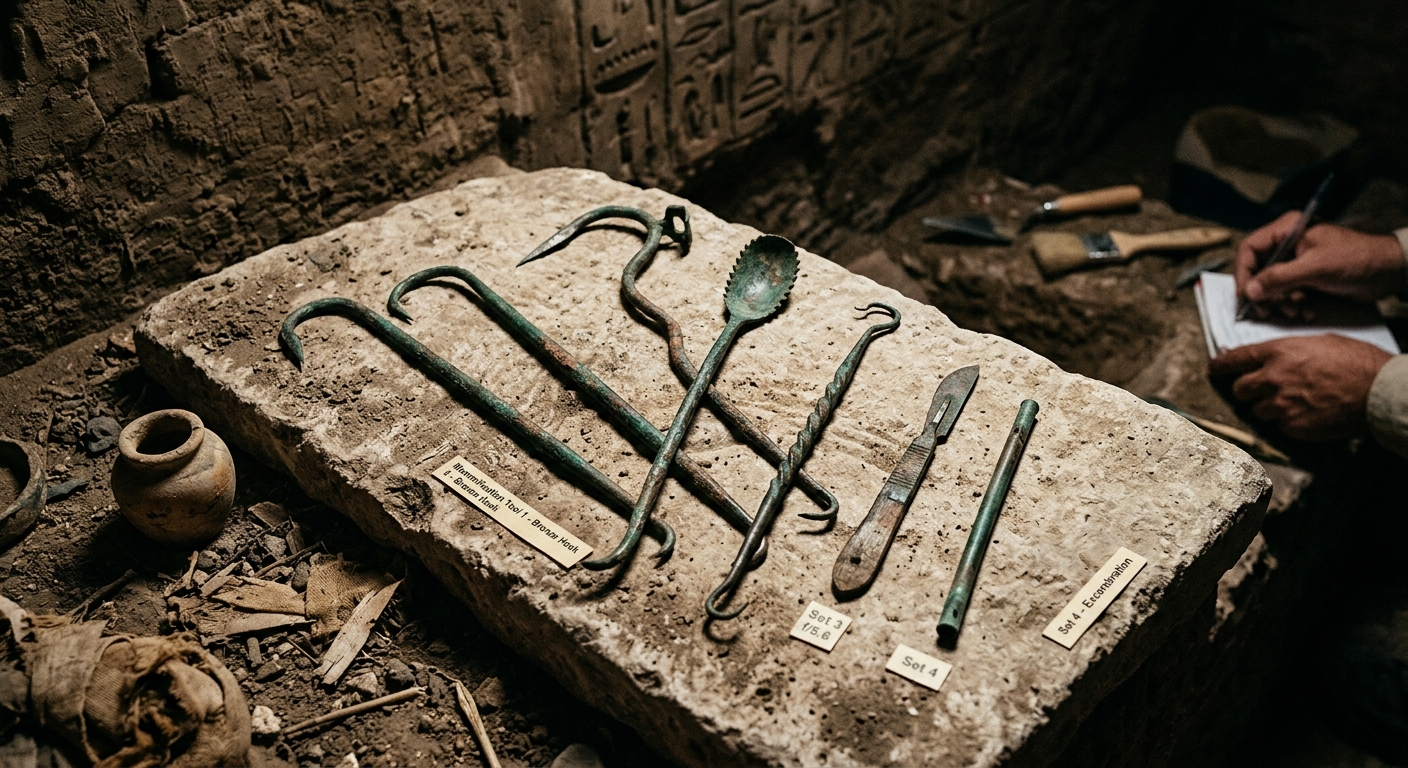
Archaeological excavations have uncovered an impressive array of surgical instruments from ancient Egypt. These bronze and copper tools included:
Specialized Brain Surgery Equipment
- Curved probes: Used to navigate the delicate nasal passages
- Thin chisels: For carefully breaking through bone barriers
- Spoon-shaped extractors: To remove tissue or foreign matter
- Fine forceps: For grasping and manipulating small objects
- Cauterizing irons: To stop bleeding and seal wounds
The precision of these instruments rivals modern surgical tools. Many were crafted with intricate designs and showed evidence of repeated use and maintenance, suggesting they were valuable and effective pieces of medical equipment.
The Science Behind Ancient Success
How did ancient Egyptian surgeons achieve such remarkable success without modern technology? The answer lies in their deep understanding of human anatomy, developed through their mummification practices.
Mummification: The Ultimate Anatomy Lesson
The process of mummification required priests and physicians to become intimately familiar with every organ, blood vessel, and bone in the human body. During mummification, the brain was typically removed through the nose using long, hooked instruments. This procedure, performed millions of times over centuries, gave Egyptian medical practitioners unparalleled knowledge of cranial anatomy.
They understood:
- The exact thickness of different skull bones
- The safest pathways through the nasal cavity
- Which areas of the brain controlled different body functions
- How to minimize damage to surrounding tissues
Evidence from the Tombs: Real Patients, Real Results
Mummified remains provide compelling evidence of successful ancient brain surgeries. CT scans of Egyptian mummies have revealed:
Signs of Healed Cranial Procedures
Several mummies show clear evidence of trepanation (skull drilling) with signs of bone regrowth, indicating the patients survived the surgery and lived for months or years afterward. Even more impressive, some skulls show evidence of multiple procedures, suggesting repeat surgeries were possible.
The Case of the Nobleman’s Tumor
One particularly fascinating case involves a nobleman from the New Kingdom period whose mummified remains show evidence of a successfully removed brain tumor. The precision of the procedure and the complete healing of the surgical site suggest the operation was performed by a master surgeon.
Modern Medicine Learns from Ancient Wisdom
Today’s neurosurgeons have rediscovered and refined the transnasal approach pioneered by the ancient Egyptians. Modern endoscopic endonasal surgery uses fiber optic cameras and micro-instruments to perform procedures remarkably similar to those described in ancient papyri.
Contemporary Applications
Current medical procedures that trace their origins to ancient Egyptian techniques include:
- Pituitary tumor removal
- Repair of cerebrospinal fluid leaks
- Treatment of certain brain aneurysms
- Removal of skull base tumors
The Legacy Lives On
The sophistication of ancient Egyptian neurosurgery challenges our assumptions about historical medical capabilities. These weren’t primitive attempts at healing, but refined surgical techniques developed over centuries of practice and observation.
Their success rate, while impossible to determine precisely, was likely quite high for certain procedures. The fact that they continued to perform these operations for over a millennium suggests they achieved positive outcomes regularly enough to justify the risks.
The next time you visit a modern hospital or undergo a medical procedure, remember that some of the techniques being used have their roots in the sandy tombs and ancient temples of Egypt. The physicians who walked the banks of the Nile 3,500 years ago were true pioneers, pushing the boundaries of medical science in ways we’re only now beginning to fully appreciate.





This is fascinating, though I have to admit my expertise is really in polar adaptations rather than ancient medicine! I’m curious though, what evidence shows these procedures were actually successful or if patients survived them, because that seems like the critical piece for proving they truly “mastered” the technique. Either way, it’s a humbling reminder that humans have been innovating in extreme conditions for millennia, whether that’s surviving arctic winters or developing complex surgeries, so I’m definitely bookmarking this to learn more.
Log in or register to replyI appreciate the skepticism here, Alma – that’s the right instinct honestly. I’ve spent two decades watching amphibian populations respond to environmental changes, and one thing I’ve learned is that longevity of a species or practice doesn’t necessarily mean it was successful in the way we assume. Those mummified remains are fascinating artifacts, but I’d want to see clear evidence of bone remodeling or healing rather than just surgical marks before concluding these procedures had good survival rates, you know?
Log in or register to replyThis is a really cool intersection of archaeology and human ingenuity, though I’d be curious about the geological context here – the Nile Valley’s specific mineral compositions and stone tool availability would’ve been crucial for developing those instruments. The preservation of soft tissue evidence in certain burial sites has a lot to do with local groundwater chemistry and how the strata sealed around the remains, so that geological record might actually help verify whether these procedures were as widespread as claimed. Have you looked into what the actual skeletal evidence shows in terms of healing or infection markers around the surgical sites?
Log in or register to reply