Nature’s Most Unusual Partnership: When Plants Become Toilets
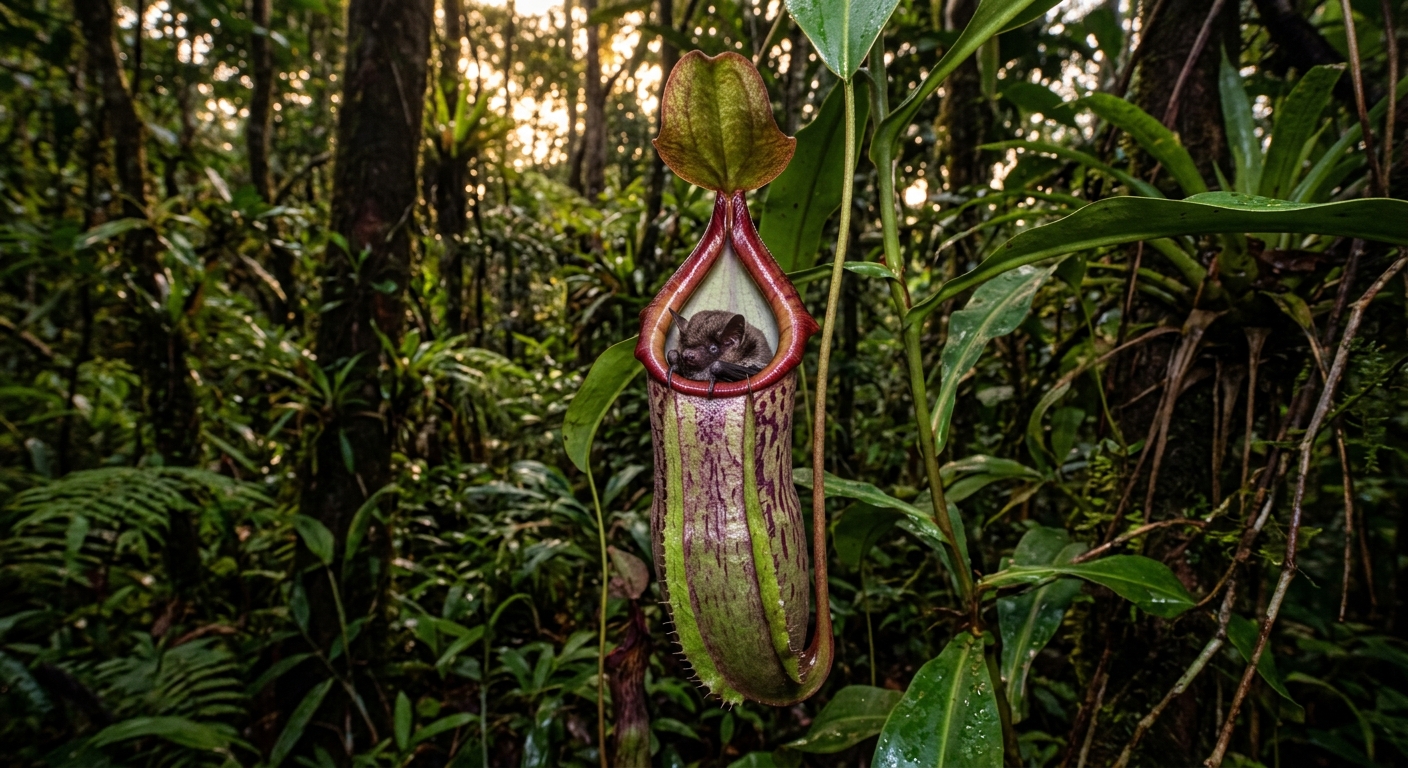
In the dense rainforests of Borneo, an extraordinary evolutionary story unfolds every night. While most carnivorous plants rely on trapping insects for survival, one particular species has discovered something far more profitable: becoming a living toilet for bats. The Nepenthes rafflesiana var. elongata, a specialized pitcher plant, has evolved one of nature’s most unusual feeding strategies by trading its insect-catching abilities for something much more valuable in the nutrient-poor soils of tropical rainforests.
This remarkable plant has essentially given up the carnivorous lifestyle that defines its family, instead choosing to form a mutually beneficial relationship with woolly bats. What makes this partnership so fascinating is how both species have evolved specific adaptations to make their arrangement work perfectly.
The Evolution of a Living Restroom
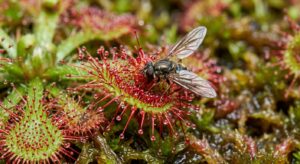
Traditional pitcher plants are death traps for insects. Their slippery walls, digestive enzymes, and deep pools create an inescapable prison for any unfortunate bug that falls in. However, the Bornean pitcher plant took a completely different evolutionary path. Instead of perfecting the art of insect murder, it became the ultimate bat bed and breakfast.
The plant’s pitchers have evolved to be the perfect size and shape to accommodate small woolly bats (Kerivoula hardwickii). These modifications include:
- Wider, more stable pitcher openings that won’t trap the bats
- Reduced digestive enzymes that won’t harm their furry guests
- Specialized acoustic properties that help bats locate the pitchers using echolocation
- Stronger pitcher walls that can support the weight of roosting bats
Most remarkably, the plant has developed what scientists call an “acoustic reflector” on the back wall of its pitchers. This curved surface acts like a satellite dish, reflecting the bats’ echolocation calls back to them with exceptional clarity. It’s essentially a natural bat beacon that says “safe roosting spot here!”
The Science Behind the Partnership
Research conducted by scientists at the University of Cambridge revealed just how perfectly matched this relationship has become. The woolly bats that use these pitcher plants as day roosts provide something incredibly valuable: nitrogen-rich guano (bat droppings) that serves as premium fertilizer.
In the nutrient-poor soils of tropical rainforests, nitrogen is often the limiting factor for plant growth. While other plants struggle to find adequate nitrogen sources, these clever pitcher plants have secured a steady supply delivered directly to their root systems. The bats deposit their waste right into the pitcher, where it’s broken down and absorbed by the plant.
Studies have shown that pitcher plants with regular bat tenants grow significantly larger and healthier than those without. In fact, the plants receive more nitrogen from bat guano than they would ever obtain from digesting insects. It’s a win-win situation that showcases evolution at its most creative.
Perfect Timing and Mutual Benefits
The timing of this relationship is crucial to its success. Woolly bats are active at night, hunting for insects in the forest canopy. During the day, they need safe, dry places to roost and sleep. The pitcher plants provide the perfect hideaway: protection from predators, shelter from rain, and a stable temperature.
For the bats, these plant partnerships offer several advantages:
- Protection from weather and predators during daylight hours
- Strategically located roosting spots throughout their territory
- Acoustic enhancement that helps them navigate in complete darkness
- Temperature regulation within the pitcher’s microenvironment
The bats show remarkable loyalty to their chosen pitcher plants, often returning to the same plant night after night. This consistency ensures that the plant receives regular fertilizer deposits, creating a reliable nutrient stream that supports healthy growth.
Communication Through Sound
Perhaps the most incredible aspect of this partnership is how the plant has evolved to communicate with bats through sound. The acoustic reflector doesn’t just help bats locate the pitcher, it actually produces a unique acoustic signature that bats can distinguish from other objects in the forest.
Researchers discovered that the pitcher’s shape creates distinct echo patterns that woolly bats recognize as “safe roosting spots.” This acoustic communication represents one of the few known examples of plants actively signaling to animal partners using sound.
Implications for Our Understanding of Evolution
The relationship between Bornean pitcher plants and woolly bats challenges our traditional understanding of carnivorous plants and evolutionary adaptation. It demonstrates that evolution doesn’t always follow predictable paths and that sometimes the most successful strategies involve cooperation rather than predation.
This discovery has broader implications for conservation efforts in tropical rainforests. The intricate relationships between species like these highlight how interconnected forest ecosystems truly are. Protecting one species often means protecting the complex web of relationships that support entire ecological communities.
Scientists continue to study this remarkable partnership, hoping to uncover more secrets about how such precise evolutionary adaptations develop. The Bornean pitcher plant and its bat tenants remind us that nature’s creativity knows no bounds, and that sometimes the most successful survival strategy is simply providing excellent customer service.