The Ultimate Aerial Assassin
When you think of nature’s deadliest predators, your mind probably conjures images of great white sharks, lions, or perhaps eagles. But what if I told you that the most successful hunter on Earth is an insect no bigger than your thumb? Meet the dragonfly: a delicate-looking creature that puts every other predator to shame with an absolutely mind-boggling 95 percent hunting success rate.
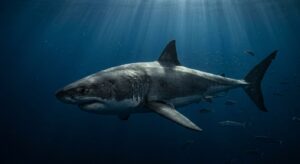
To put this incredible statistic into perspective, consider that lions succeed in only about 25 percent of their hunts, while great white sharks manage roughly 50 percent. Even the legendary peregrine falcon, capable of diving at speeds exceeding 200 mph, achieves success rates of only 20-30 percent. The humble dragonfly doesn’t just beat these apex predators – it obliterates their records.
The Science Behind Their Supernatural Hunting Skills
What makes dragonflies such phenomenally effective hunters isn’t brute strength or intimidating size. Instead, it’s their extraordinary neural architecture and biomechanical design that would make even the most advanced military engineers weep with envy.
Compound Eyes: Nature’s Ultimate Surveillance System
A dragonfly’s most striking feature might be its enormous compound eyes, which aren’t just for show. These remarkable organs contain up to 30,000 individual lenses called ommatidia, giving them nearly 360-degree vision. While humans can detect three primary colors, dragonflies can see up to 15 different color receptors, allowing them to perceive ultraviolet light and detect the slightest movements that would be completely invisible to us.
But here’s where it gets truly fascinating: dragonflies don’t just see their prey, they predict where it’s going to be. Their visual system can track up to 12 different targets simultaneously while calculating flight paths, speeds, and interception points in real-time. It’s like having a biological targeting computer that would make fighter jet technology look primitive.
Interceptive Hunting: The Art of Prediction
Unlike most predators that chase their prey directly, dragonflies employ a hunting strategy called “interceptive pursuit.” This means they don’t follow their target’s current position – instead, they fly directly to where their prey will be in the future. This requires incredibly complex calculations involving the prey’s speed, direction, wind conditions, and the dragonfly’s own flight capabilities.
Research conducted at Harvard University revealed that dragonflies can lock onto a target and maintain visual contact even during complex aerial maneuvers. Their brain, though smaller than a grain of rice, processes this information faster than most supercomputers could handle similar calculations.
Engineering Marvels: Four Wings of Death
The dragonfly’s four wings operate independently, creating a level of aerial agility that aircraft engineers can only dream of replicating. Each wing is powered by its own set of muscles, allowing for movements that seem to defy physics:
- Hovering precision: Dragonflies can remain perfectly stationary in mid-air, even in windy conditions
- Instant direction changes: They can switch from forward flight to backward movement without any transition period
- Variable wing angles: Each wing can adjust its angle independently for maximum efficiency
- Speed control: They can accelerate from 0 to 35 mph in mere milliseconds
This incredible maneuverability means that once a dragonfly has targeted its prey, escape is virtually impossible. Their wings can beat up to 30 times per second while maintaining perfect control over their flight path.
The Neural Network Advantage
Perhaps most remarkably, dragonflies possess specialized neurons called “small target movement detectors” that are exclusively tuned to spot small, moving objects against complex backgrounds. These neurons fire only when they detect something with the size and movement characteristics of potential prey, filtering out irrelevant visual information.
This biological filtering system is so efficient that it inspired researchers at the University of Adelaide to develop new algorithms for autonomous vehicle navigation and missile guidance systems. Military applications aside, this research has led to breakthroughs in collision-avoidance technology for drones and self-driving cars.
Ancient Hunters, Modern Mysteries
Dragonflies have been perfecting their hunting techniques for an astounding 325 million years, making them one of the oldest groups of insects still alive today. During the Carboniferous period, their ancestors ruled the skies with wingspans reaching over two feet across. While modern dragonflies are considerably smaller, they’ve retained and refined the hunting prowess that made their lineage so successful.
Fossil evidence suggests that the basic body plan and hunting strategies of dragonflies have remained largely unchanged for millions of years – a testament to just how perfectly evolved these creatures are for their ecological niche.
Implications for Technology and Robotics
The dragonfly’s hunting success hasn’t gone unnoticed by the scientific community. Researchers are now studying these insects to develop:
- More efficient drone designs with improved maneuverability
- Advanced tracking systems for surveillance applications
- Better algorithms for autonomous vehicle navigation
- Enhanced prosthetic devices that can predict user intentions
Some aerospace companies have even begun developing “dragonfly-inspired” aircraft that mimic the insect’s four-wing design and independent wing control systems.
The Ecosystem Impact
With their incredible hunting efficiency, dragonflies play a crucial role in controlling mosquito and other pest populations. A single dragonfly can consume hundreds of mosquitoes per day, making them invaluable allies in the ongoing battle against insect-borne diseases.
This level of predation efficiency helps maintain ecological balance in wetland environments, where dragonflies serve as both predator and prey in complex food webs. Their success as hunters directly impacts the populations of numerous other species, demonstrating how a creature’s hunting abilities can shape entire ecosystems.
Witnessing Perfection in Action
The next time you see a dragonfly hovering over a pond or darting through your garden, take a moment to appreciate that you’re observing one of nature’s most accomplished predators in action. That seemingly casual flight pattern represents millions of years of evolutionary refinement, resulting in a hunting machine so effective that it makes every other predator on Earth look like an amateur.
In a world where we’re constantly amazed by technological advances, it’s humbling to realize that a tiny insect achieved what our most sophisticated machines can barely approximate. The dragonfly’s 95 percent success rate isn’t just a remarkable statistic – it’s a testament to the incredible complexity and efficiency that evolution can achieve given enough time to perfect its designs.