
In the shadowy world of botanical deception, few strategies are as audacious as the one employed by certain orchid species. These master manipulators have evolved one of nature’s most sophisticated con games: sexually deceiving male wasps by perfectly mimicking female wasps in both appearance and scent. The result? Frustrated male insects become unwitting pollinators in what scientists call pseudocopulation.
The Art of Botanical Seduction
Sexual deception in orchids represents one of evolution’s most remarkable achievements in mimicry. Over 250 orchid species worldwide have mastered this elaborate ruse, with the majority found in Australia and the Mediterranean region. These orchids don’t just casually resemble female wasps; they’ve evolved into biological forgeries so precise that male wasps cannot distinguish between the flower and their intended mates.
The deception operates on multiple sensory levels. The orchid’s labellum (the modified petal that serves as a landing platform) mimics the size, shape, color, and texture of a female wasp. Some species even develop fake eyes, antennae, and wing patterns that mirror their target species with startling accuracy. But the visual mimicry is just the beginning of this evolutionary masterpiece.
Chemical Warfare: The Power of Pheromone Mimicry
The most crucial element of the orchid’s deception lies in its ability to produce chemical compounds that perfectly replicate female wasp pheromones. These volatile organic compounds are so precisely matched to the target species that male wasps experience the same hormonal response they would to an actual potential mate.
The Science Behind the Scent
Research has revealed that these orchids produce complex cocktails of chemicals, including:
- Alkanes and alkenes: Long-chain hydrocarbons that form the backbone of many insect pheromones
- Esters and alcohols: Compounds that provide species-specific scent signatures
- Terpenes: Aromatic molecules that enhance the overall chemical bouquet
- Fatty acids: Additional components that fine-tune the pheromone mimic
What’s truly remarkable is that different orchid species produce distinct chemical profiles tailored to their specific wasp targets. A single genus might contain multiple species, each specialized to deceive different wasp species with unique pheromone combinations.
The Mating Dance That Never Ends
When a male wasp encounters these deceptive orchids, the response is immediate and intense. Driven by powerful mating instincts, the wasp attempts to copulate with what it perceives as a receptive female. During these attempted mating sessions, which can last several minutes, the wasp’s movements trigger the orchid’s pollination mechanism.
As the wasp struggles and maneuvers on the flower’s surface, pollinia (pollen packets) become attached to specific parts of the insect’s body. When the frustrated wasp eventually gives up and flies to another flower of the same species, hoping for better luck, it inadvertently transfers the pollen to the new flower’s stigma, completing the pollination process.
Precision Engineering in Nature
The positioning of reproductive structures in these orchids demonstrates evolutionary engineering at its finest. The pollinia attach to different body parts depending on the orchid species: some target the wasp’s head, others the thorax or abdomen. This precise placement ensures that pollen transfer occurs efficiently when the wasp visits subsequent flowers.
A Global Phenomenon with Local Specialists
Sexual deception in orchids occurs worldwide, but certain regions have become hotspots for this evolutionary strategy. Australia leads the world with over 200 species of sexually deceptive orchids, primarily in the genera Chiloglottis, Caladenia, and Drakaea. The Mediterranean region hosts numerous Ophrys species that have perfected the art of wasp seduction.
Each orchid species typically specializes in deceiving one or a few closely related wasp species. This specificity has led to remarkable co-evolutionary relationships where both the orchid and its pollinator have evolved together over millions of years. The orchid refines its deception while the wasp occasionally evolves better detection abilities, creating an ongoing evolutionary arms race.
The Dark Side of Deception
While this pollination strategy is undeniably ingenious, it comes with significant costs for both parties involved. Male wasps waste valuable time and energy on futile mating attempts, time that could be spent finding actual mates or food sources. For the orchids, maintaining such precise mimicry requires enormous evolutionary investment, and any breakdown in the deception can lead to pollination failure.
Climate change and habitat destruction pose additional threats to these specialized relationships. As wasp populations decline or shift their ranges, the orchids that depend on them face uncertain futures. The loss of either partner in these relationships could spell doom for both species.
Lessons from Nature’s Master Manipulators
The sexual deception practiced by orchids offers profound insights into the power of evolutionary pressure and the lengths to which organisms will go to ensure reproductive success. These plants have essentially weaponized beauty and chemistry to hijack the reproductive instincts of another species for their own benefit.
Scientists continue to study these remarkable orchids, not only to understand their evolutionary history but also to learn from their sophisticated chemical and visual mimicry. The precision with which these plants replicate wasp pheromones has implications for developing new pest control strategies and understanding the chemical basis of animal communication.
In a world where we often think of plants as passive organisms, sexually deceptive orchids remind us that the plant kingdom is full of active, sophisticated strategists willing to go to extraordinary lengths to survive and reproduce. Their success stands as a testament to the incredible creativity of evolutionary processes and the complex interconnections that bind all life on Earth.

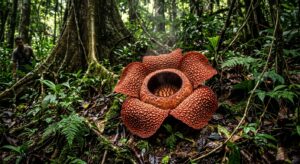




This is exactly the kind of thing that makes me drag people through the orchid wing at the museum, because once you see how wildly *specific* these mimics are – right down to the wing venation and pheromone cocktail – it totally rewires how you think about evolution’s creativity. Paula and Wendy, you’re both touching on something cool: these orchids basically cracked the code of what makes their pollinator tick, which is just cognition expressed through flowers instead of behavior. The wasp doesn’t “know” it’s been fooled any more than we consciously know why certain scents trigger memories, and that’s the beautiful, slightly unsettling part.
Log in or register to replyThis is absolutely fascinating, though I have to admit my heart stays with the cetaceans and their incredible communication systems! That said, the parallel between these orchids using chemical signals to manipulate behavior and how whales use complex vocalizations to communicate across ocean basins really shows how nature finds infinite ways to solve survival problems. I wonder if we’re still missing so much about whale song specificity, like whether they might have even more nuanced “dialects” we haven’t decoded yet, the same way these orchids have perfected their scent profiles. Either way, this kind of research makes me think about how much we still underestimate non-human intelligence and adaptation.
Log in or register to replyThe manipulation tactics here really remind me of how chimps use social intelligence to navigate their groups, like when they form alliances based on understanding what others want – except the orchids have taken it to an insane level of specialization! It’s wild how nature keeps finding these intricate ways to communicate and deceive, whether it’s through pheromones or complex vocalizations like you mentioned with whales, Wendy. This kind of research makes me think about why understanding other species’ “languages” matters so much for conservation – we can’t protect what we don’t understand.
Log in or register to reply