Imagine a living organism that was already ancient when the first humans painted caves, that witnessed the rise and fall of ice ages, and that continues to thrive today in the mountains of Utah. This isn’t science fiction – it’s the remarkable story of Pando, a clonal colony of quaking aspens that has been growing continuously for an estimated 80,000 years.
What Makes Pando So Special?
At first glance, Pando looks like an ordinary aspen forest covering 106 acres in Utah’s Fishlake National Forest. But beneath the surface lies an extraordinary secret: every single tree in this forest is genetically identical. They’re not separate organisms at all, but rather tens of thousands of stems sprouting from a single, massive underground root system.
This biological marvel weighs an estimated 6,000 tons, making it not only one of the oldest living organisms on Earth but also one of the heaviest. The name “Pando” comes from Latin, meaning “I spread,” which perfectly describes how this ancient organism has survived for millennia.
The Science Behind Clonal Colonies
Clonal reproduction is nature’s ultimate survival strategy. While most trees reproduce sexually through seeds, creating genetically diverse offspring, some species like quaking aspens can also reproduce asexually. This process, called vegetative reproduction, allows them to send up new shoots from their existing root system.
How Clonal Growth Works
The process is surprisingly simple yet incredibly effective:
- Root Extension: The parent organism extends its root system horizontally underground
- Shoot Development: New shoots emerge from these roots at various distances from the original plant
- Independent Growth: Each shoot develops into what appears to be a separate tree but remains connected to the mother root system
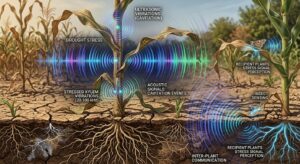
- Resource Sharing: Nutrients, water, and even chemical signals flow freely between all connected stems
Pando’s Incredible Survival Story
For 80,000 years, Pando has survived ice ages, droughts, fires, floods, and countless other environmental challenges that would have killed conventional trees. Its secret lies in its underground immortality. When surface stems die from disease, fire, or old age, the root system simply sends up new shoots to replace them.
Natural Disaster Resistance
This survival strategy makes Pando virtually indestructible by natural forces. Forest fires that would devastate other woodlands actually benefit aspen colonies by clearing competing vegetation and triggering new growth. The underground root system remains protected from flames, ready to regenerate when conditions improve.
During harsh winters or extended droughts, individual stems might struggle or die, but the colony survives by redistributing resources from healthier sections to stressed areas. It’s like having a biological backup system that spans over 100 acres.
The Secret Language of Trees
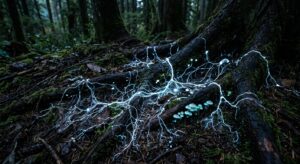
Recent scientific research has revealed that Pando’s connected root system functions like a vast underground internet. The colony can:
- Share nutrients between distant sections
- Transmit chemical warning signals about pest attacks
- Coordinate seasonal changes across the entire colony
- Allocate resources to areas with the best growing conditions
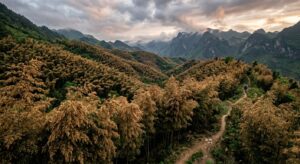
This communication network explains why Pando’s autumn color change happens almost simultaneously across the entire forest, creating a spectacular golden display that draws visitors from around the world.
Modern Threats to an Ancient Giant
Despite surviving for 80 millennia, Pando now faces its greatest challenge: human activity and climate change. Unlike the natural disasters it has weathered before, these modern threats target the very mechanisms that have ensured its survival.
Current Challenges Include:
- Overgrazing: Deer and elk populations, no longer controlled by natural predators, are eating young shoots faster than they can mature
- Climate Change: Shifting temperature and precipitation patterns are stressing the root system
- Human Development: Roads and buildings fragment the colony and disrupt root connections
- Fire Suppression: Preventing natural fires allows competing species to crowd out new aspen growth
Other Ancient Clonal Colonies
Pando isn’t alone in the ancient clone club. Scientists have discovered several other remarkably old clonal organisms:
- Old Tjikko: A Norway spruce in Sweden that’s been cloning itself for 9,550 years
- Jurupa Oak: A California scrub oak colony estimated to be 13,000 years old
- Posidonia Meadows: Mediterranean seagrass colonies that may be 200,000 years old
Conservation Efforts
Scientists and conservationists are working to protect Pando for future generations. Current efforts include fencing to prevent overgrazing, controlled burning to restore natural fire cycles, and genetic studies to better understand the colony’s needs.
The importance of preserving Pando extends beyond its record-breaking age. This living fossil provides invaluable insights into plant evolution, climate adaptation, and ecosystem resilience that could help us understand how life on Earth responds to environmental change.
Lessons from the Immortal Forest
Pando’s story teaches us profound lessons about survival, adaptation, and the interconnectedness of life. In a world obsessed with individual achievement, this ancient organism shows us the power of cooperation and shared resources. Every tree supports every other tree, creating a resilient whole that’s greater than the sum of its parts.
As we face our own environmental challenges, perhaps we can learn from this 80,000-year-old master of survival. Pando reminds us that sometimes the secret to longevity isn’t standing alone but growing together, sharing resources, and staying connected to our roots.