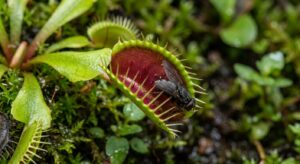
Your garden might be much noisier than you think. While you go about your day watering plants and trimming hedges in peaceful silence, a hidden world of sound exists just beyond the range of human hearing. Scientists have recently discovered that plants emit ultrasonic screams when they’re being cut, damaged, or suffering from drought stress. These findings challenge everything we thought we knew about plant communication and suggest that the plant kingdom is far more vocal than we ever imagined.
The Discovery That Changed Everything
The groundbreaking research came from Tel Aviv University, where scientists used sensitive microphones capable of detecting sounds in the ultrasonic range (20-100 kilohertz) to listen to plants under stress. What they found was remarkable: tomato and tobacco plants consistently produced distinct clicking sounds when they were cut or deprived of water.
These ultrasonic emissions aren’t random noise. The plants produced different sound patterns depending on the type of stress they experienced. When cut, plants emitted one pattern of sounds, while drought-stressed plants produced another. Even more fascinating, healthy plants were significantly quieter, producing far fewer sounds than their stressed counterparts.
The Sound of Plant Distress
The research team recorded thousands of sounds from various plant species and discovered that the frequency and intensity of these ultrasonic screams varied dramatically based on the plant’s condition:
- Drought-stressed tomato plants: Emitted an average of 35 sounds per hour
- Cut tomato plants: Produced about 25 sounds per hour
- Healthy tomato plants: Made fewer than one sound per hour
- Drought-stressed tobacco plants: Generated approximately 11 sounds per hour
- Healthy tobacco plants: Remained virtually silent
The sounds themselves are brief, lasting only milliseconds, but they’re loud enough in the ultrasonic range that they could theoretically be heard by other organisms from several feet away.
How Do Plants Make These Sounds?
The mechanism behind these plant screams is still being studied, but scientists believe the sounds are produced through a process called cavitation. When plants are stressed, especially during drought conditions, air bubbles can form in their vascular system (the plant equivalent of blood vessels). When these bubbles collapse or burst, they create the clicking sounds that sensitive equipment can detect.
This process is similar to what happens when you crack your knuckles, but on a much smaller scale and at frequencies far above human hearing. The more stressed the plant becomes, the more cavitation occurs, leading to increased sound production.
Who Might Be Listening?
While humans can’t hear these ultrasonic plant screams without special equipment, many animals in nature can detect sounds in this frequency range. This raises fascinating questions about the role these sounds might play in natural ecosystems:
Potential Listeners Include:
- Moths and other insects: Many can hear ultrasonic frequencies and might use plant distress calls to locate weak or damaged plants
- Bats: These echolocation experts operate in similar frequency ranges
- Rodents: Many small mammals can detect ultrasonic sounds
- Other plants: Some research suggests plants might be able to detect and respond to sound vibrations
This opens up the possibility that plant screams serve as a form of communication, either warning other plants of danger or inadvertently attracting herbivores to weakened vegetation.
The Broader Implications for Plant Intelligence
The discovery of plant screams adds to a growing body of evidence suggesting that plants are far more complex and responsive than traditionally believed. Recent research has shown that plants can:
- Communicate through chemical signals released into the air
- Send messages to other plants through underground fungal networks
- Respond to the sounds of running water or insect feeding
- Remember past experiences and modify future behavior accordingly
- Recognize kin and compete more aggressively with unrelated plants
These ultrasonic emissions represent another layer of plant communication that scientists are just beginning to understand.
What This Means for Agriculture and Gardening
The practical applications of this discovery could revolutionize agriculture and plant care. If farmers and gardeners could learn to interpret plant sounds, they might be able to:
Early Stress Detection
Monitoring plant sounds could provide an early warning system for crop stress, allowing farmers to address problems before they become visible. This could lead to better water management and improved crop yields.
Precision Agriculture
Sound monitoring technology could be integrated into precision agriculture systems, providing real-time data about plant health across large fields without the need for invasive testing or waiting for visual symptoms to appear.
Indoor Plant Care
Future houseplant care might involve acoustic monitoring devices that alert plant parents when their green companions are experiencing stress, leading to healthier indoor gardens.
The Ethical Questions
The discovery that plants produce sounds when distressed raises intriguing philosophical questions about plant consciousness and suffering. While scientists are careful to note that these sounds don’t necessarily indicate consciousness or pain as we understand them in animals, they do suggest that plants have complex responses to their environment that we’re only beginning to comprehend.
This research challenges us to reconsider our relationship with the plant kingdom and might influence how we think about agriculture, forestry, and environmental conservation.
Future Research Directions
Scientists are now working to expand this research in several directions. They’re testing more plant species to see if ultrasonic communication is universal in the plant kingdom. They’re also investigating whether plants can respond to sounds made by other plants, potentially revealing a complex acoustic communication network in forests and gardens.
Advanced machine learning algorithms are being developed to interpret different types of plant sounds, potentially creating a dictionary of plant acoustic communication that could revolutionize how we understand and interact with vegetation.
The next time you walk through a garden or forest, remember that you’re surrounded by a symphony of communication occurring just beyond your hearing. The silent world of plants may not be so silent after all, and their ultrasonic screams are opening our ears to the complex, hidden conversations happening all around us in the natural world.