When Plants Turn Predator: Meet the Ultimate Carnivorous Hunter
In the humid rainforests of Southeast Asia, an unassuming plant sits quietly, waiting. To the untrained eye, it might look like an innocent tropical flower with colorful, cup-shaped leaves. But this botanical beauty harbors a deadly secret: it’s one of nature’s most efficient killers, capable of digesting prey as large as rats, frogs, and even small birds.
Welcome to the world of the pitcher plant, where the traditional roles of predator and prey are turned completely upside down.
The Anatomy of a Living Death Trap
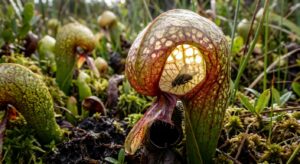
Pitcher plants, belonging to the genus Nepenthes, have evolved into perfect killing machines over millions of years. Their modified leaves form deep, pitcher-shaped chambers that serve as inescapable prisons for unsuspecting victims. But the real genius lies in the intricate design details that make escape virtually impossible.
The Lure: Sweet Death Beckons
The rim of each pitcher, called the peristome, is lined with nectar-producing glands that emit an irresistible sweet fragrance. This aromatic cocktail acts like a neon sign in the jungle, advertising free food to insects, small mammals, and amphibians. The colors are equally enticing, ranging from vibrant reds and purples to striking yellows and greens that stand out against the forest backdrop.
The Trap: A Slippery Slope to Doom
Once prey ventures onto the pitcher’s rim to sample the nectar, they encounter a surface engineered for failure. The peristome is covered in microscopic ridges that become incredibly slippery when wet from rain or morning dew. What seems like solid footing quickly becomes a one-way slide into the abyss below.
Inside the pitcher, the walls are lined with downward-pointing waxy scales that make climbing out impossible. It’s like trying to scale a wall covered in banana peels while wearing ice skates.
The Digestive Chamber: Where Victims Meet Their Fate
At the bottom of each pitcher lies a pool of digestive fluid that would make any stomach acid jealous. This potent cocktail contains:
- Proteases: Enzymes that break down proteins into amino acids
- Phosphatases: Chemicals that extract phosphorus from bones and tissues
- Organic acids: Natural preservatives that prevent the fluid from spoiling
- Antimicrobial compounds: Substances that keep harmful bacteria at bay
The digestion process can take anywhere from several days to weeks, depending on the size of the prey. Larger victims like frogs and rats are slowly dissolved, with only indigestible parts like fur, feathers, and bones remaining as evidence of the plant’s carnivorous feast.
Size Matters: From Gnats to Giants
Not all pitcher plants are created equal. The largest species, Nepenthes rajah, produces pitchers that can hold up to 3.5 liters of digestive fluid. These botanical giants have been documented consuming prey that would shock even seasoned botanists:
Common Victims
- Flies, mosquitoes, and other flying insects
- Ants and beetles
- Spiders and centipedes
- Small frogs and lizards
Extraordinary Catches
- Rats and shrews
- Small birds
- Scorpions
- Even small snakes
In 2009, researchers discovered the remains of a whole rat inside a Nepenthes rajah pitcher in Borneo, proving that these plants are capable of taking down prey much larger than previously thought possible.
Why Plants Turn Carnivorous: The Nutrient Struggle
You might wonder why a plant would evolve to become a meat-eater when photosynthesis seems perfectly adequate for survival. The answer lies in the harsh environments where pitcher plants thrive.
These botanical carnivores typically grow in nutrient-poor soils where essential elements like nitrogen and phosphorus are scarce. While other plants struggle to survive in these conditions, pitcher plants have found an alternative source of nutrients: animal protein.
By digesting insects and other small animals, these plants can extract vital nutrients that are otherwise unavailable in their environment. It’s an evolutionary strategy that has allowed them to colonize ecological niches where few other plants can survive.
The Ecosystem Engineers
Surprisingly, pitcher plants don’t just take from their environment; they also give back in fascinating ways. The pitchers themselves become miniature ecosystems, hosting a variety of organisms that have adapted to life in these deadly chambers:
- Mosquito larvae that can survive in the acidic fluid
- Specialized bacteria that help break down organic matter
- Tiny spiders that hunt around the pitcher rims
- Tree frogs that use the pitchers as safe havens for their tadpoles
Conservation: Protecting Nature’s Living Traps
Despite their fearsome reputation, many pitcher plant species face threats from habitat destruction and illegal collection. These remarkable plants grow slowly and require specific environmental conditions, making them vulnerable to human activities.
Deforestation in Southeast Asia has destroyed countless pitcher plant habitats, while collectors prize rare species for private gardens and botanical displays. Conservation efforts are now underway to protect these incredible plants and the unique ecosystems they support.
The Future of Carnivorous Plant Research
Scientists continue to discover new secrets hidden within pitcher plants. Recent research has focused on the potential medical applications of their digestive enzymes, the biomechanics of their trapping mechanisms, and their role in maintaining biodiversity in tropical ecosystems.
As we learn more about these remarkable plants, one thing becomes increasingly clear: pitcher plants represent one of evolution’s most creative solutions to survival challenges. They remind us that in nature, the line between predator and prey isn’t always where we expect it to be.