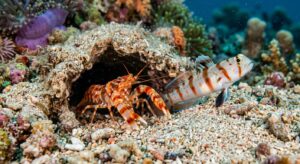
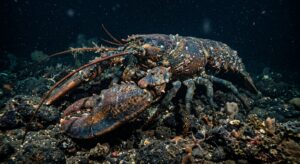
In the vast expanse of our oceans, where silence is golden for naval operations, a creature no bigger than your thumb holds the power to disrupt the most sophisticated military sonar systems on Earth. Meet the pistol shrimp, nature’s living sonic weapon that proves sometimes the smallest packages deliver the biggest surprises.
The Underwater Gunslinger
The pistol shrimp, also known as the snapping shrimp, belongs to the family Alpheidae and comprises over 600 species found in tropical and temperate coastal waters worldwide. What makes this crustacean extraordinary isn’t its size or appearance, but rather its ability to generate one of the loudest sounds in the animal kingdom through a specialized claw mechanism that defies belief.
Unlike other shrimp species with symmetrical claws, pistol shrimp have evolved one dramatically oversized claw that can grow to half the length of their entire body. This asymmetrical appendage functions as a sophisticated biological weapon, capable of producing sound levels reaching up to 218 decibels underwater. To put this in perspective, a jet engine produces around 140 decibels, and sounds above 85 decibels can cause permanent hearing damage in humans.
The Science Behind the Sonic Boom
The pistol shrimp’s extraordinary ability stems from a process called cavitation, one of nature’s most violent phenomena occurring on a microscopic scale. When the shrimp snaps its specialized claw shut, it creates a high-speed water jet that travels at approximately 60 miles per hour. This rapid movement generates a cavitation bubble that collapses almost instantaneously, producing the characteristic loud snap.
During this cavitation event, several mind-blowing things happen simultaneously:
- The collapsing bubble reaches temperatures of approximately 4,700 degrees Celsius, nearly as hot as the surface of the sun
- A brief flash of light is emitted through a process called sonoluminescence
- Tremendous pressure waves are generated, creating the loud acoustic signature
- A powerful shockwave is produced that can stun or kill small prey
This entire process occurs in less than a millisecond, making it one of the fastest movements in the animal kingdom. The physics involved are so complex that scientists are still studying the exact mechanisms behind this remarkable biological phenomenon.
Naval Nightmares: When Nature Interferes with Military Technology
The implications of pistol shrimp activity on naval operations became apparent during World War II when sonar operators reported mysterious crackling sounds that interfered with their ability to detect enemy submarines. Initially dismissed as equipment malfunction, these acoustic disturbances were later identified as the collective snapping of countless pistol shrimp colonies.
Modern naval sonar systems rely on precise acoustic readings to detect underwater objects, navigate safely, and communicate with other vessels. Pistol shrimp colonies can create such intense acoustic interference that they effectively create “acoustic shadows” where sonar becomes unreliable or completely useless. This natural phenomenon has forced military strategists to consider biological factors when planning naval operations in tropical waters.
The Acoustic Battlefield
In some coastal regions, particularly around coral reefs and rocky shorelines where pistol shrimp thrive, the collective snapping creates a continuous crackling soundscape. During peak activity periods, typically at dawn and dusk, the noise can be so intense that it overwhelms sensitive hydrophone equipment designed to detect the subtle acoustic signatures of submarines and other underwater vessels.
Naval forces have had to develop specialized filtering techniques and frequency analysis methods to distinguish between biological noise and actual threats. This has led to significant investments in advanced signal processing technology and a better understanding of marine biology among military personnel.
Ecological Impact and Behavioral Patterns
Beyond their military implications, pistol shrimp play crucial roles in marine ecosystems. They use their sonic abilities for multiple purposes including hunting, territorial defense, and communication. Their powerful snaps can stun small fish and other prey, making them formidable predators despite their diminutive size.
Many pistol shrimp species have evolved fascinating symbiotic relationships with gobies, small fish that act as lookouts while the shrimp maintains burrows in the seafloor. This partnership demonstrates the complex social behaviors that can evolve around such specialized adaptations.
The shrimp’s acoustic activity also influences the broader marine soundscape, affecting the behavior of other species and contributing to the complex acoustic ecology of coastal environments. Some researchers believe that the constant background noise from pistol shrimp colonies may actually provide acoustic camouflage for other marine animals trying to avoid predators.
Research Applications and Future Implications
Scientists are intensively studying pistol shrimp to understand how biological systems can generate such extreme forces and temperatures. This research has potential applications in materials science, engineering, and even medical technology. The cavitation mechanism could inspire new approaches to underwater propulsion, cleaning technologies, and therapeutic devices.
Climate change and ocean acidification may affect pistol shrimp populations and their acoustic output, potentially altering the marine soundscape in ways that could have far-reaching implications for both naval operations and marine ecosystem dynamics.
Nature’s Reminder of Humility
The pistol shrimp serves as a humbling reminder that nature’s solutions often surpass human engineering in elegance and efficiency. This tiny crustacean has evolved a biological mechanism that can generate extreme temperatures, produce powerful shockwaves, and create acoustic interference capable of confounding sophisticated military technology.
As we continue to explore our oceans and develop new technologies, the pistol shrimp stands as a testament to the incredible diversity of life on our planet and the unexpected ways in which even the smallest creatures can shape our understanding of physics, biology, and military strategy. In the ongoing arms race between human technology and natural phenomena, sometimes nature holds the ultimate trump card in the most unlikely package.