Imagine our entire planet transformed into a massive, frozen snowball hurtling through space, with ice sheets extending from the poles all the way to the equator. This isn’t science fiction or a distant future climate catastrophe. This actually happened to Earth around 700 million years ago, and it came terrifyingly close to ending life as we know it before complex organisms even had a chance to evolve.
The Great Freeze That Almost Ended Everything
During what scientists call the “Snowball Earth” period, our planet experienced one of the most extreme climate events in its 4.5-billion-year history. Global temperatures plummeted so dramatically that ice covered virtually the entire surface of the Earth, including tropical regions that today bask in year-round warmth. Ocean surfaces froze solid, creating an icy shell that trapped marine life beneath miles of ice.
This wasn’t just a harsh winter that lasted a few years. The Snowball Earth period persisted for millions of years, creating conditions so hostile that they pushed life on our planet to the very brink of total extinction. The few microorganisms that had managed to evolve by this point found themselves in a fight for survival unlike anything Earth had experienced before or since.
What Triggered Earth’s Deep Freeze?
The chain of events that led to Snowball Earth began with a perfect storm of geological and atmospheric changes. During this time, most of Earth’s landmasses were clustered near the equator in a supercontinent. This configuration created ideal conditions for a runaway cooling effect that scientists call the “ice-albedo feedback loop.”
Here’s how this devastating process unfolded:
- Massive volcanic activity released enormous amounts of carbon dioxide, but it also created sulfur compounds that reflected sunlight back to space
- Continental weathering removed CO2 from the atmosphere faster than it could be replenished
- Initial ice formation began reflecting more sunlight away from Earth’s surface
- Accelerating cooling created more ice, which reflected even more sunlight
- Runaway freezing continued until the entire planet became encased in ice
Life Hanging by a Thread
When Earth transformed into a giant snowball, the few simple life forms that existed faced conditions that would challenge even the most extremophilic organisms we know today. The thick ice covering cut off sunlight from reaching the oceans, effectively shutting down photosynthesis on a global scale. This meant that the foundation of most food chains simply disappeared.
Temperature readings from this period suggest that even tropical regions experienced temperatures around negative 40 degrees Fahrenheit. Ocean surfaces were frozen solid to depths of over half a mile in some areas. For the primitive bacteria, algae, and other microorganisms that represented the pinnacle of evolution at the time, these conditions were nothing short of apocalyptic.
The Survivors’ Last Stand
Despite these hellish conditions, life found a way to persist in the most unlikely places. Scientists believe that small populations of microorganisms survived in several critical refuges:
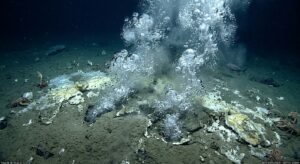
- Hydrothermal vents on the ocean floor continued to provide heat and chemical energy
- Volcanic hot springs created pockets of liquid water in an otherwise frozen world
- Deep ocean trenches where geothermal activity prevented complete freezing
- Underground environments insulated from the surface chaos
These tiny populations of survivors represented the entire future of complex life on Earth. If they had failed to endure the millions of years of Snowball Earth conditions, our planet might have remained a sterile, frozen wasteland indefinitely.
The Great Thaw and Life’s Comeback
The end of Snowball Earth came through another dramatic geological process. Volcanic activity continued beneath the ice, slowly pumping carbon dioxide into the atmosphere. Since the frozen oceans couldn’t absorb this CO2 as they normally would, greenhouse gases accumulated to levels far higher than anything in Earth’s previous history.
When this massive greenhouse effect finally overcame the planet’s reflective ice cover, the thaw was rapid and extreme. Global temperatures may have swung from around negative 40°F to over 120°F in just a few thousand years. This created a hothouse Earth with intense storms, massive flooding, and radical chemical changes in the oceans.
The Evolutionary Explosion That Followed
The end of Snowball Earth marked one of the most important turning points in the history of life. The surviving microorganisms found themselves in a radically changed world with new environmental niches and evolutionary pressures. This set the stage for an explosion of biological innovation.
Within a relatively short geological timeframe after Snowball Earth ended, the first complex multicellular organisms began to appear. Many scientists believe that the extreme selective pressure of the Snowball Earth period, followed by the rapid environmental changes of the thaw, accelerated evolutionary processes that might otherwise have taken much longer.
Earth’s Closest Call
The Snowball Earth period represents the closest our planet has ever come to experiencing a complete sterilization event caused by climate change. Unlike mass extinctions caused by asteroid impacts or volcanic catastrophes, this was a gradual process that tested life’s ability to endure extreme conditions over millions of years.
The fact that microscopic life managed to survive this planetary deep freeze is nothing short of miraculous. Those hardy microorganisms that endured the cold, darkness, and chemical chaos of Snowball Earth are the ancestors of every living thing on our planet today, including us. Their survival ensured that Earth’s biological story could continue, eventually leading to the rich diversity of life we see around us.
Understanding how life survived Snowball Earth provides crucial insights into both the resilience of biology and the delicate balance that maintains our planet’s habitability. It reminds us that Earth’s climate system is capable of far more extreme changes than anything in human experience, and that the conditions supporting complex life are more fragile than we might assume.